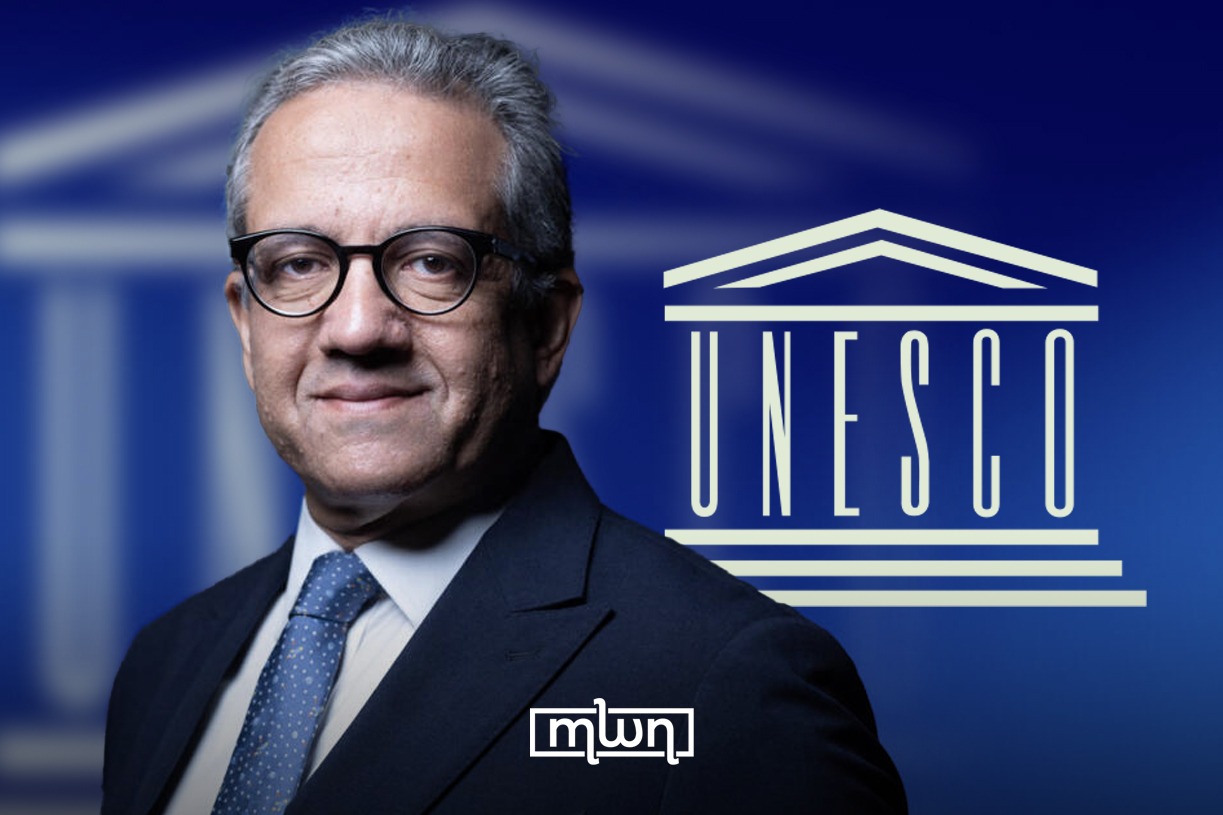
Rabat – In a decisive vote on Monday, UNESCO’s Executive Board nominated former Egyptian minister Khaled El-Enany to lead the United Nations’ cultural, educational, and scientific agency, positioning him as the organization’s next Director-General. He won by 55 votes to 2 over his rival, Édouard Firmin Matoko of the Republic of Congo, with the United States abstaining.
El-Enany’s nomination is still awaiting full approval by all UNESCO member states, scheduled for Nov. 6 during UNESCO’s General Conference in Samarkand, Uzbekistan. If confirmed, he is expected to assume office in mid-November, succeeding Audrey Azoulay.
A professor of Egyptology at Helwan University, El-Enany has spent more than 30 years in scholarship and cultural administration. He has also served as Egypt’s Minister of Antiquities and later Minister of Tourism and Antiquities between 2016 and 2022.
During those years, he oversaw major archaeological projects, museum renovations, and efforts to modernize heritage sites. His nomination is seen by many as historic, as he would be the first Arab to occupy the UNESCO post.
But the path ahead is steep. UNESCO is currently grappling with a looming financial crisis caused by the planned U.S. withdrawal, slated to take effect in December 2026, which could cut around $75 million from its yearly budget.
El-Enany has already pledged to look for alternative funding through private sector partnerships, new revenue models, and engagement with the tech industry. He also promises to lead with openness, listening to member states and treating all dossiers without politicization.
His opponent, Matoko, formerly a long-time UNESCO official and Assistant Director-General in charge of Africa and external relations, entered the race in March 2025. Despite his experience inside the agency, he could not muster sufficient support.
Observers see El-Enany’s nomination as a reflection of shifting influence in global cultural leadership. Backed by the Arab League, the African Union, France, and several European and Latin American states, his candidacy attracted broad alliances. Yet critics warn that delivering on promises—especially financial ones—will require strong political will and creative diplomacy.
Read Also: Morocco’s Latifa Yaakoubi Pushes Local Action at UNESCO Biosphere Congress