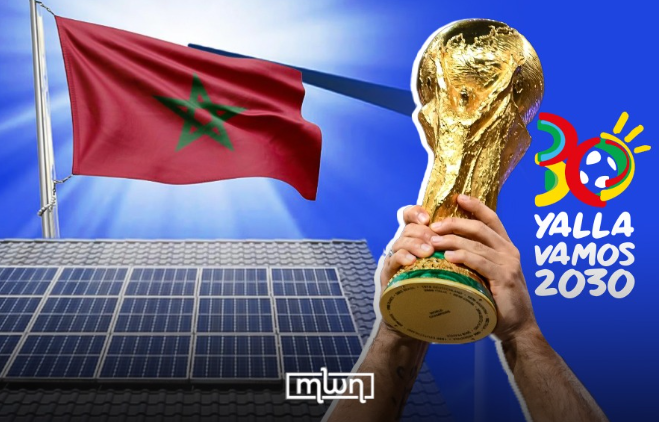
As Morocco prepares to co-host the 2030 FIFA World Cup with Spain and Portugal, one question dominates discussions among policymakers, investors, and citizens: Can Public-Private Partnerships (PPPs) drive the country’s green transition while meeting massive infrastructure demands? The tournament offers not only a global stage but also a once-in-a-generation opportunity to accelerate Morocco’s shift toward sustainability.
An opportunity beyond stadiums
Morocco’s vision for 2030 goes far beyond sports. The government has committed to transforming the event into a model of sustainable development and social inclusion. According to Fouzi Lekjaa, President of the Organizing Committee, environmental sustainability is “at the heart of Morocco’s 2030 strategy.” This aligns with Morocco’s broader climate goals, including achieving over 50% renewable electricity by 2030 and expanding low-carbon infrastructure across the country.
PPPs have already proven effective in Morocco’s renewable energy sector. The Noor Ouarzazate Solar Complex—one of the largest in the world—was delivered through a PPP model that combined public oversight, private financing, and international expertise. The same approach could now power Morocco’s next wave of green infrastructure.
Green mega-projects underway
One of the most ambitious PPP projects tied to the 2030 World Cup is the $13 billion green energy and water plan, which includes a 1,400-kilometer high-voltage transmission line from Dakhla to Casablanca and renewable-powered desalination plants. The project brings together TAQA Morocco, Nareva, and the National Office of Electricity and Drinking Water (ONEE), creating thousands of jobs and securing water supply for southern regions.
In addition, Morocco plans to double renewable electricity generation in its southern provinces by 2027, adding around 1.4 GW of solar and wind capacity through private sector participation. This surge in clean energy investment will not only power World Cup venues but also strengthen grid resilience and support the country’s long-term decarbonization goals.
Transport, energy, and urban sustainability
The transport sector, responsible for about 23% of Morocco’s greenhouse gas emissions, stands to benefit significantly from PPPs. The government’s $10 billion rail expansion plan, which includes new high-speed lines and electrified trains, aims to cut emissions and improve connectivity between World Cup host cities. Similar partnerships could fund electric bus fleets, tram extensions, and green mobility corridors.
Sustainable stadium design is another key area. The new Grand Stade Hassan II in Casablanca is expected to target LEED Gold certification, incorporating solar energy, rainwater collection, and smart cooling systems. These measures would make Morocco’s sports infrastructure a model for environmentally responsible event management in Africa.
Challenges on the road to 2030
Despite the optimism, PPPs face serious challenges. Analysts warn that rising public debt—approaching 70% of GDP—could strain Morocco’s ability to finance large-scale projects if contracts are poorly structured. Skilled labor shortages are another concern, as multiple megaprojects run simultaneously. Moreover, recent youth-led protests highlight public frustration with visible spending on stadiums while education and healthcare lag behind. Without tangible benefits for all citizens, the legitimacy of the World Cup’s green investments could be undermined.
Making PPPs work for Morocco’s green future
To ensure that PPPs truly drive Morocco’s green transition, five conditions are crucial:
- Clear sustainability standards in every contract—including emissions limits, energy efficiency, and circular-economy principles.
- Blended finance models that combine public funds with green bonds and concessional loans to reduce costs and risks.
- Local capacity-building to ensure Moroccan companies and workers benefit directly from new projects.
- Transparent governance through open procurement, published audits, and citizen monitoring.
- Post-2030 legacy planning to guarantee that new facilities remain useful, efficient, and inclusive long after the final whistle.
Conclusion
The 2030 World Cup can be Morocco’s turning point toward a sustainable future—if PPPs are deployed not just for speed and visibility, but for resilience and inclusion. The success of projects like Noor Ouarzazate proves that Morocco can combine ambition with innovation. The challenge now is to make every partnership green, transparent, and beneficial for all Moroccans. The world will be watching—not only the matches, but the legacy Morocco builds beyond them.