
Rabat– The Moroccan government has reaffirmed its commitment to addressing the demands of the youth-led GenZ 212 protest movement, while highlighting ongoing reforms in key sectors such as education, health, and employment.
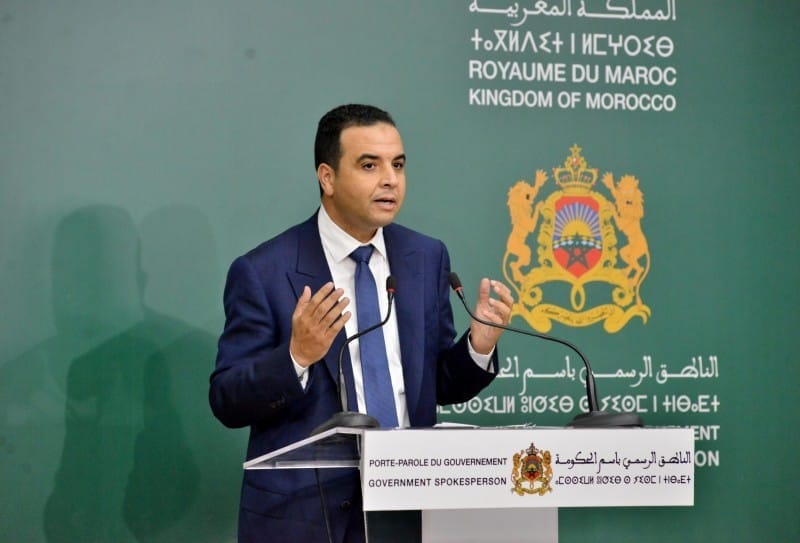
Speaking at a press briefing following the weekly Council meeting on Thursday, Government Spokesperson and minister delegate in charge of relations with Parliament, Mustapha Baitas, said the government “has been clear and transparent from the start in responding to this issue” and emphasized that the authorities have “received and understood the message” from the protesting youth.
Baitas stressed that meaningful dialogue requires both parties to be engaged. “Until the other side is ready and the conditions for dialogue are in place, the government will continue to accelerate ongoing projects, particularly in health, education, and employment,” he said, citing a series of recent meetings aimed at speeding up progress in these areas.
The minister also highlighted structural reforms that the government has undertaken, pointing to legislative initiatives such as alternative sentencing aimed at reducing overcrowding in prisons and revising the country’s penal policies. “These are real reforms, not slogans. They are concrete initiatives that directly improve citizens’ daily lives,” Baitas said, still acknowledging that challenges remain in certain sectors.
On the social front, Baitas asserted the government’s commitment to dialogue and social development, noting that nearly MAD 49 billion ($5.36 billion) has been allocated toward this effort through 2027. The initiative has already resulted in a rise in the minimum wage from MAD 3,000 to MAD 4,500 ($330 to $495) and an increase in the average civil servant salary from MAD 8,000 to MAD 10,600 ($880 to $1,170).
Education reform, a central issue in the GenZ212, was also addressed. Baitas highlighted the progressive rollout of the “Pioneering Schools” program, which now covers more than 5,412 primary and secondary schools — nearly half of Morocco’s public schools. In primary education, over 4,626 schools have adopted the program, while more than 786 secondary schools are participating, reaching an overall implementation rate of 30%.
He added that most classrooms have been renovated and equipped with projectors and computers, with an implementation rate exceeding 80%, while acknowledging that some schools have yet to receive all planned IT equipment, with procurement procedures still underway.
Baitas concluded by reiterating the government’s commitment to mobilizing available resources to address shortcomings and improve essential public services, while hoping for active participation from all parties in future dialogue.
This comes as the GenZ212 movement has signaled their mistrust in engaging with the government in dialogue on any level, elevating their demands directly to King Mohammed VI. The youth are calling to dismiss the government, accusing Head of Government Aziz Akhannouch as the central culprit in the corruption, and even rolling out a boycott campaign that targets him.
The youth are waiting with anticipation to see if King Mohammed VI will address their demands in his upcoming speech tomorrow, which will mark the start of the new Parliament term.