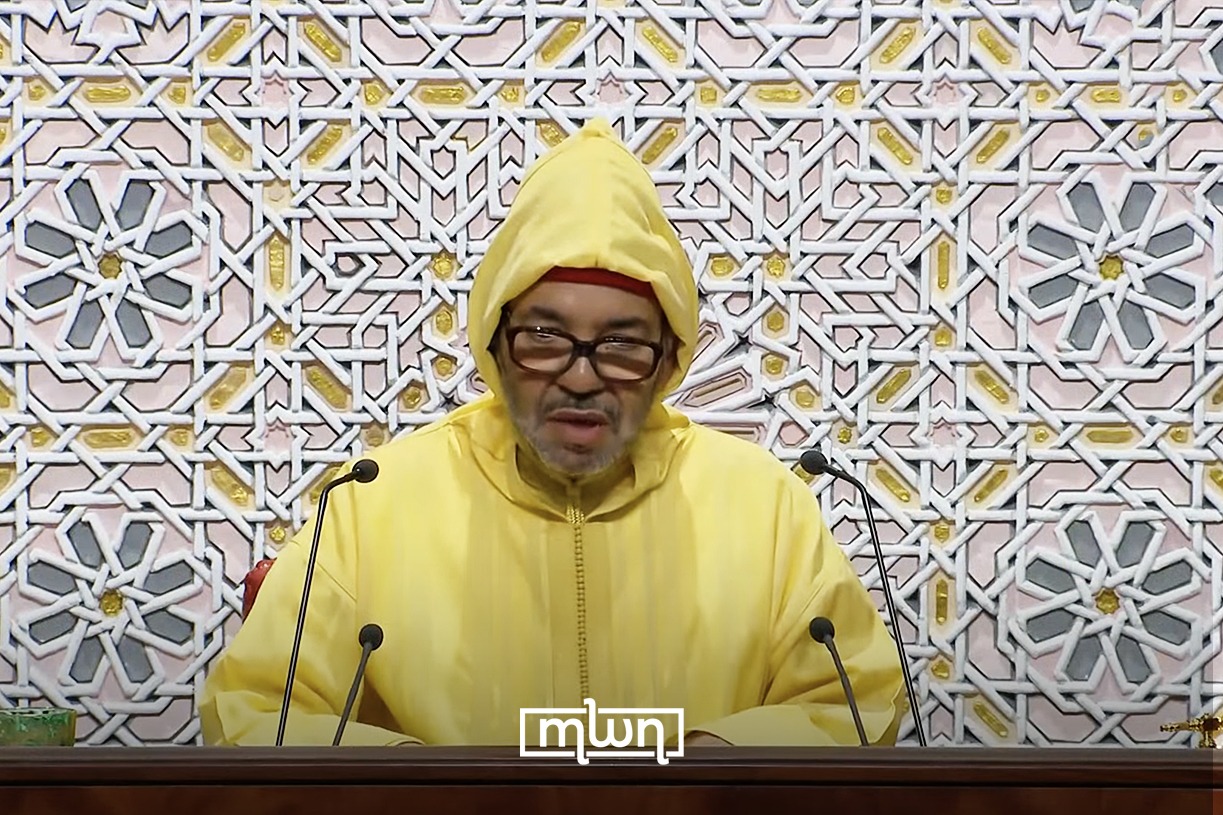
Rabat – King Mohammed VI has reiterated his long-standing calls for elite accountability and genuine public service, urging MPs and lawmakers to strengthen policies that seek to defend the nation’s and citizens’ interests.
The monarch made his speech during the opening of parliament, urging the lawmakers to complete pending legislative plans as well as ongoing prorogues and projects.
He also urged vigilance in defending the nations’ interests and preserving citizens’ fundamental rights, stressing that there should be “no contradiction or competition between major national projects and social programs, since both ultimately aim to develop the country and improve citizens’ living conditions across all regions.”
The monarch also called on all government and elected officials to “combat all practices that waste time, effort, and resources.”
Morocco will not tolerate “any negligence affecting the efficiency and effectiveness of public investment,” he warned.
King Mohammed VI’s speech comes in a context marked by a series of protests led by youth movements, including GenZ212.
Protesters have been calling on the government to speed up projects seeking to implement tangible reforms to address dysfunctions in the health sector and education.
The protests come as many reports have documented the fragility of the two sectors, especially following the deaths of several women during labor in Agadir’s Hassan II Hospital.
Beyond reforms, the youth movement has also called for accountability for any potential parties involved in corruption or for failing to fulfill their duties.
Many have strongly criticized what they see as the government’s prioritization of major infrastructure projects like stadiums over socio-economic initiatives addressing some of the most pressing concerns across Morocco, including lingering challenges in terms of healthcare, education, and unemployment.
In his speech on Throne Day, King Mohammed VI urged the government to tackle regional disparities, stating that there is no place for a “Morocco moving at two speeds.”
The monarch has long been outspoken about the need for social justice and inclusivity at all levels. While Morocco has indeed made notable progress in a wide range of areas critical for development, he said in his Throne Day speech, at all levels, challenges persist in different sectors – including health and education.
“You know well that I will never be satisfied, regardless of the level of economic development and infrastructure, if it does not contribute tangibly to improve citizens’ living conditions from all social categories and in all regions and areas without discrimination or exclusion,” he explained.
Morocco’s economy created 82,000 jobs in 2024, according to Bank Al Maghrib governor Abdellatif Jouahri. Still, the prevailing sentiment among youths and critics is that with unemployment rates still very high, Moroccans need more and fairer employment opportunities.
In addition to high unemployment, one of Morocco’s most pressing concerns has been shortages in the health workforce.
Moroccan nurses and health technicians have recently conveyed their concerns in a report sent to Minister of Health Amine Tahraoui to ring the alarm bell about the country’s healthcare system.
The report from the National Office of the Independent Union of Nurses called on the ministry to tackle what they described as a “ticking time bomb.”
Chronic staff shortage, poor ambulance equipment, and frequent traffic accidents that leave nurses and technicians at risk of legal prosecution when things go wrong are some of the most persistent challenges facing Morocco’s healthcare system, the report deplored.