 Join on WhatsApp
 Join on Telegram
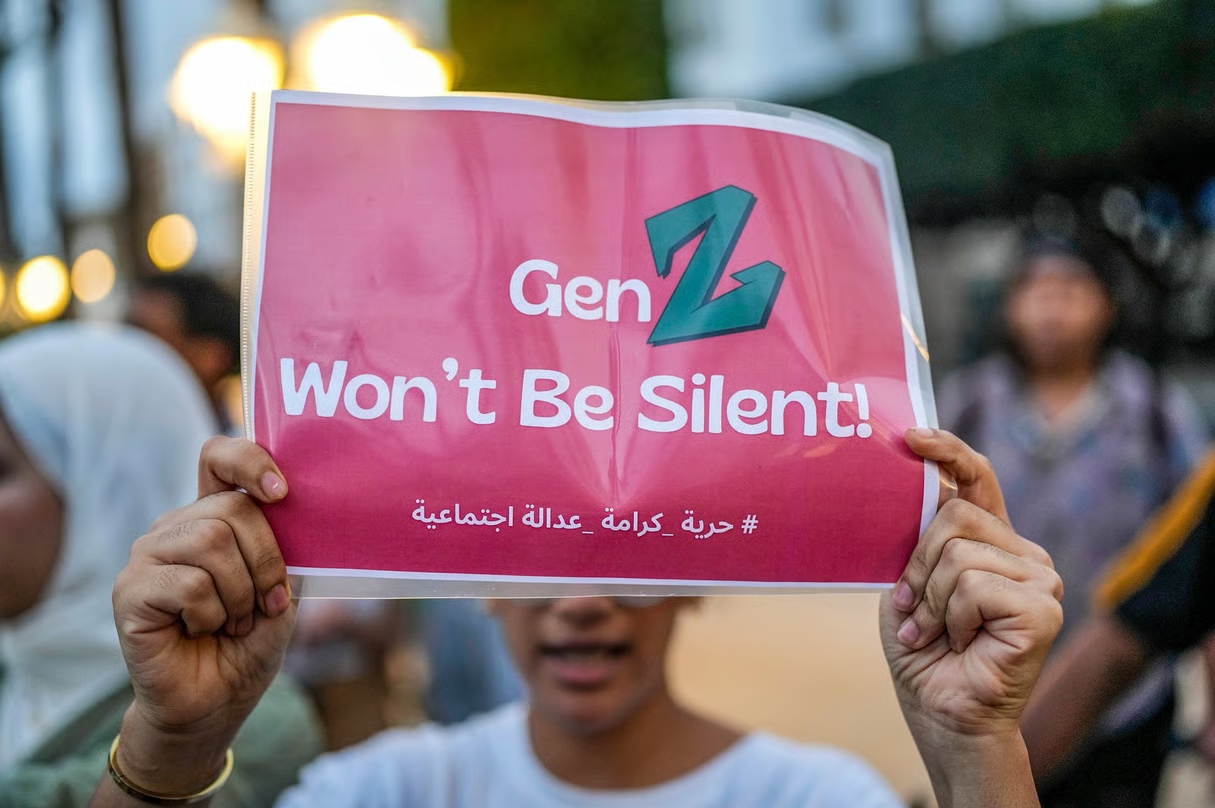
Marrakech – Youth from Morocco’s Oriental region announced their complete withdrawal from the “GenZ212” movement today, citing significant deviations from the movement’s founding principles.
According to a statement, young people from Oujda, Berkane, Nador, Jerada, Bouarfa, and Figuig have decided to halt all planned activities and dissolve their coordination committees.
The Oriental region youth initially joined GenZ212 like other Moroccan youth, attracted by what they perceived as “a sincere national desire to defend legitimate demands for all members of the Moroccan people, from health to education to social and territorial justice.” However, they now claim the movement has “deviated from the basic principles upon which it was founded.”
In their statement, they identified several concerns, including the movement’s abandonment of independence and self-management principles. They criticized GenZ212 for “seeking irrational alliances with contradictory factions, such as leftist movements and some banned Islamic movements,” which they say contradicts their fundamental principles of autonomy.
Another major concern was the persistent refusal of founding leaders, supervisors, and organizers to appear publicly or reveal their true identities.
“This makes us ask several questions about the reasons for this unjustified fear, and about the credibility and reliability of the entities that manage and run the movement from behind the curtain,” they stated.
They added that this approach contradicts the principle of transparency and accountability that the movement advocates.
The Oriental youth also noted that primary demands such as health and education have been relegated to secondary status, representing “a blatant coup against the basic demands that established peaceful struggle.”
They further objected to what they called “illogical demands” from the movement, particularly the boycott of Moroccan national team matches. “We consider the national team representative of the people of all spectrums, not the government or a specific entity,” they explained.
They described such calls as “an invitation to boycott joy and the sense of pride and belonging that people feel after every victory achieved by national teams in various sports fields.”
The statement also addressed repeated calls to boycott the Africa Cup of Nations (AFCON 2025) in Morocco, which they qualified as “a failed call to boycott a successful sector” that would not solve problems in other struggling sectors but would cause “material and moral damage that will harm the nation as a whole, not just the government.”
The movement faces these internal divisions
Parallely, Amazigh Gen Z youth also announced their withdrawal from the movement. In a clarification statement, they asserted that their withdrawal “does not mean withdrawing from national concerns or civil struggle, but rather a new alignment in the battle of awareness, in which we practice criticism and reform from an independent and responsible position, away from intellectual guardianship or cross-border loyalties.”
The Amazigh youth insisted that “real change does not begin with noise and chaos” and stated that “Amazigh identity is not a slogan for adornment, but the essence of true Moroccan personality, as confirmed by His Majesty King Mohammed VI in his Ajdir speech, when he made Amazighity a fundamental pillar of national unity.”
They strongly condemned “the continuing attempts of some figures known for their hostility to the royal institution and territorial unity to ride on protests by exploiting youth and detainee issues to serve narrow and suspicious agendas, which camouflage their discourse with slogans of freedom while hiding explicit hostility to the royal institution and the nation’s constants.”
The Amazigh statement also responded to what they called a “desperate attempt” to link Amazighity with Zionism, calling it “a failed and exposed attempt to silence free voices that reject guardianship and censorship, and defend their authentic identity, land, and dignity.”
This wave of departures reveals growing tensions within the GenZ212 movement. What began as a unified platform for demanding improvements in health, education, and social justice has seemingly evolved into an ideological battleground. The claims from both the Oriental and Amazigh youth suggest internal fragmentation along political and identity lines.
The movement appears to be struggling with balancing its initial social demands with emerging ideological influences. Critics within the Amazigh activist community have observed that the movement’s discussions have increasingly taken on what they characterize as an “exclusionary direction” that suppresses Amazigh identity, language, and culture.
These developments expose deeper vulnerabilities within Moroccan civil society movements, where unity around legitimate social demands is increasingly undermined by ideological infiltration and identity-driven fragmentation.
Analysts warn that hostile groups – including foreign networks with clear animosity toward Morocco – may exploit these internal rifts to sow discord and weaken national cohesion, particularly at this sensitive moment as the country prepares to host major international sporting events.