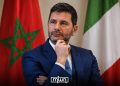

In recent years, the relationship between Morocco and Korea has moved well beyond cordial diplomacy. What might have been seen primarily through the prism of cultural fascination, such as K-pop, Korean dramas, and learning the language, has evolved into a full-fledged multidimensional partnership. From trade and investment to education and strategic infrastructure projects, the two countries are forging ties that are shaping not only state policy but also the aspirations of Morocco’s youth.
For many young Moroccans, engagement with Korea began as an object of cultural fascination. K-pop stars, Korean dramas, and fashion trends are filtered via YouTube, Netflix, and social media. Language learning programs, fan communities, and a growing number of exchange and scholarship opportunities have deepened the curiosity into something more concrete. As one study puts it, “Young Moroccans end up applying for Korean government scholarships or exchange programs, mainly because of their interest in exploring this culture that they were exposed to through media and the internet.”
The Global Korea Scholarship (GKS) and similar programs are enabling talented students from Morocco to study in Korean universities. As Ambassador Keeyong Chung has said, “I hope that your experience in Korea will build not only a bridge between Korea and Morocco but bridges among nations and cultures promoting diversity and multilateralism in this ever-divided world.”
Beyond cultural fascination
These soft power exchanges are not just entertaining; they help young Moroccans see new possibilities. They imagine careers in technology, tourism, and green energy; they see models of governance, education systems, and industrial strategy that differ from the status quo.
Parallel to the cultural enthusiasm, Morocco and South Korea have been steadily building cooperation in trade, industry, and infrastructure. Diplomatic relations date back to 1962, but recent years have seen a surge in high-profile agreements.
The past decade has especially brought unprecedented momentum. In 2025, Morocco’s Minister of Industry and Trade, Ryad Mezzour, announced a landmark $1.5 billion contract between Hyundai Rotem and Morocco’s national railway operator (ONCF) to provide double-deck electric trains. Mezzour hailed it as “a milestone,” citing technology transfer, job creation, and local factory construction as key benefits.
Morocco is also leveraging its strategic geography and natural resources to become a hub for trade with Europe, Africa, and Asia. The Tanger Med port, as well as ambitious projects such as the Dakhla Atlantic Port and a growing battery-value chain (phosphate, cobalt) all stand as proof points of Morocco’s ambition to establish itself as a continental trade and green industry hub.
Politically, both countries have taken steps to formalize cooperation. Agreements in higher education, renewable energy, automotive sectors, and green building research show that the bilateral partnership is not superficial. Committees focused on cultural exchanges (youth, education, sports) and joint diplomatic efforts reflect a shared vision.
A new horizon of possibilities for young Moroccans
In the long run, such cooperation could allow Morocco to position itself as Korea’s key partner in Africa. whether in renewable energy, logistics, or cultural exchange. For Moroccan youth, this means not only studying abroad or learning a language, but potentially being part of future industries that link Africa and Asia more closely.
What does all this mean for young Moroccans? First, it offers a new set of role models and reference points. Korea’s transformation from a war-torn nation in the 1950s to a high-technology manufacturing and cultural exporter is something many in Morocco view with admiration. It suggests that sustained investment in education, infrastructure, industrial policy, and innovation can yield results.
Second, it opens concrete pathways: learning Korean, studying in Korea, working with Korean firms now investing in Morocco (automotive, renewable energy, logistics). These aren’t distant dreams but immediate possibilities.
Looking ahead, the Morocco–South Korea relationship is becoming more than a case study in cultural diplomacy or trade cooperation. It is evolving into a model for how two countries, separated by geography but united by shared aspirations, can build something durable through culture, commerce, and common challenges. For young Moroccans, South Korea represents not just another foreign culture to admire, but another pathway to imagine for their own future, and for their country’s place in the world.