 Join on WhatsApp
 Join on Telegram
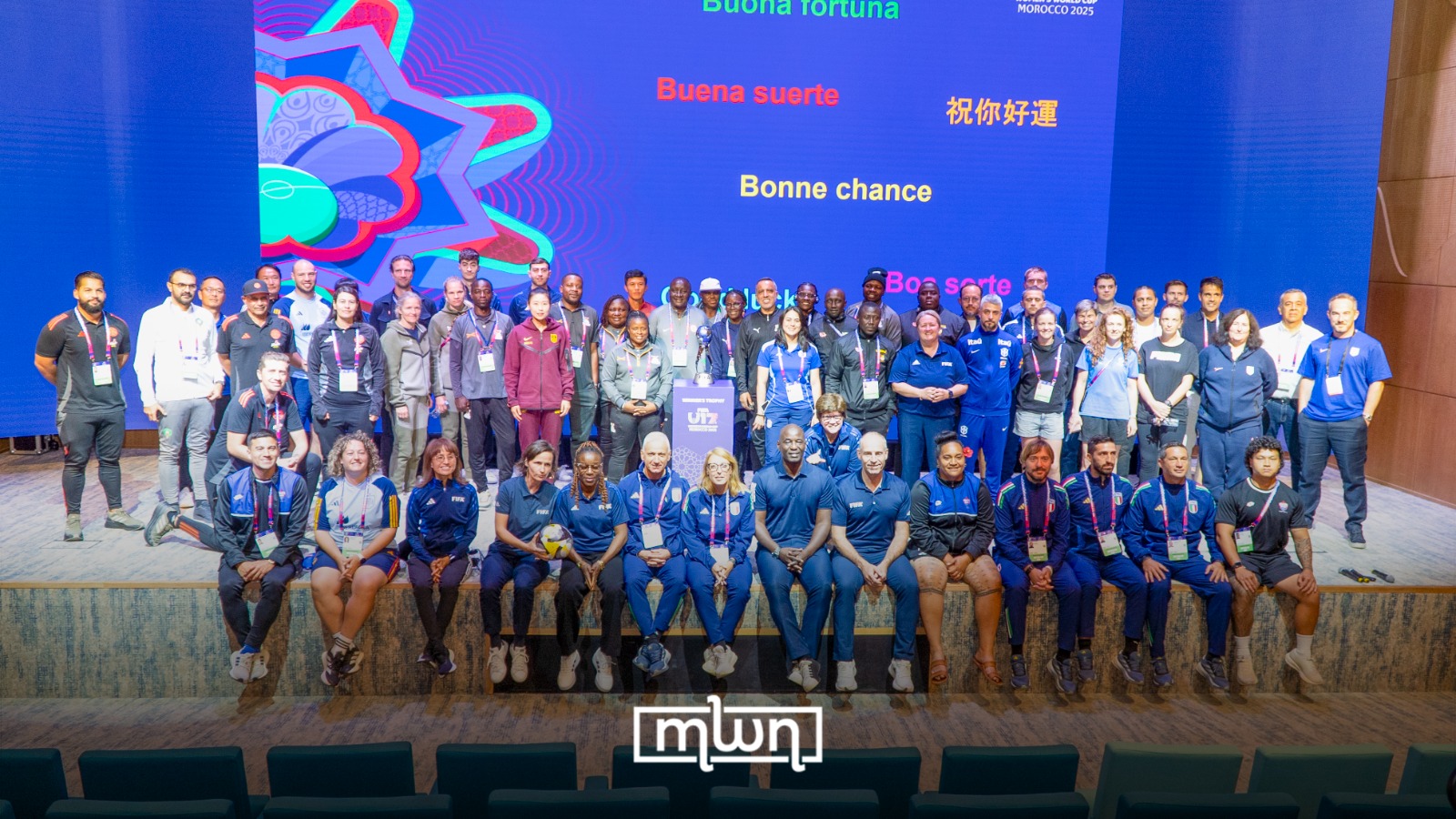
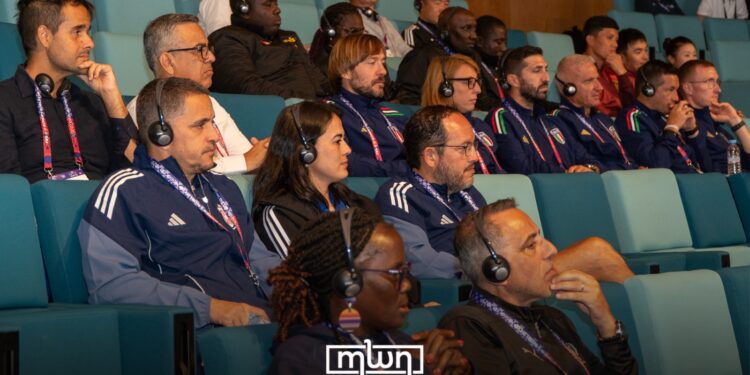
Rabat – FIFA brought together coaches and technical directors at the Mohammed VI Football Complex on Monday for a working summit focused on accelerating the growth of women’s football.
The session coincided with Morocco’s historic role as host of the new annual FIFA U-17 Women’s World Cup, which will be staged in Morocco every year from 2025 to 2029 in a newly expanded 24-team format.

A platform built for access, learning, and performance
FIFA delegates outlined a simple development idea: “Find, Train, Play.” Under the global Talent Development Scheme (TDS), each member association is supported to identify roughly the 50 best young players, guarantee six to seven weekly training sessions, and secure regular competitive minutes domestically and abroad.
At the tournament level, FIFA’s Technical Study Group (TSG) and the Football Performance Insights team are capturing every match to track long-term trends in the U-17 women’s game and publish coach-friendly analysis on the FIFA Training Centre.
By comparing the benchmarks of India 2022, Dominican Republic 2024, and Morocco 2025, evidence of how the game’s style, tempo, and competitive balance are evolving.

Why annual hosting matters
The annual U-17 Women’s World Cup in Morocco is designed to create a permanent football environment, constant competition, predictable calendars, and regular exposure to the world’s best teams.
Typically, players have to wait two years – a disadvantage due to aging or potential injuries. Now, players and coaches can meet, compete, and learn every season, sharing knowledge in one hub at the Complexe Mohammed VI.
For national teams like Morocco, this is a major opportunity: hosting every year means more elite opponents on home soil, faster feedback loops for coaches, and a clearer runway to raise standards.
Facing nations with years of investment and experience accelerates local learning, helping women’s football develop across clubs, academies, and national teams.
Heinrichs to MWN: ‘Be brave and take risks’
Speaking to Morocco World News at the summit, April Heinrichs, the first woman to captain, win, and lift the FIFA Women’s World Cup (USA, 1991) and now a FIFA high-performance specialist, described the ideal core profile of a U-17 player who succeeds on the global stage.
“Give every talent a chance, but then add work ethic and passion,” Heinrichs told MWN.
“Think about the game all the time. Be a good student. Understanding and decision-making come from a good academic background. … To be successful in this tournament, it’s about being brave and taking risks.”
Heinrichs praised Morocco’s trajectory, noting how investment is visible “from large stadiums to small neighborhood pitches, on grass and turf, even in city centers,” a sign of a deepening football culture that, she said, “will translate to women’s football as well.”
She noted the Atlas Lionesses’ knockout run at the 2023 Women’s World Cup as a turning point and expects Morocco to now build toward 2027 qualifying.
The women’s game is growing, and Morocco is part of it
Tom Gardner, who leads FIFA’s Football Performance Insights unit, told MWN the team is using multi-year data to map how U-17 women’s football is changing and where Morocco fits.
“We’ve seen huge growth in the last five to ten years. With data from 2022, 2024, and 2025, we can benchmark trends and show how the game is developing globally,” Gardner said. “It’s fantastic to have Morocco hosting this edition so we can benchmark Morocco’s performances against global standards in real time.”

Morocco’s long-term strategy is paying off
The summit’s themes mirror Morocco’s two-decade football strategy: elite academies, modern stadiums, and a pipeline for girls and women supported by the Mohammed VI infrastructure.
Results are now visible across multiple levels: the men’s national team reached the 2022 World Cup semi-finals, the women debuted and advanced to the knockouts of the World Cup in 2023, and the U-20 men won the World Cup for the first time, beating Argentina in the final.
That momentum meets opportunity by awarding Morocco five consecutive U-17 Women’s World Cups (2025–2029).
Morocco is also the first African nation to host the U-17 Women’s World Cup.
FIFA’s new model helps federations plan long-term, and gives Morocco a global stage for its women’s football.
Morocco 2025 kicks off a new era for U-17 women’s football — annual, expanded, and global.
For FRMF and its partners, the mission is clear: grow grassroots access, improve coaching and competition, and keep players at the center.