 Join on WhatsApp
 Join on Telegram
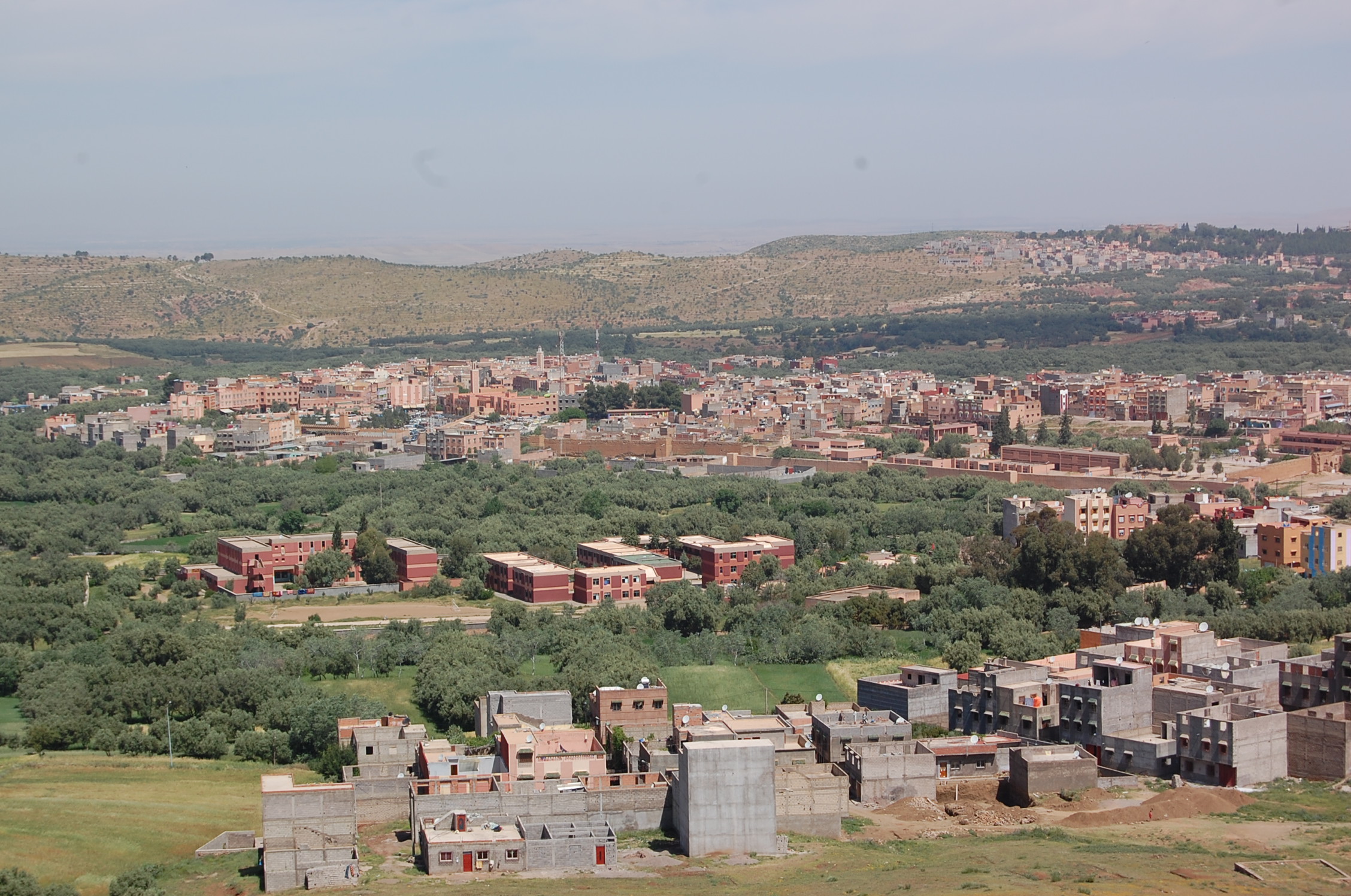
Marrakech – Morocco’s Ministry of Youth, Culture, and Communication has announced plans to restore the historic site of Dar Moulay Hachem in Demnate, transforming it into a center dedicated to promoting Jewish cultural heritage.
According to converging sources, the initiative is part of a broader national effort to preserve Morocco’s Jewish history. The new center will be located adjacent to a recently renovated Jewish cemetery, despite Demnate no longer having a Jewish population.
Moroccan officials situate the project within a comprehensive national strategy to preserve Jewish memory and heritage in Morocco.
They noted that the initiative builds on years of restoration work on Jewish cemeteries and synagogues across the country and reflects the constitutional recognition of the Hebrew component as a core element of Moroccan identity.
They also pointed to several elements that demonstrate Morocco’s consistent policy toward Jewish heritage: the role of Jewish royal advisor André Azoulay, the work of the royal commission for the restoration of Jewish cemeteries, and the establishment of museums, synagogues, and Jewish cultural events.
Since 2010, at least 167 Jewish burial sites and shrines have been restored nationwide, reversing decades of neglect in both small towns and major cities.
Morocco’s pluralism is written in restored stone
Morocco’s 2011 Constitution explicitly recognizes the “Hebraic” tributary as part of the national identity alongside Arab, Amazigh, Saharan-Hassani, African, and Andalusian components, framing Judaism as indigenous to Morocco rather than foreign.
The state has elevated Judeo-Moroccan memory in public culture through several initiatives. Casablanca hosts the Museum of Moroccan Judaism – the only dedicated Jewish museum in the Arab world – while Essaouira’s Bayt Dakira (“House of Memory”) functions as a living archive and cultural center tied to the historic Slat Attia synagogue.
The 2021 US State Department report has noted a royal initiative to renovate “hundreds of synagogues, cemeteries, and heritage sites,” confirming this as ongoing public policy, not isolated projects.
At the diplomatic level, Rabat draws a clear distinction between its commitment to protecting Moroccan Jews/Jewish heritage and its position of full solidarity with Palestine.
The King’s chairmanship of the Al-Quds Committee and the Bayt Mal Al-Quds Agency funds social, health, and education projects in East Jerusalem and Gaza – illustrating solidarity with Palestinians while maintaining protection of Jewish life at home.
Moroccans uphold religious tolerance while rejecting colonial domination
Public opinion reflects the same distinction many Moroccans make in everyday language: respect for fellow Moroccan Jews and their heritage, with sharp and often visceral criticism of Israeli government policies.
Across social discourse, media, and even Friday sermons, Israel’s conduct in Gaza and the occupied Palestinian territories is frequently described as brutal, expansionist, and dehumanizing, characterized by apartheid-like segregation, collective punishment, and systemic oppression of Palestinians.
Many Moroccans denounce Israel’s actions as colonial, racist, and morally bankrupt, arguing that the occupation – through committing genocide in Gaza and other war crimes – violates every principle of justice that Judaism itself upholds.
This public stance stems from a clear conceptual separation between Judaism and Zionism. The former is seen as one of the three Abrahamic faiths deserving deep respect, sharing with Islam and Christianity a foundation of ethical and spiritual kinship.
The latter, however, is widely viewed as a political ideology rooted in territorial expansion, dispossession, and ethno-national supremacy.
Thus, while Moroccan society honors its Jewish citizens and proudly preserves synagogues, cemeteries, and cultural sites as part of its national identity, it continues to reject the normalization of oppression – refusing to equate respect for the Jewish religion with Israel’s unethical and violent policies.
For Moroccans, being anti-Israel does not mean being anti-Semitic. The distinction is both moral and historical: criticism of Israel’s occupation and apartheid practices stems from opposition to injustice, not hostility toward Jews or Judaism. In this sense, Moroccans reject any conflation between political dissent and religious hatred.
They also see themselves as heirs to a civilization that sheltered Jews during persecution and continues to safeguard that memory today. To them, opposing Israel’s violent policies is an act of conscience, not prejudice – a reaffirmation that justice, not blind alignment, defines Morocco’s moral identity.