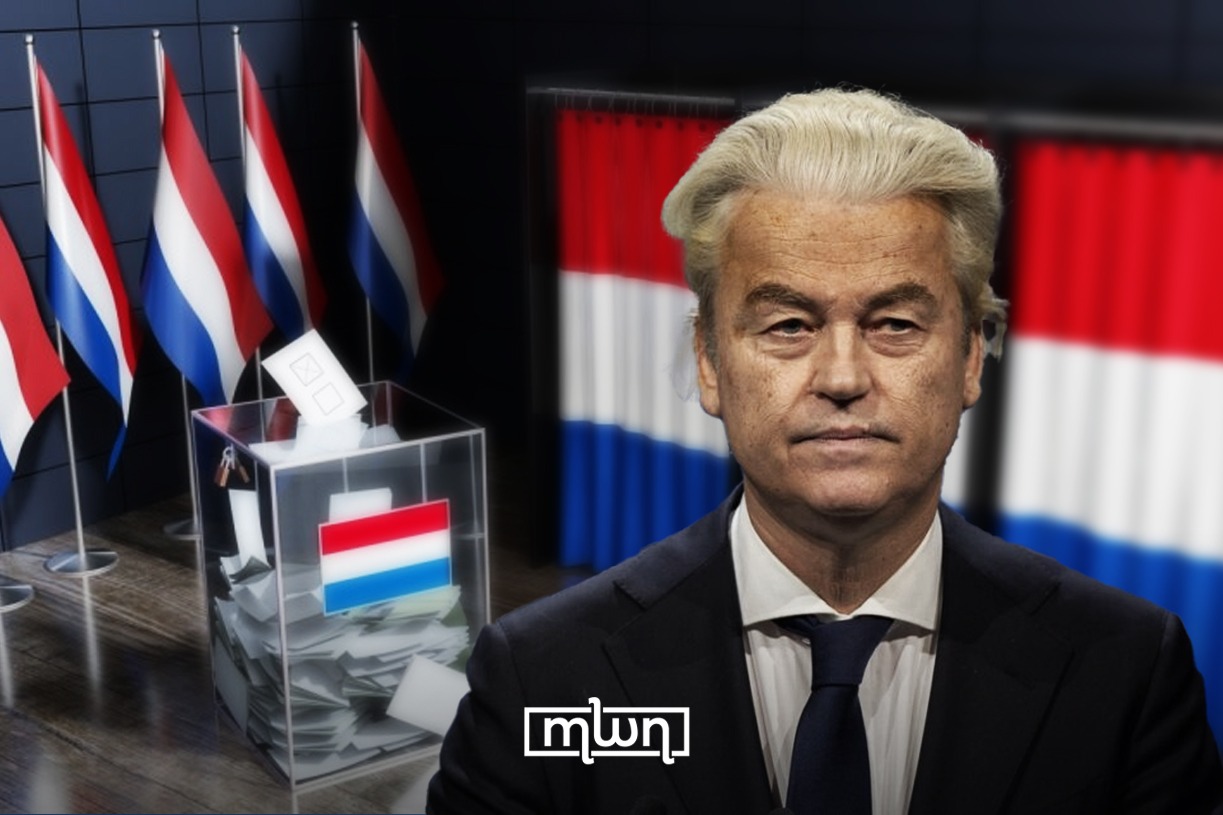
The Netherlands held elections yesterday to fill its 150-seat House of Representatives. Following a government coalition collapse in June, voters chose among twenty-seven parties. However, it is expected that no more than fifteen parties will win at least one seat in the new parliament and become eligible to be part of a governing coalition. The potential alliances and coalition pairings are both fascinating and perplexing.
Early results: A national exit poll by NOS of 80,000 people taken at polling stations around the country suggests the center-left D66 party, whose source of electoral support is among the urban and college-educated, is on pace to win 27 seats, making them the biggest party in the new parliament. The poll puts the far-right Party for Freedom (PVV) in second place with 25 seats (down from 37) and the center-right VVD in third with 23 seats (down one).
These results indicate more drama for Dutch politics in the near term. But the political center is alive and well, given the apparent success of both the D66 and center-right Christian Democratic Appeal (CDA) parties.
For the past decade, momentum in Dutch politics has come from relatively new parties and leaders advocating for a host of issues, from agricultural regulation reform (Farmer-Citizen Party, BBB) to cultural identity/migration issues (Party for Freedom, PVV). Ongoing drama that began during the 15-year supremacy of the People’s Party for Freedom & Democracy (VVD), began to fade.
And then there is 62-year-old Geert Wilders. Founder and head of the PVV, Gilders is an omnipresent force in Dutch politics and in the Dutch media. He entered the Dutch parliament back in 1998, when Bill Clinton was in the White House and the euro had yet to become an actual currency. The momentum of the political far-right and Dutch nationalism has fractured and, in many ways, moved on from Wilders.
Political Dealignment
The frustration among Dutch voters may echo, perhaps, that of other EU member nations whose voters may think about immigration, but are more focused on pocketbook issues like inflation and housing costs. Germany’s 2025 election in February ushered in a new conservative leader for the center-right CDU party, Friedrich Merz, who challenged the nation’s long-standing assumptions about economic, tax, and social welfare policies.
In Spain, Catalan political leadership has recently decided to sever parliamentary ties with Prime Minister Pedro Sánchez’s Socialist minority government. With no agreement on a formal national budget, the government in Spain is continuing via autopilot.
Political dealignment is en vogue in Europe, as large numbers of voters abandon one political party (often a long-established one), but don’t necessarily affiliate themselves definitively with a new one. In France, Emmanuel Macron established the En Marche party in 2016. The party’s fortunes have faded significantly since it won an outright majority of 308 seats in the 2017 French parliamentary elections.
A changing Netherlands
A total of 316,000 migrants from other countries arrived in the Netherlands in 2024. Almost half of migrants came from countries outside the European Union (EU), according to Statistics Netherlands. The population of the Netherlands (18 million) grew by a modest 103,000 people in 2024. Key components of the Dutch economy rely on migration and foreign-born labor, including agriculture, tourism, manufacturing, and healthcare services.
Whether the charismatic D66 party leader, 38-year-old Rob Jetten, becomes the country’s next prime minister or not, Dutch citizens of all ages will encounter a demographic trend that will inform domestic policies for years to come: The Netherlands needs migration.
As Statistics Netherlands put it, “As in every year since 2022, the death rate has exceeded the birth rate. Now, population growth is attributable entirely to migration …”
But the data also indicate that skilled labor immigration has fallen as Dutch immigration policies have tightened recently. In 2024, about 16,000 specialized labor migrants (often well-paid workers) entered the Netherlands from countries outside the EU. This represents a decline of twenty-six percent compared to 2023. Sixteen percent of Dutch citizens were born outside the country, a similar percentage to that of the United States.
Dutch leaders will likely balance economic growth, government revenue and social service spending issues alongside shifting political realities in the coming years. The complexities of government spending will only accelerate as the EU population ages: One in five EU citizens is 65 or older.
Election results will likely also mean that the tone of the immigration reform debate in the Netherlands will change. As a recent report from the Centre for Economic Policy Research notes, “Another way to improve the skills of the foreign population and accommodate the needs of employers is to integrate and train low-skilled foreign workers who are already present in the country or who want to move there.”
Sixteen years ago, the newly appointed Moroccan-born Mayor of Rotterdam, Ahmed Aboutaleb, told the media of his desire to build bridges of understanding and acceptance in his adopted home city. Those lessons apply to a new generation of Dutch leaders, too.