
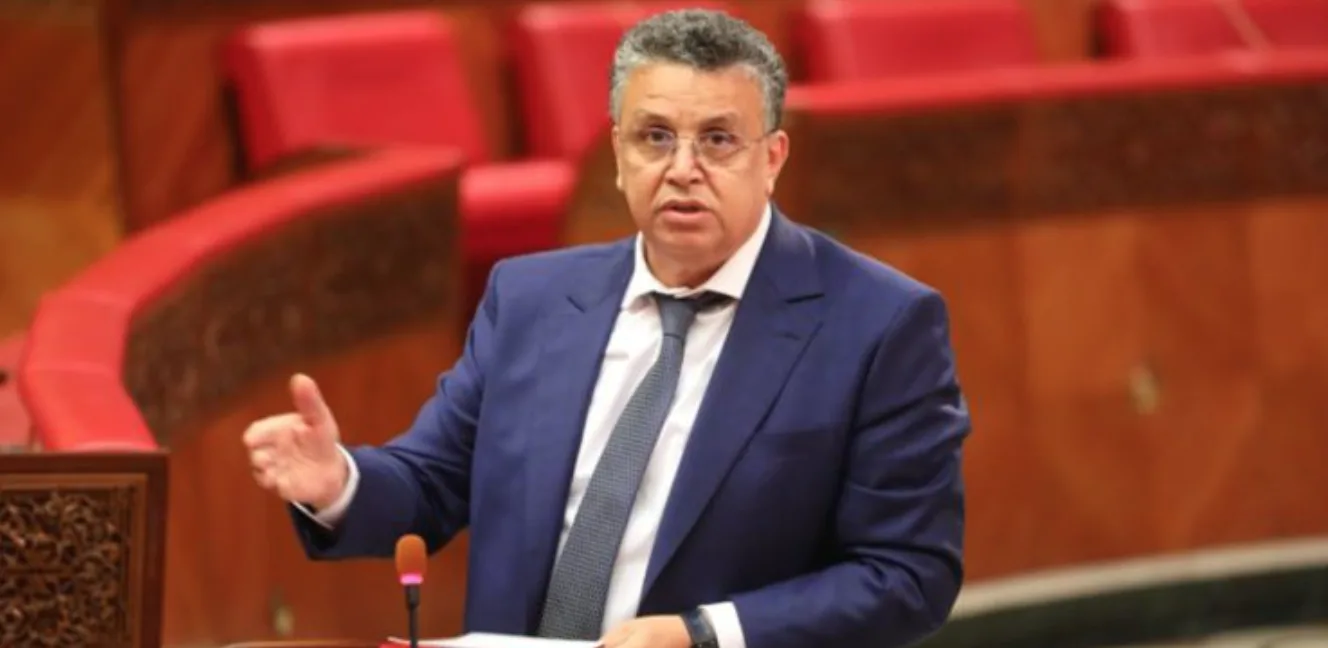
Rabat – During a parliamentary session on Monday, Justice Minister Abdellatif Ouahbi condemned what he described as a national “obsession with divorce,” insisting that marriage and separation are private matters that should not be treated as political or moral issues.
Responding to questions from MPs about the rise in divorce rates, Ouahbi dismissed the debate as an intrusion into citizens’ personal lives.
“If two people want to marry, they marry. If they want to divorce, they divorce. What business is it of ours?” he said, adding, “Do we have to interfere in everything – marriage, children, and people’s private lives?”
The minister pointed out that the majority of divorce cases in Morocco (around 97%) are divorced for discord, meaning they are initiated by women.
For Ouahbi, this statistic does not reflect a social crisis but rather progress in women’s legal empowerment. “Women now have the right to request divorce themselves. Before, they did not,” he said.
Ouahbi also addressed the ongoing discussions on financial settlements and entitlements after divorce, topics that took up a significant portion of discussion during the Family Code (Moudawana) reform sessions.
He acknowledged the need for structural changes to ensure fairness – particularly for women who face economic and legal challenges following separation.
“The problem is not divorce itself, but its consequences,” Ouahbi said. “A woman can live twenty years with her husband and end up receiving MAD 1,000 a month, with two children to raise. She can’t change her children’s school, travel with them, or even make their passports. We need the courage to give everyone their rights.”
Criticizing contradictions in the current situation, the minister questioned the limits of gender equality in practice. “A woman votes like a man, yet she can’t take her child abroad. What kind of democracy is that?” he asked.
Ouahbi’s remarks come amid broader debates over reform of Morocco’s Family Code, a process expected to bring major legal and social changes, especially concerning women’s rights, child custody, and post-divorce conditions.
Although Morocco has been making efforts to reform its laws and reduce gender disparities, the gap between legal progress and lived reality remains wide.
Many women continue to face economic vulnerability and administrative restrictions after divorce, which directly points to cultural norms and bureaucratic barriers that still undermine equality in practice.
Despite political will and reformist discourse, the country continues to struggle in turning legal initiatives into tangible justice for women in their daily lives.