Rabat – UN Envoy Staffan de Mistura has removed decades of ambiguity that Algeria’s regime has long exploited on the Western Sahara dispute.
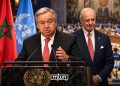
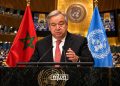
In a press briefing on Resolution 2797, de Mistura emphasized that the newly adopted resolution for Western Sahara explicitly identifies the main parties to the Western Sahara dispute.
“It’s a very detailed resolution – every word was carefully chosen and negotiated. There are several key points: The parties are clearly identified as Morocco, the Polisario, Algeria, and Mauritania,” de Mistura said on Wednesday.
This comes as yet another blow to Algeria’s regime, which has long been reluctant to shoulder its responsibility as a main actor in the dispute, rather defining itself merely as an observer. For decades, Algeria’s regime claimed that a solution to the dispute should be between Polisario and Algeria.
However, Resolution 2797, adopted on Friday last week, stressed the importance of Algeria’s involvement in upcoming discussions without preconditions or delay in order to facilitate a mutually agreed upon political solution under Morocco’s Autonomy Plan as a basis for negotiations.
Resolution 2797 also represents a breakthrough as it puts an end to Algeria and Polisario’s outdated narratives and long-promoted claims of self-determination.
While the resolution includes the term, de Mistura stated that self-determination explicitly references and upholds Morocco’s sovereignty over the region.
“The principle of self-determination is there, as is a clear reference to Moroccan sovereignty,” de Mistura said in the briefing.
He reiterated the resolution’s appeal, calling for a consensus and solution to the dispute.
De Misutra also expressed satisfaction with the adoption of the resolution, describing it as significant as it “demonstrated a renewed international energy and determination to resolve this 50-year-old conflict.”
This energy was something that had never been achieved before, he argued, stressing: “The UN Secretariat is sometimes like a sailing boat: It is the experience to reach a safe destination, but it requires a strong and constant wind- meaning serious engagement by one or more members of the Security Council and beyond.”
The UN envoy recalled the engagement of stakeholders, including the US and all relevant members of the Council, including those who abstained or did not vote.
“Resolution 2797 was the result of proactive engagement by the penholder through Dr. Massad Boulos, Ambassador Mike Waltz, and other members of the council,” De Mistura said, adding that “everyone was, in one way or another, involved.”
End of the road for Algeria’s wishful thinking and evasion
De Mistura recalled the importance of having all parties engaged in the process despite divergences in opinions.
“The resolution provides – and I stress this word – a framework for negotiations. It does not prescribe an outcome, which, to be sustainable, must be the result of negotiations conducted in good faith,” he said.
This comes in response to the Algerian regime’s renewed commitment to stay away from the UN-led political process, as well as in response to Polisario’s threats.
De Misutra also recalled that the UN is awaiting Morocco to expand and update the autonomy initiative as requested and announced in both his address and King Mohammed VI’s recent address.
On Friday, October 31, King Mohammed VI celebrated the adoption of Resolution 2798, emphasizing that two-thirds of UN Member States now consider the Autonomy Plan to be the only framework for resolving the dispute.
“In light of this UN resolution, Morocco will update and detail its Autonomy Initiative, then submit it to the United Nations to serve as the sole basis for negotiation, given that it is the only realistic, viable solution,” the monarch said.
To celebrate the momentum, King Mohammed VI also declared Tuesday that October 31 is a National Unity Day.
In response to a question on whether Polisario is happy about the resolution, de Mistura told a reporter: “You should ask them directly. I would not paraphrase their position.”
He said that the UN will engage them following this resolution, stating that he hopes they will be part of the process.
Algeria, which finances, shelters, arms, and supports Polisario, reiterated its traditional position despite Resolution 2797’s consecration of Morocco’s Autonomy Plan as the irreversible political horizon for settling the Sahara dispute.
Earlier this week, the Algerian Foreign Affairs Minister showed his country’s denial of the momentum, claiming that Morocco has “failed” to make its autonomy plan the exclusive framework for resolving the dispute.
Such engagement in wishful thinking is certainly part of the Algerian regime’s usual approach of dismissing the reality on the ground while clinging to its own deluded claims and shirking its historical responsibility in the dispute.
But with Resolution 2797 having indicated the UN’s unmistakable readiness to close this lingering file once and for all, it remains to be seen how Algeria can keep up this pretence of distance and disinterested observation while fanning the flames of Polisario’s impossible statehood aspirations.