

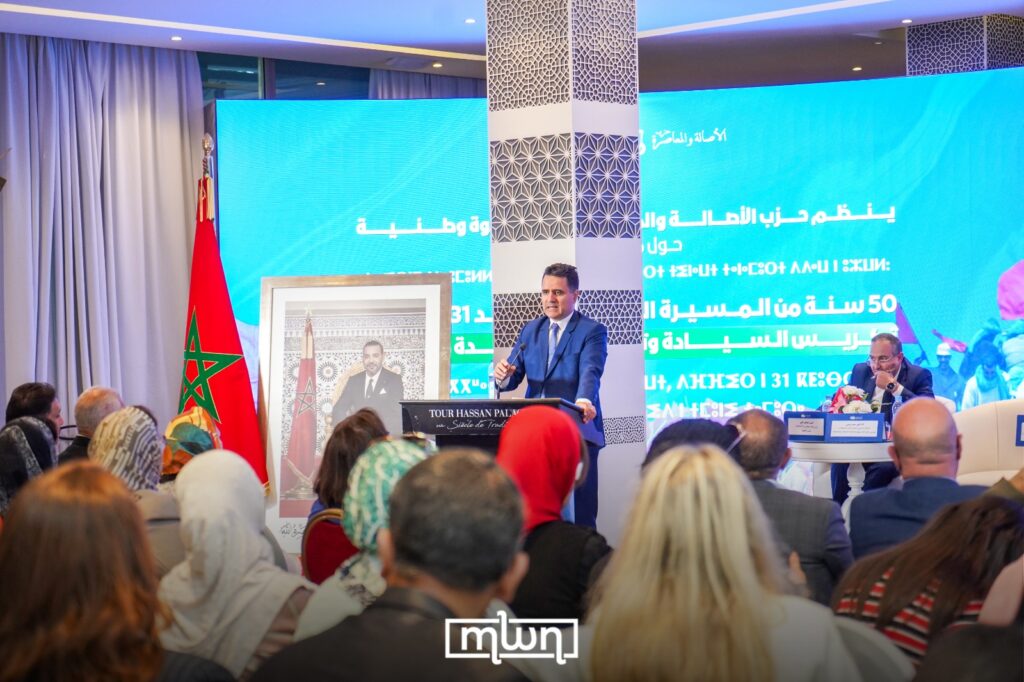
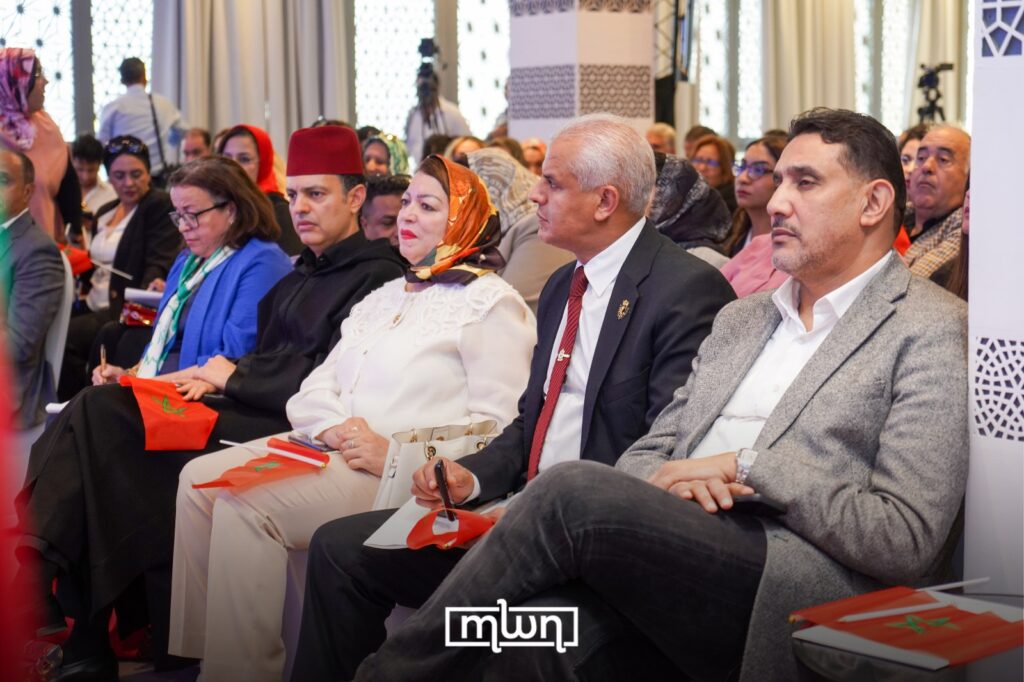
Rabat — The Authenticity and Modernity Party held a national conference Saturday to analyze the implications of UN Security Council Resolution 2797 while commemorating the 50th anniversary of the Green March.
The gathering brought together PAM’s collective leadership, political bureau, and specialists in politics, history, and development to discuss the October 31 resolution, which backed Morocco’s Autonomy Plan for Western Sahara and renewed the mandate for MINURSO, the UN peacekeeping mission in the region.
Analyst describes ‘historic’ UN decision
Political analyst Samir Bennis traced Morocco’s path to UN Resolution 2797 back to King Hassan II’s bold 1974 moves that derailed Spain’s plans for a Sahara referendum. Speaking at PAM’s Green March anniversary conference, Bennis credited the late King’s “political acumen” and international connections for winning the first round against Spain and later Algeria.
Bennis described how Hassan II caught Spain off guard in September 1974 by calling for International Court of Justice involvement, forcing a delay in Spain’s scheduled 1975 referendum.
“Had that scenario unfolded, it would have led to a referendum that ultimately would have kept the Sahara outside Moroccan sovereignty,” Bennis explained. The analyst spoke of the crucial role of Morocco’s UN diplomats, particularly Ahmed Alaoui, who secured Mauritania’s cooperation and swayed the General Assembly vote.
The analyst called the October 31 Security Council resolution “the end of the second round and the end of the political and legal dispute between Morocco and Algeria.” He said the 2020 US recognition of Moroccan sovereignty gave Morocco “the wings and the strong push” to pressure Spain and France into supporting the Autonomy Plan.
With the US, France, Spain, and Britain now backing Morocco’s position, Bennis said only “a few steps remain” to reach a final settlement based on the autonomy framework.
Speaking to Morocco World News (MWN), political analyst Samir Bennis pointed to the resolution’s significance. He said Resolution 2797 breaks new ground as the first UN organ decision to explicitly reference Moroccan sovereignty over the Sahara.
The resolution identifies Morocco’s autonomy proposal as “the only feasible solution” for reaching a mutually acceptable settlement within Morocco’s sovereign territory, according to Bennis.
Bennis described Morocco’s success as a “historic remontada,” noting the North African country has systematically built consensus while deflecting attempts by regional actors to block resolution of the Sahara dispute.
PAM to activate international networks
Mehdi Bensaid, who serves on PAM’s General Secretariat, explained the party’s strategy following the resolution. After King Mohammed VI addressed the nation on the UN vote, Bensaid said PAM moved to brief its members on the diplomatic breakthrough, communicating with them through the conference.
“It was essential for the party to discuss with our activists the developments this issue has witnessed in the last week,” he stated.

Bensaid outlined how PAM will deploy its international reach through both parallel and parliamentary diplomacy. With members serving in international bodies and PAM’s affiliation with Liberal International, the party plans to amplify Morocco’s position in global forums.
He framed the conference as a platform for “serious discussion about new decisions, new terminology, and new horizons” surrounding the Sahara file, bringing in outside experts to broaden perspectives.
“The national cause concerns us all,” Bensaid said, stressing unified effort across Morocco’s political spectrum.
Party official calls for national consensus building
Political Bureau member Younes Maamar said the conference seeks to define Morocco’s path forward following the UN resolution. With sovereignty established as the framework, Maamar called for broad consultation on the autonomy model’s design.
He credited Morocco’s gains in economic development, democratic institutions, and social cohesion over 26 years with bolstering international support. Maamar described PAM’s approach as “a Morocco-to-Morocco exercise” stressing humility, youth engagement, and national unity as the party pursues regional and international partnerships.
Mohammed V University professor Mohammed Zakaria Aboudahab called the resolution a “turning point,” saying the Security Council “recognized the Moroccan Sahara as part of our territorial integrity.”
He noted Morocco is developing “an updated version of the Autonomy Plan” while maintaining vigilance in upcoming regional negotiations involving Algeria, the Polisario, and other parties.
The timing is particularly significant given the recent adoption of UN Security Council Resolution 2797, which extends the mandate of the United Nations Mission for the Referendum in Western Sahara (MINURSO) and reaffirms support for the political process aimed at reaching a lasting and mutually acceptable solution to the decades-long dispute over the territory’s status.