

 Join on WhatsApp
 Join on Telegram
Rabat – A major academic conference at the Faculty of Arts and Humanities examined yesterday Morocco’s decades-long diplomatic efforts on the Sahara issue, where leading policy experts and academics analyzed the path from the 1975 Green March to the recent UN Resolution 2797.
The conference featured four distinguished speakers who examined the Moroccan Sahara from complementary perspectives, all centered on Resolution 2797 and Morocco’s Autonomy Plan, first presented in 2007.
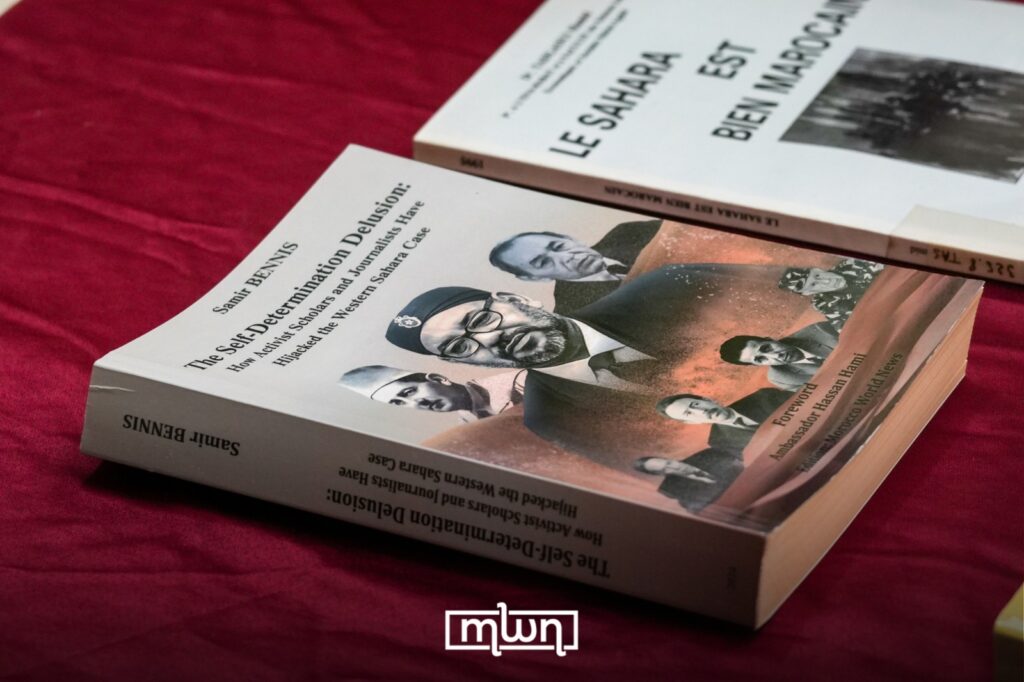
Samir Bennis, former UN adviser and co-founder of Morocco World News (MWN), delivered a comprehensive analysis during his speech at the conference, identifying 2007 as “a pivotal turning point in the history of this issue” when Morocco submitted its Autonomy Plan to the UN Security Council.
During his presentation, Bennis explained that Resolution 1754, adopted twenty days after Morocco’s submission of its Autonomy Plan in 2007, marked the beginning of a gradual transformation in the Security Council’s language and approach to the dispute.
The expert explained how “the Security Council has completely ceased using the term ‘referendum’ in any of its adopted resolutions,” referring to a significant shift in UN discourse in favor of Morocco’s position.
The 2007 resolution welcomed Morocco’s autonomy proposal as “serious, credible, and [one that] can be built upon to reach a political solution acceptable to both parties,” while merely “taking note” of the Polisario proposal, he stressed. This shift came with major political significance in Morocco’s favor, he added.
Bennis described Resolution 2440 from October 2018 as another landmark moment, calling it “the first resolution to include Algeria in Security Council resolutions.” Resolution 2440 implicitly recognized Algeria as a principal party to the Sahara dispute, he recalled, stressing: “This was a major breakthrough for Morocco.”

The former UN adviser detailed Algeria’s attempts to derail Morocco’s progress, explaining how the Algerian regime’s hostility pushed it to “use the human rights card” between 2010 and 2015, particularly following the Gdeim Izik events in November 2010. Algeria even employed “paid voices, whether actors or figures working in the human rights field, to pressure the American administration,” Bennis elaborated.
He concluded his speech by stressing that the adoption of Resolution 2797 represents “the inevitable outcome” of decades of unprecedented political efforts by Moroccan diplomacy and reflects “a firm conviction among Security Council members that there will be no solution to this dispute except within the framework of Moroccan sovereignty.”
University president speaks of national significance
In an interview with MWN on the sidelines of the event, the President of Moulay Ismail University Aboubakr Bouayad explained the conference’s timing and significance.
“This conference coincides with three national occasions: the anniversary of the Green March, Unity Day, and Independence Day,” Bouayad told MWN.

He noted that the gathering provided “an opportunity for a cross-pollination of ideas and to hear from experts in this field” who discussed Resolution 2797, which he described as “a victory for Moroccan diplomacy that enshrines autonomy under Moroccan sovereignty.”
Bouayad stressed that the conference offered researchers a valuable platform to celebrate what he called the triumph of Moroccan diplomacy under the leadership of King Mohammed VI.
Dean stresses Autonomy Plan’s international recognition
For his part, the Dean of Meknes’ Faculty of Arts and Humanities, Mohammed Larouz, told MWN that hosting the conference was “both an honor and a privilege for us to hold a conference on the national cause, the Moroccan Sahara, to address this significant occasion within this institution.”
Larouz described Morocco’s Autonomy Plan as “a visionary and pragmatic approach to resolving the regional dispute over the Moroccan Sahara within the framework of Morocco’s full sovereignty and territorial integrity.”
The plan has earned growing international recognition as “a serious, credible, and realistic solution,” he noted, adding that the Moroccan Sahara represents not only a political cause but also “a national commitment and development priority” under the leadership of King Mohammed VI.
Expert details Autonomy Plan implementation framework
Also speaking to MWN, university professor Rachid Benomar discussed the legal framework for implementing autonomy, drawing from King Mohammed VI’s October 31 speech, which affirmed that “the autonomy or UN Resolution 2797 represents a qualitative leap in the path of territorial unity.”
“There is international recognition of Morocco’s sovereignty over its Sahara through autonomy,” Benomar said, noting that “autonomy is a mechanism of self-determination” that has demonstrated Morocco’s good faith at the UN.
Benomar explained that this qualitative leap must be accompanied by amendments to Morocco’s 2007 proposal, noting: “These amendments fall at the heart of the legislation that Morocco has enjoyed since the 2011 constitution to the present day.”
He revealed that Morocco is determined to pursue constitutional amendments incorporating autonomy and modifications to electoral laws, with “the electoral system in the autonomy region deriving its legitimacy from the organic law that will be in the constitution.”
Historian links Green March legacy to modern achievements
Mohamed Zine El Abidine El Hossaini, a researcher in history and civilization, spoke to MWN about the transition from the late King Hassan II’s achievement of the peaceful Green March to the successes under King Mohammed VI’s reign.
His analysis was grounded in documents and manuscripts establishing Morocco’s historical rights to the territory, while outlining the peaceful nature of the Green March itself.
He put forward recent achievements, particularly the growing international recognition through consulate openings in Laayoune and Dakhla. These diplomatic gains have culminated in Resolution 2797, which represents a significant milestone in Morocco’s efforts to solidify its sovereignty over the Sahara region, he explained.

As Morocco moves forward with implementing the internationally-recognized Autonomy Plan under its sovereignty and territorial integrity, the conference concluded, the Moroccanness of the Sahara is no longer only a political cause. It is now also a national commitment and priority for development, with the kingdom eager to reaffirm its continental depth and regional leadership through transformative development projects in its southern provinces.