 Join on WhatsApp
 Join on Telegram
Marrakech – At a time when global industries are scrambling to secure the minerals that will define the next century, Morocco opened the 2025 International Mining Congress & Exhibition (IMC) with a message that resonated far beyond the walls of the conference hall: Africa is not simply rich in minerals, it is indispensable to the world’s future, and it is ready to redefine its place in the global order.
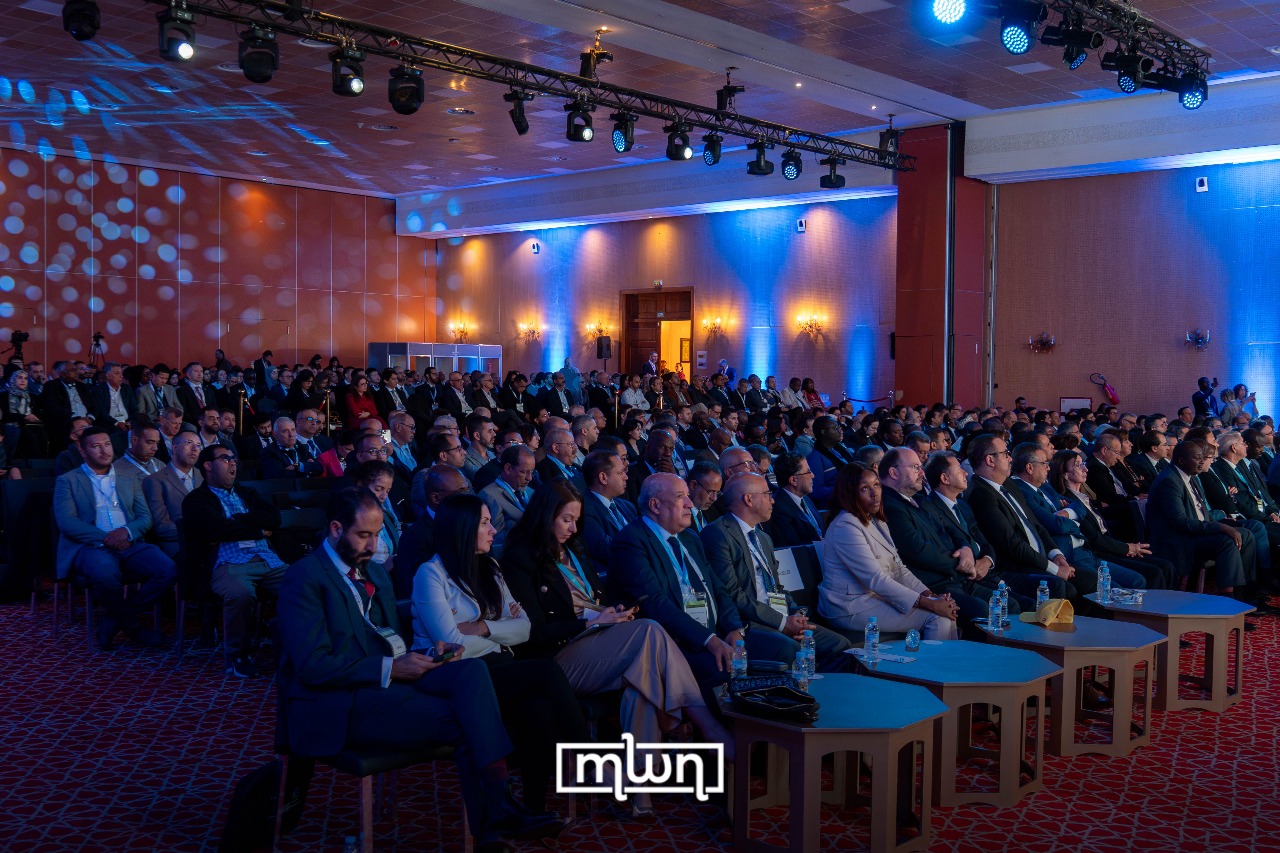
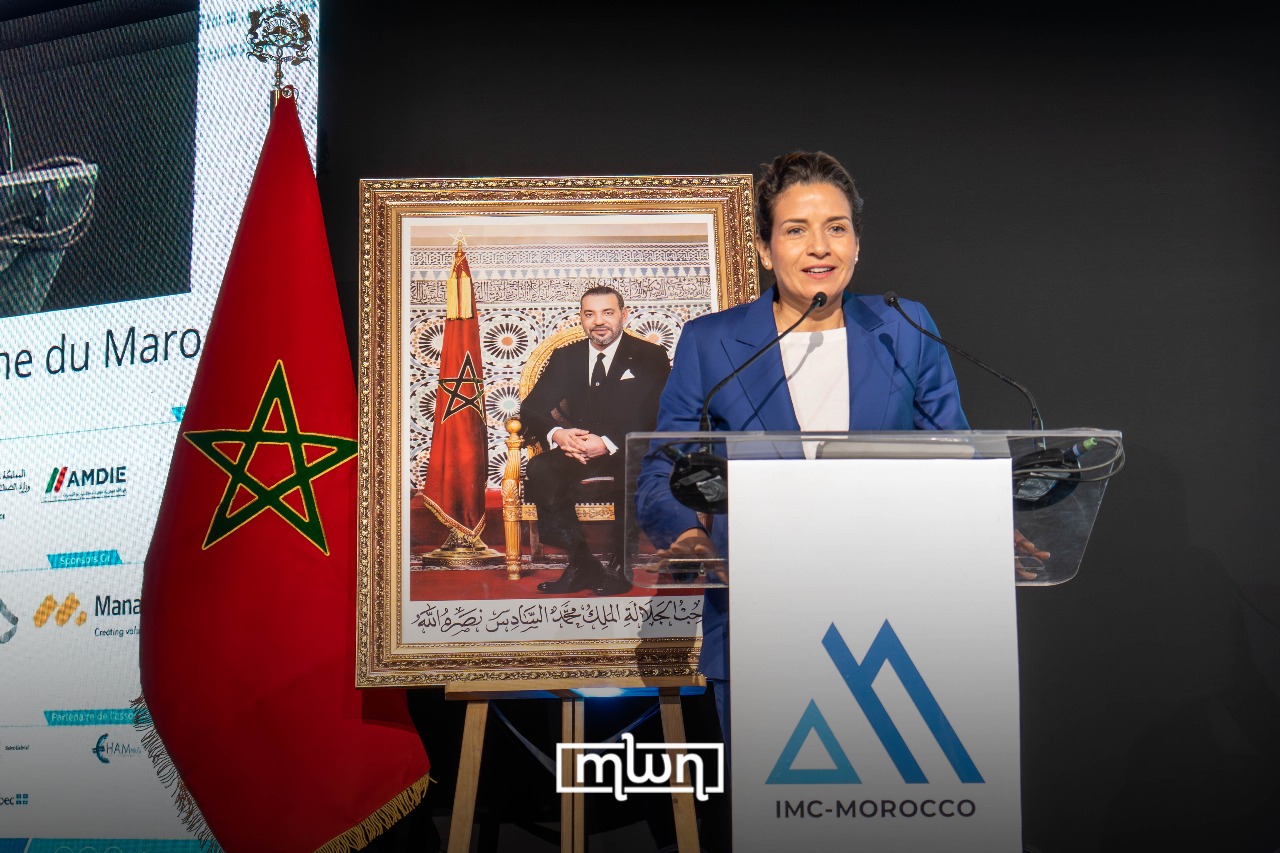
Ministers, industry leaders, and international delegations gathered in Marrakech, Leila Benali, Morocco’s Minister of Energy Transition and Sustainable Development, delivered a speech that was both a strategic warning and a continental call to action.
Her remarks offered a rare blend of scientific clarity, geopolitical realism, and continental ambition, presenting Africa as the foundation of the global energy transition, yet one that refuses to remain undervalued.
Benali opened with an unexpected, but powerful point: the timeline of the Earth does not match the timeline of humanity.
Minerals form over millions of years through processes, hydrothermal circulation, metamorphism, sedimentation, that are slow, methodical, and unalterable.
The global economy, on the other hand, no longer moves at a human pace. Supply chains evolve in months.
Technologies can become obsolete in a single year. And global demand for critical minerals is rising faster than any geological process can replenish them.
This contrast, she added, has created a unique tension in modern history. The quiet force of geology now collides with the frantic acceleration of industry. At the center of that collision, stands Africa.
A harsh paradox
For Benali, the world’s dependence on minerals such as cobalt, manganese, graphite, copper, lithium, phosphates, and rare earth elements is not a distant abstraction, it is the new global reality.
“Never before has the world needed strategic minerals as much as it does today,” she stated. “Without them, there are no batteries, no electric vehicles, no hydrogen, no data centers, no renewable energy, no modern industry.”
Critical minerals are no longer just commodities; they are the architecture of global competitiveness and national security.
Yet, as Benali pointed out with striking candor, Africa remains trapped in its long-standing paradox: the world depends on African minerals, but the continent captures only fragments of the value those minerals generate.
Millions still lack reliable access to energy. Many African economies remain vulnerable to commodity volatility. Regulatory systems across the continent often move at different speeds, leaving producers and investors navigating complex landscapes.
The implication was clear: geological abundance does not automatically translate into prosperity or power.
To bridge that gap, Africa must rethink not what it possesses, but how it negotiates, transforms, and governs it.
“The world depends on our minerals, yet we do not fully benefit from their value,” she said a line that encapsulated the continent’s frustration, but also its emerging strategy.
Morocco’s modern mining sector
Morocco took the stage not just as a host but as a case study. Over the past decade, the country has positioned itself as Africa’s most attractive mining jurisdiction, and Benali made it clear that this was the result of structural reforms, not geography.
Benali recalled Morocco’s digitalization of the national mining cadaster, making Morocco one of the few African nations to transition entirely to a transparent, modern registry.
She also talked about a major amendment of the mining law, designed to harmonize Morocco’s regulatory environment with global best practices and anticipate shifts in the mineral economy.
The minister further unveiled the fa7m.ma site, an unprecedented digital platform being deployed in Jerada to formalize and modernize small-scale miners.
These reforms demonstrate Morocco’s understanding that mining today is no longer just about extraction. It is about governance, information systems, and technology; the elements that allow countries to climb toward higher-value segments of global supply chains.
For his part, Mohamed Cherrat, president of the Moroccan Federation of Mineral Industry (FDIM), said that under the leadership of King Mohammed VI, Morocco’s mining sector has become a cornerstone of national sovereignty and sustainable development.
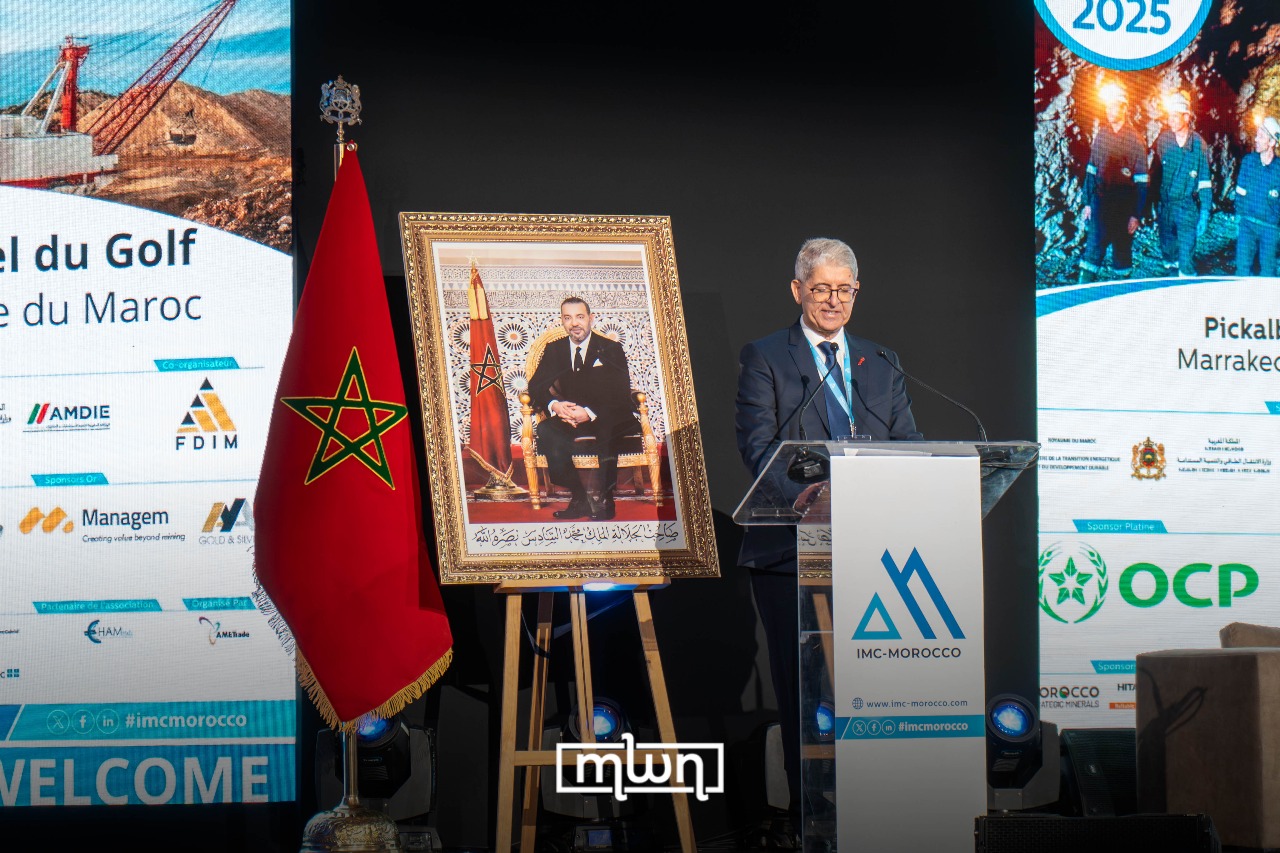
“Our mineral resources directly and indirectly support major industrial sectors and strengthen Morocco’s production capacity amid global energy, technological, and geopolitical conditions,” he said, on Morocco’s mineral wealth.
But Benali insisted that Morocco’s success is not a solitary mission. “No country can advance alone or adapt alone to global transformation,” she said.
The complexity of new value chains, the speed of technological change, and the global nature of the energy transition demand collective intelligence, not isolation.
The ‘African genius’
One of the strongest lines of her speech came when she shifted the conversation from Morocco to Africa as a whole.
The past year, she said, has seen unprecedented collaboration among African nations, a sign not only of institutional maturity but of a growing realization that the continent must negotiate its interests collectively.
The fragmentation of African mineral strategies has historically weakened the continent’s bargaining power – but the global context is shifting.
With major economies aggressively competing for mineral access and secure supply chains, Africa’s unified voice is becoming not only relevant, but necessary.
Benali framed this not as an aspiration, but as an ongoing movement rooted in the continent’s own intelligence.
“Allow me to salute the African genius,” she said. For Benali, African genius is not abstract optimism; it is the capacity of African nations to analyze global power shifts, design joint strategies, and speak from a position of confidence rather than concession.
Could IMC 2025 be a quiet pivot point?
Backed by support from Morocco’s Ministry of Energy Transition, the Ministry of Industry and Commerce, and AMDIE, IMC 2025 was already billed as a major event – but Benali’s speech reframed it as something much more consequential.
Marrakech became a stage where Africa presented its new posture: one of negotiation, coordination, and strategic ambition.
The message that echoed through the Congress was unmistakable: Africa is not waiting to be invited into the global mineral economy; it is defining it.
And Morocco, positioned as a technological and industrial hub, intends to serve as both catalyst and gateway.