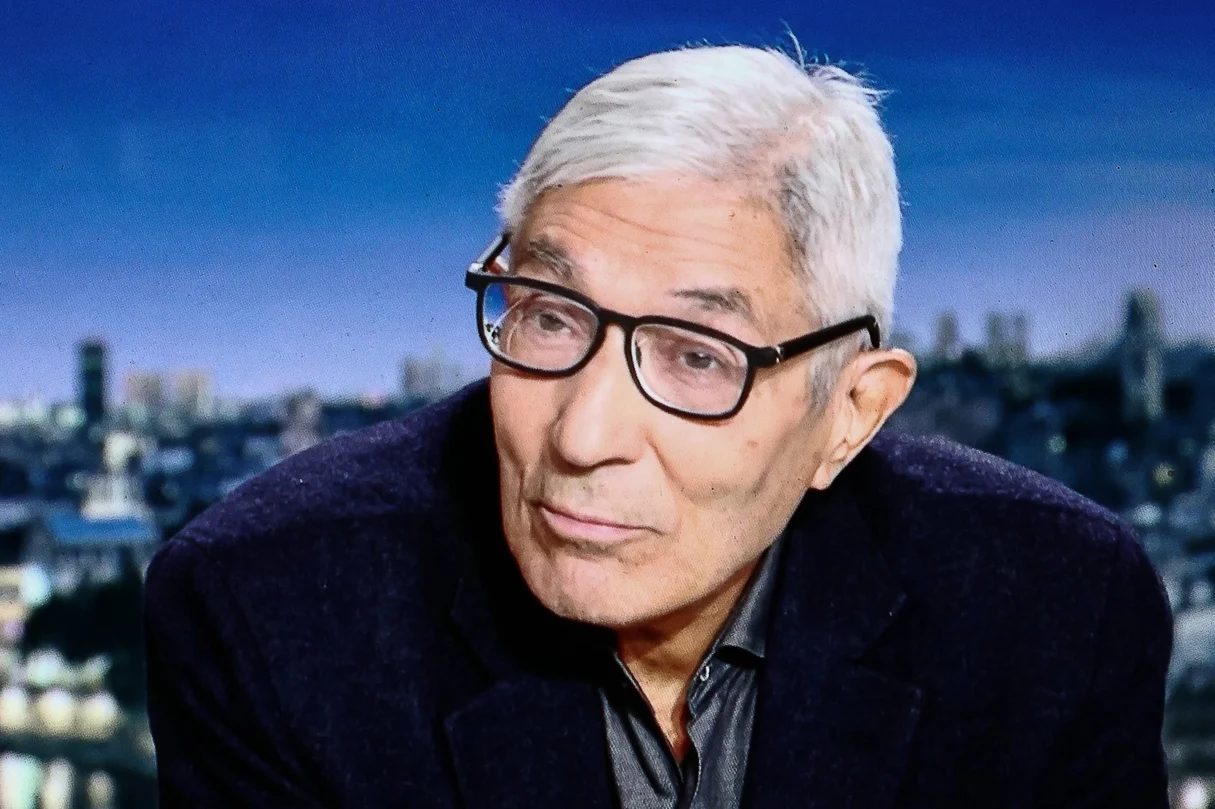
Marrakech – Franco-Algerian writer Boualem Sansal emerged from Algeria’s penitentiary apparatus Sunday with devastating revelations about his yearlong ordeal, systematically dismantling the junta’s narrative while exposing the vindictive machinations behind his incarceration.
The 81-year-old author made his first public testimony since regaining freedom on November 12. The literary luminary delivered withering testimony linking his persecution directly to France’s recognition of Moroccan sovereignty over Western Sahara.
“I quickly understood that it was France’s recognition of Moroccan sovereignty over Western Sahara and my friendship with Xavier Driencourt, former ambassador of France, that were the cause of this story,” Sansal declared to Le Figaro, unveiling the regime’s calculated vengeance. The writer characterized Western Sahara as “hyper sacred” to Algeria’s authoritarian establishment, describing it alongside Palestine as the junta’s twin “ideological pillars.”
Sansal’s arrest resembled a clandestine abduction rather than lawful detention. He recounted his harrowing arrest upon landing in Algiers on November 16, 2024. “Around 1 a.m., a group arrived: sinister men, dressed half like Islamists, half like neighborhood thugs. They came toward me and pulled out handcuffs,” he told Le Figaro.
Airport authorities subjected him to a Kafkaesque ordeal, detaining him until 2 a.m. before hooding him for transport to undisclosed facilities.
“For six days, I had no status. I was kidnapped. By whom? I don’t know,” Sansal testified, describing his initial incarceration in an empty cell devoid of windows or basic amenities.
Interrogators subjected him to surreal questioning sessions, displaying photographs of former French President Nicolas Sarkozy while demanding explanations for their acquaintance. “They showed me a photo of Sarkozy. ‘Is he your friend? Do you know him?’ I answered that it was a photo from a reception with his wife and me and two or three friends,” he recalled.
‘In prison, our memory empties’
The regime’s systematic dehumanization protocols became immediately apparent. “Being a prisoner is humiliation,” Sansal declared on France Inter. “They search you from morning to night, you’re like a lapdog: ‘Come here, sit there, go there, eat.’ That’s terrible.”
He described the psychological warfare inherent in incarceration: “In a prison, we’re obliged to keep our suffering to ourselves. Prisoners don’t communicate about that, it’s silence. We cry in our cell, in the evening, alone, in our head.”
Algeria’s military apparatus demonstrated its contempt for intellectual discourse through deliberate cultural deprivation. Reading materials remained virtually nonexistent, limited to religious texts in Arabic and deteriorating French volumes “eaten by moths.”
Sansal identified remnants, including Victor Hugo’s “Notre-Dame de Paris” alongside works by Henry de Montherlant and Guy de Maupassant, “two of my favorite authors.”
The regime’s anti-intellectual barbarism extended to writing prohibition. “We need to be with ourselves, it can’t be done in these conditions,” Sansal explained regarding his inability to write, describing the systematic confiscation of his laptop and telephone.
The psychological toll proved devastating: “In prison, our memory empties. We don’t know how to speak anymore,” he testified, struggling to recite Verlaine poetry once memorized perfectly.
International pressure eventually forced tactical adjustments to his treatment. “At first, I was a prisoner like the others,” Sansal recounted. “But faced with reactions in Europe and calls for my liberation, from there, I was like a king.” This preferential treatment included daily showers while other prisoners bathed once every ten days, yet failed to mitigate the fundamental brutality.
The regime’s desperation became starkly apparent during a pre-release encounter with a mysterious authority figure. “He said constantly: ‘In the hypothesis that you’re released, will you continue your criticism of Algeria?’” Sansal recalled. “I said ‘Sir, I’ve never criticized Algeria, I criticize a regime, I criticize people, I criticize a dictatorship.’”
The official’s response revealed the junta’s obsessive paranoia: “You recognized Moroccan sovereignty over Western Sahara. Do you realize the importance of red lines?”
The visitor’s parting warning exposed Algeria’s international isolation: “I hope you’ll pay more attention to what you say. You know, Algeria is hated by everyone, everyone criticizes it.”
‘Algeria is completely isolated’
Sansal confirmed this diplomatic hemorrhaging, noting that “Algeria is completely isolated. On the Western Sahara question, it’s now alone. Even the Sahrawis no longer want Algerian mediation because they say it blocks them and they prefer after all to discuss with Moroccans.”
Russia and China’s abandonment at the Security Council demonstrated the regime’s spectacular diplomatic failure. “Algeria is at the bottom of the abyss,” Sansal concluded with surgical precision, describing the junta’s messianic pretensions crumbling amid global indifference.
The regime’s ideological scaffolding rests precariously on two foundational myths. “It’s with these two subjects that it justifies itself, that it gives itself a messianic, Africanist dimension,” Sansal analyzed, dissecting the apparatus’s psychological architecture. France’s policy shift supporting Morocco’s autonomy plan triggered what he termed “an ontological divorce” between Paris and Algiers.
Despite his brutal treatment, Sansal maintained his commitment to Franco-Algerian rapprochement. “I am since always for reconciliation between France and Algeria,” he declared on France 2. The writer lamented that “sixty years have passed, we’re still using liberation war discourse,” criticizing both governments for perpetuating historical grievances rather than building constructive bilateral relations.
Sansal exposed the regime’s orchestrated campaign against Algeria’s intellectual class, directly linking his persecution to broader authoritarian consolidation. “I felt that at a certain moment, with the arrival of this new regime that immediately showed that recess was over, the power wanted to control society totally to avoid a repeat of the hirak,” he revealed on France Inter.
The writer described how Algeria’s military establishment launched a sweeping crackdown on dissenting voices, transforming the country into an intellectual wasteland where free expression became tantamount to treason. This deliberate suffocation of civil society represents the junta’s desperate attempt to prevent another popular uprising, employing imprisonment and intimidation to silence potential catalysts of democratic awakening.
The regime’s hostility toward creative expression reflects deeper authoritarian pathology, according to Sansal’s devastating assessment. “The regime is very severe with intellectuals in general,” he argued, describing systematic persecution targeting journalists, writers, and artists who dare challenge official narratives.
Sansal labeled this cultural barbarism as institutional policy designed to eliminate independent thought, noting that “around fifty journalists” have been incarcerated in recent years for practicing their profession.
‘I control each of my words’
The governing elite views intellectual independence as existential threat, deploying state violence against those who “remind them of historical truths” or question the regime’s foundational myths. This coordinated campaign against Algeria’s creative class reveals a government terrified of its own people’s capacity for critical thinking and artistic expression.
His liberation came through German intervention rather than French diplomacy – a calculated humiliation for the regime. “If it had been France, the Algerians wouldn’t have accepted it. It would have been interpreted by them as a terrible defeat,” Sansal explained.
President Abdelmadjid Tebboune’s intentional absence from the G20 summit signals continued vindictive hostility toward France. “They had an appointment and he announces he’s not going. It’s an insult,” Sansal observed.
The writer now controls his discourse carefully, protecting remaining detainees and family members from potential reprisals. “I control each of my words,” he admitted on France 2, thinking particularly of French journalist Christophe Gleizes and “several dozen political prisoners.” His measured responses reflect tactical calculation rather than submission: “In six months, I’ll tell you everything,” he promised France Inter listeners.
Sansal plans provocative return to Algeria for retrieving confiscated belongings, viewing this as ultimate vindication. “I must return because when you suffer injustice, you naturally seek reparation,” he declared. “I don’t need money, not even a new trial. Just the fact of going there and coming out, for me that’s reparation.”
The regime’s vindictive persecution spectacularly backfired, transforming a distinguished author into an international symbol of intellectual resistance. Fellow prisoners dubbed him “The Legend” – the nickname he plans adopting for his forthcoming testimonial.
Algeria’s military junta succeeded only in elevating a critic into a globally recognized icon of literary freedom, their authoritarian overreach generating precisely the international condemnation they sought to avoid.