
 Join on WhatsApp
 Join on Telegram
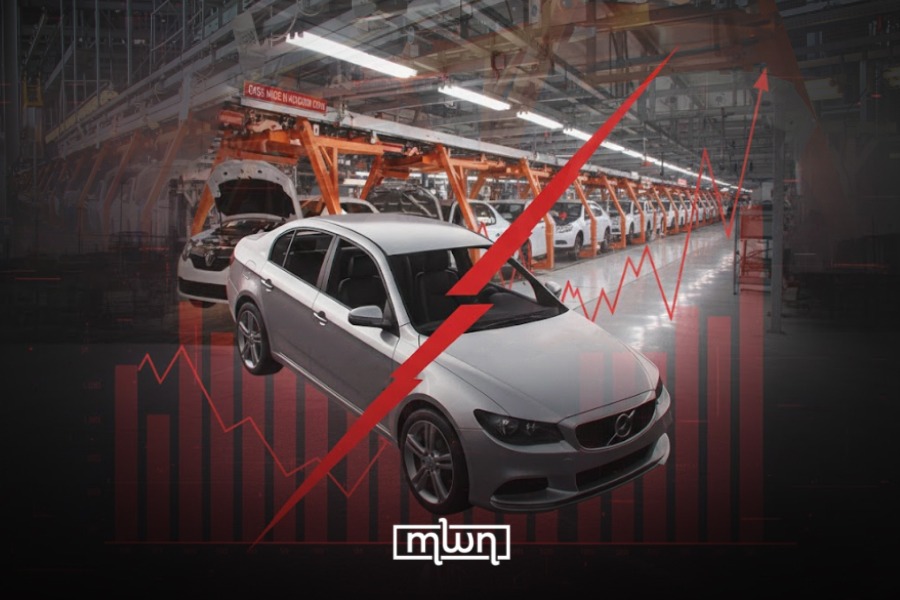
Mohammedia – Morocco’s automotive industry, the country’s largest export sector, recorded an unusual decline in the first nine months of 2025, according to Bank Al-Maghrib’s Monthly Review of Economic, Monetary and Financial Conditions – November 2025.
The report shows that automotive exports fell to MAD 112.2 billion ($12.34 billion) during this period, down from MAD 115.3 billion ($12.68 billion) a year earlier, marking a decrease of 2.7%.
This downturn comes despite continued growth in several other manufacturing activities and stands out as one of the more notable sectoral shifts of the year.
The document highlights a sharp contraction in the vehicle construction segment, which dropped by 14.6% to MAD 43.1 billion ($4.74 billion) after reaching more than MAD 50 billion ($5.50 billion) in the same period of 2024.
This segment has traditionally been a central driver of Morocco’s export performance, and its decline weighed visibly on the sector’s overall results.
The fall occurred while other export categories within the automotive industry showed resilience and, in some cases, continued to expand.
Mixed performance within the sector
Several automotive components recorded positive growth despite the sector’s general slowdown. Cabling exports increased by 5.4% to MAD 42.4 billion ($4.66 billion), reinforcing Morocco’s position as a key supplier of electrical wiring systems.
Exports of vehicle interiors and seats also rose by 7.8%, reaching MAD 7.3 billion ($803 million), while powertrain components increased by 4.8% to MAD 9.3 billion ($1.02 billion).
These increases reveal a shift within the sector, with stronger activity in component manufacturing partially offsetting weaker demand for complete vehicles.
The review notes that other related industrial exports faced difficulties. Electronics and electrical products, which include items linked to automotive production, fell by 7.5% to MAD 12.6 billion ($1.39 billion), with electronic components shrinking by nearly 39% compared to last year.
This decline added pressure on the broader manufacturing ecosystem, although total industrial value added still grew as other branches performed strongly in the second quarter.
Impact on national trade trends
The slowdown in automotive exports contributed to the modest national export growth rate of 3.6% during the first nine months of 2025, a pace that did not match the 9.2% rise in imports during the same period. As a result, Morocco’s trade deficit widened by 17.7% to MAD 259.1 billion ($28.50 billion).
Although strong performances in sectors such as phosphates, agriculture, and aeronautics supported the country’s overall export earnings, the downturn in automotive construction limited the degree of improvement.
These results come at a time when Morocco’s industrial sector continues to expand in other areas. Manufacturing value added increased by 6.9% in the second quarter of 2025, supported by growth in transport equipment, chemicals, and electrical materials production.
The automotive sector’s mixed performance, therefore, contrasts with broader industrial momentum, marking 2025 as a year of divergence within Morocco’s export landscape.
According to the review, automotive exports remain an essential part of the national economy, and the contrasting trends within the sector will continue to be monitored closely in the months ahead.
Read Also: Hirschmann Automotive Opens New Factory in Morocco’s Oujda