 Join on WhatsApp
 Join on Telegram
Marrakech – The 22nd Marrakech International Film Festival showcased the world premiere of “El Sett,” an ambitious biographical film chronicling the life of legendary Egyptian singer Oum Kalthoum.
Director Marwan Hamed and screenwriter Ahmed Mourad presented their 160-minute opus exploring the journey of “Kawkab al-Sharq” (Star of the East) from a small Delta village to global stardom.
The film features actress Mona Zaki in the challenging lead role, supported by an ensemble cast including Sayed Ragab, Ahmed Khaled Saleh, Mohamed Farag, Karim Abdel Aziz, and Ahmed Helmy. United Media Services and Big Time Productions collaborated on the production, aiming to capture the complexity of Egypt’s most celebrated artist.
A life shaped by power, art, and politics
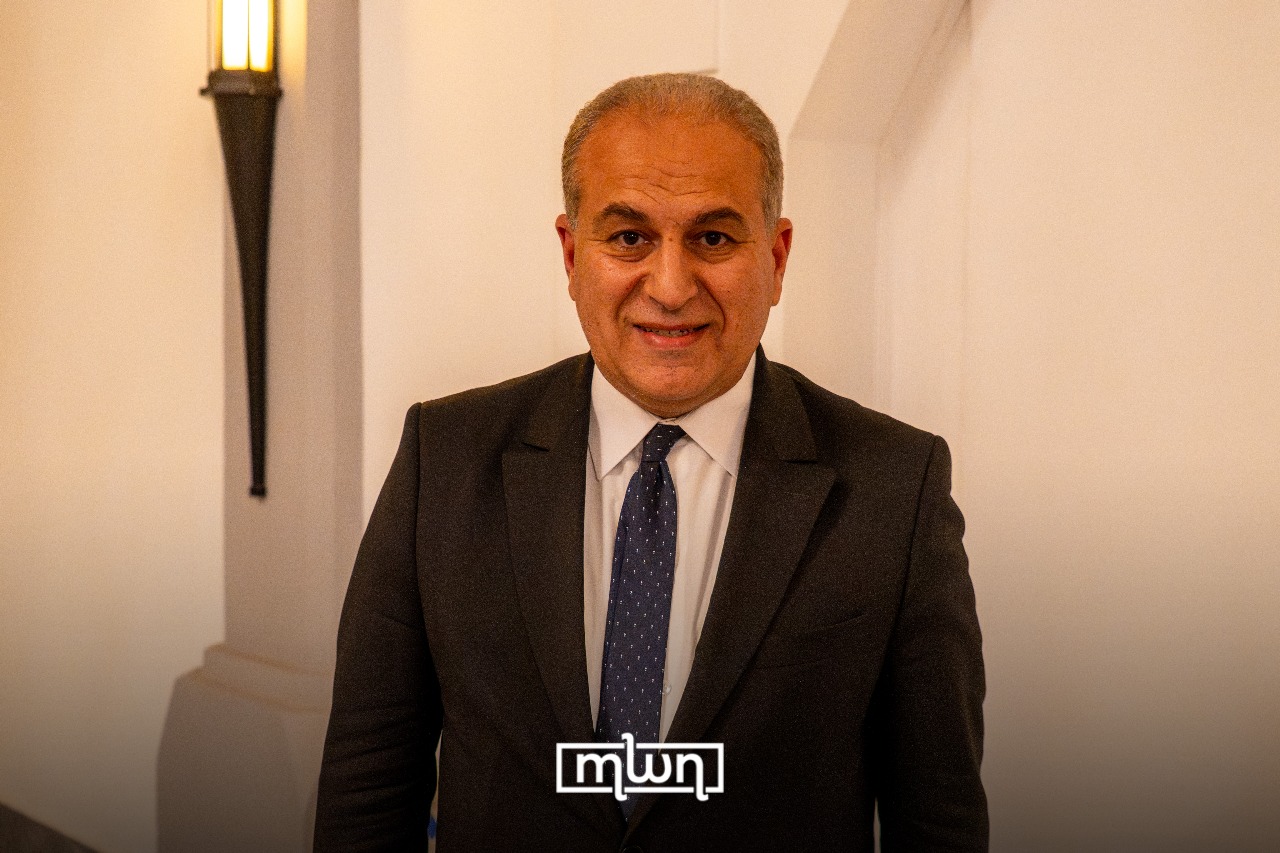
Speaking to Morocco World News (MWN) at the festival, Egypt’s Ambassador to Morocco, Ahmed Nihad Abdel-Latif, explained the cultural significance of the screening.
“I think Oum Kalthoum is the most famous singer that Egypt and the Arab world have witnessed in the 20th century,” Abdel-Latif stated. “She came to Morocco, and she did very important concerts here in 1968, in the late 60s, that were widely attended.”
View this post on Instagram
The ambassador noted Oum Kalthoum’s universal appeal across Arab nations. “Oum Kalthoum does not only belong to Egypt, but she also belongs to the entire Arab world,” he declared. “Having her at the Marrakech Film Festival is a reflection of that.”
Hamed’s directorial approach employs alternating black-and-white and color sequences to create temporal layers in the narrative. The black-and-white segments function as thresholds between past and present rather than mere archival footage. Color emerges during pivotal moments, suggesting vibrations that infiltrate the visual storytelling.

The film opens with Oum Kalthoum’s iconic 1967 Olympia concert in Paris, immediately establishing her international prominence. The narrative traces her origins in rural Egypt, where she performed disguised as a boy to circumvent social restrictions on female performers. These early scenes establish the tension between her extraordinary voice and societal constraints.
Mona Zaki’s interpretation prioritizes evocation over imitation. Rather than reproducing Oum Kalthoum’s exact mannerisms, Zaki embodies the internal density of a woman navigating between superhuman vocal abilities and human vulnerability. Critics observed her approach liberates the film from mere mimicry while preserving the figure’s humanity.
The screenplay addresses previously unexplored aspects of Oum Kalthoum’s life, including her political engagement, syndicate activities, and behind-the-scenes influence.
The film examines her relationships with royal circles, mainly with King Farouk, her tensions with political figures, and her eventual status as a moral pillar of Egyptian society – including her post-Nasser era trajectory after 1952, which was initially marked by caution.
Egypt and Morocco meet through cinema
Ambassador Abdel-Latif reflected on the historical Egypt-Morocco cultural connection through cinema. “Egyptian movies and Egyptian movie stars have been present in Morocco for many, many years,” he observed. “Each Moroccan I meet tells me that they grew up with Egyptian movies.”
The ambassador cited multiple examples of this cultural exchange. Egyptian screen legend Leila Eloui made a dazzling appearance at the 30th Rabat International Author Film Festival three weeks ago.
The Marrakech festival’s opening ceremony also featured a special tribute to Egyptian actor Hussein Fahmy, celebrating more than five decades of artistic achievement. Actress Yousra delivered an emotional homage, commending Fahmy’s singular refinement and his enduring role in dismantling stereotypes across generations.
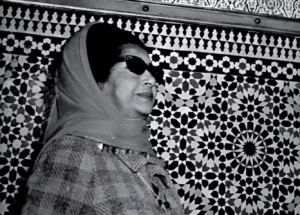
The cultural relationship extends beyond entertainment. Oum Kalthoum’s 1968 Morocco visit created lasting impressions on local audiences. Her performances at Rabat’s Mohammed V Theatre generated unprecedented enthusiasm, with ticket prices reaching MAD 300 ($30). The concerts were broadcast live on the radio and television, drawing massive audiences.
During her stay, Oum Kalthoum toured multiple cities, including Fez, Meknes, and Marrakech. In Marrakech’s Jemaa el-Fnaa square, crowds surrounded her vehicle, lifting it off the ground in their enthusiasm.
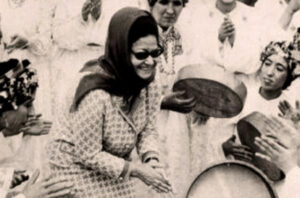
She participated in traditional Amazigh music performances and wore Moroccan caftan during her visits. She also praised Moroccan musical sensibility in subsequent interviews.
“The Moroccan people have music in their veins,” she remarked during a television interview. “Each time I add something new to a song, they recognize it very quickly. The Moroccan people are a people of artists.”
The ambassador expressed commitment to strengthening institutional collaboration between the Egyptian and Moroccan cinema industries. “I want to see how not only can there be participation in each other’s festivals and recognition, but also how we can work towards joint production,” he stated.
Festival programmers positioned “El Sett” as a centerpiece presentation, recognizing its significance within contemporary Arab cinema. The film joins recent Egyptian productions gaining international recognition, including previous FIFM selections featuring prominent Egyptian talent.
Earlier dramatizations still influence comparisons
Critics welcomed the production’s comprehensive approach to biography filmmaking. Rather than conventional chronological storytelling, Hamed constructs circular narratives where each advancement toward fame echoes past experiences. The political dimension receives particular attention without didactic treatment.
The film explores Oum Kalthoum’s feminist legacy through actions rather than declarations. It demonstrates her protection of artistic independence and dignity while challenging male-dominated entertainment industry norms. Her strength appears historical rather than theoretical.
Technical aspects include sophisticated cinematography adapting to narrative shifts. Village scenes employ warm, subdued lighting creating emotional cartography. Cairo sequences feature brighter, more clinical illumination reflecting the protagonist’s urban adaptation challenges.
The production team faced inherent challenges in approaching such an iconic figure. Critics noted occasional hesitation in the camera work, described as inevitable consequence of addressing a personality of Oum Kalthoum’s magnitude. Despite this, the film succeeds in offering fresh perspective on biographical cinema.
Social media response following the trailer release generated mixed reactions regarding Zaki’s physical resemblance to Oum Kalthoum. Some critics compared the production unfavorably to the 1999 television series starring Sabreen. Others defended the casting choice, prioritizing artistic interpretation over physical similarity.
FIFM reinforces Egyptian-Moroccan cultural synergy
The film includes major guest appearances from established Egyptian actors appearing as cameos. Director Hamed previously gained recognition for “L’Immeuble Yacoubian,” which received multiple international festival selections, including Cannes, Berlin, and Chicago.
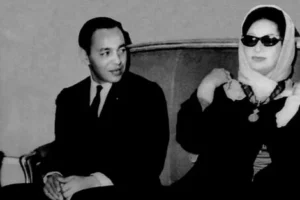
During her Morocco visit in 1968, Oum Kalthoum performed private concerts for King Hassan II and prominent Moroccan families. She learned and performed the religious song “Ya Rassoul Allah” alongside Moroccan musicians, creating memorable cross-cultural musical moments.
Ambassador Abdel-Latif characterized cinema as a “very powerful tool to connect both countries” that “embodies the appreciation they have for each other, really, that is very deep and very emotional.” He added that festivals create opportunities for collaborative productions between the Egyptian and Moroccan film industries.
The festival screening reinforced Morocco’s position as a significant venue for Arab cinema presentations. Recent programming has featured diverse Egyptian productions alongside Moroccan entries at the Cairo International Film Festival, demonstrating reciprocal cultural exchange.
“El Sett” represents ambitious filmmaking attempting to balance legendary status with human complexity. The production avoids hagiographic treatment while respecting Oum Kalthoum’s historical significance. Its premiere at FIFM signals continued vitality in Egypt-Morocco cultural collaboration.
The film opens in Egyptian theaters on December 10, following its Marrakech festival debut. Distribution plans include regional releases across Arab markets, potentially expanding Hamed’s international profile following his previous festival successes.
Through careful attention to political context and artistic development, “El Sett” positions itself as more than entertainment. It functions as cultural archaeology, excavating lesser-known aspects of 20th-century Arab history through its most recognizable musical icon.
The Marrakech premiere confirms the festival’s status as a crucial platform for contemporary Arab cinema. With Egyptian productions gaining prominence alongside international selections, FIFM continues facilitating cross-cultural dialogue through cinematic expression.