


 Join on WhatsApp
  Join on Telegram
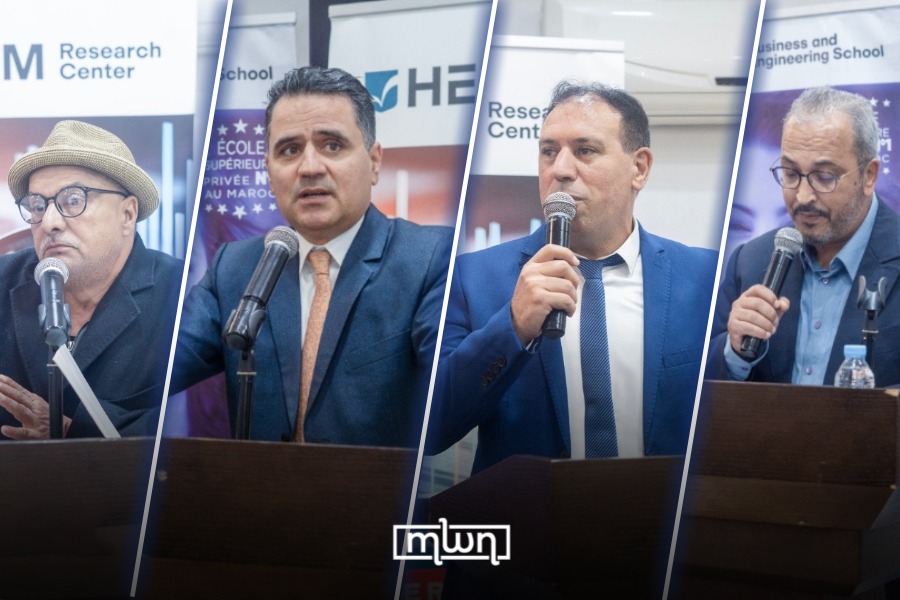
 Rabat – The HEM Institute hosted a high-level symposium yesterday under the theme “The Moroccan Sahara: Strengthening Sovereignty and the Autonomy Option in Light of Resolution 2797.” The event brought together diplomats, academics, and former ambassadors to assess the political and geopolitical implications of the UN Security Council’s latest decision on Western Sahara.
Among the key figures attending was former UN political adviser and co-founder of Morocco World News (MWN) Samir Bennis, whose presence underscored the symposium’s aim of connecting seasoned practitioners with younger voices to interpret the new phase opened by Resolution 2797.
Bennis said the resolution crowns a diplomatic trajectory launched in 2007, when Morocco presented its Autonomy Initiative.
He noted a clear evolution in Security Council language since then, with references to a referendum disappearing as early as 2003 and the Council’s resolutions increasingly affirming that any settlement must fall under Moroccan sovereignty.
He pointed to Resolution 1754 as the first major milestone, followed by a deeper shift in 2018 when the Council identified Algeria as a principal party.
He stressed that Morocco’s parallel diplomatic efforts have helped build broad international support, reflected in Resolution 2797’s adoption without a single opposing vote.
For Bennis, this signals that the autonomy plan is now widely seen as the only credible basis for a political solution.
Looking ahead, he said Morocco should work to reduce Algeria’s influence within the UN’s Fourth Committee and aim to secure a General Assembly resolution removing the Sahara question from the list of non-self-governing territories — a move he described as increasingly within reach given growing international backing.
Speakers stressed that Resolution 2797, adopted on October 31, represents more than a routine renewal. For many, including those addressing the symposium, it marks a decisive shift in how the UN frames the dispute — now describing the Moroccan Autonomy Plan as a genuine and credible basis for a lasting solution.
A new phase after the King’s October 31 speech
Several participants emphasized that the national conversation is now shaped by King Mohammed VI’s October 31 address, described repeatedly during the symposium as a turning point.
Salma Benaziz, Foreign Affairs Committee President, highlighted that the coming phase requires political parties, civil society, and policy actors to articulate concrete proposals aligned with the resolution’s direction, framing the moment as one of collective responsibility.
Hassan Abdelkhalek, former Moroccan ambassador to Algeria, focused on the resolution’s legal and political weight, calling it a historic break from past UN approaches.
He stressed that future negotiations must now be grounded explicitly in the Autonomy Initiative — not merely as a Moroccan proposal, but as an internationally endorsed reference point.
He echoed the King’s insistence that this is not a “victory” to celebrate, but an opportunity to seek a no-winner, no-loser solution that reinforces stability.
Political Systems and International Relations Professor Lahcen Aqartit underscored the role of academic institutions in shaping informed national positions.
He said the symposium forms part of broader national efforts to design a vision for self-administration in Morocco’s southern provinces, noting that Resolution 2797 must be understood through its geopolitical implications — an affirmation of Morocco’s growing role as a regional actor.
The symposium’s call was clear: Morocco has entered a new chapter, and the next steps require aligned national thinking, institutional coordination, and a clear vision for implementing autonomy within the framework of sovereignty.
Read also: Why Does Al Jazeera Keep Showing a Truncated Map of Morocco?


