
 Join on WhatsApp
 Join on Telegram
Safi – Severe flooding that struck the historic old city of Safi has left behind extensive human and material losses, exposing deep structural weaknesses in urban planning, infrastructure management, and emergency response, while raising urgent questions over responsibility and compensation for affected residents and traders.
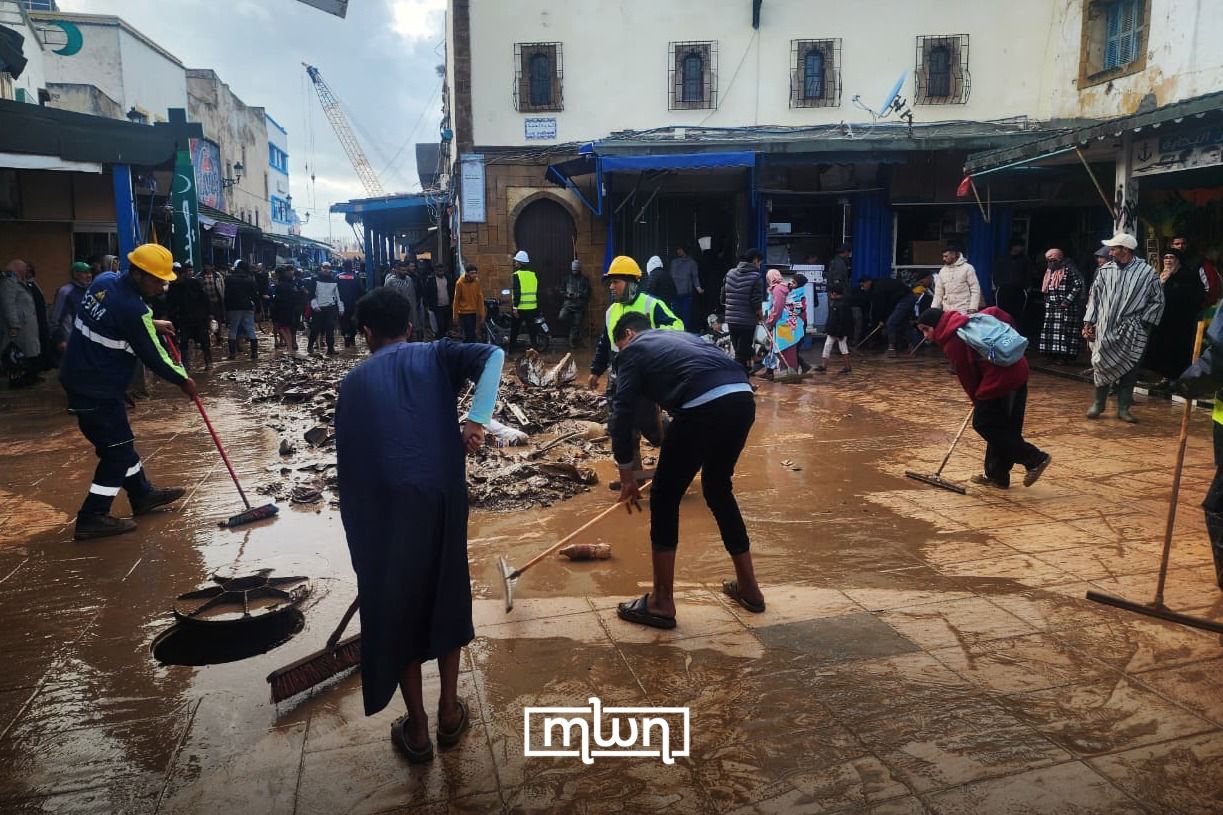
As floodwaters swept through narrow alleys and traditional markets, dozens of shops were destroyed, vehicles were washed away, and residents were forced to confront the disaster with their own means. Many traders reported losses ranging from tens to hundreds of millions of centimes, with some losing their entire livelihoods overnight.
Local testimonies gathered on the ground point to years of neglected drainage systems, clogged sewage networks, and unfinished or poorly managed public works, particularly near the coastal area and the historic Sea Palace, where a concrete structure is widely blamed for blocking the natural flow of floodwaters into the sea and redirecting them back into low-lying neighborhoods.
While civil protection services eventually intervened, residents criticized the delay and the limited effectiveness of emergency equipment, noting that much of the rescue and cleanup efforts were carried out by local youth volunteers using basic tools, often at great personal risk. Several volunteers reportedly lost their lives while attempting to save others.
Beyond the immediate devastation, the floods have reignited debate over past rehabilitation programs launched in 2008 to restore Safi’s old city, for which significant public funds were allocated. Today, many residents question how billions invested in urban renewal failed to translate into resilient infrastructure capable of withstanding heavy rainfall.

Survivors treated at Mohammed V Provincial Hospital described terrifying moments of being trapped between rising waters and collapsing goods, crediting local volunteers for saving their lives. Hospital officials confirmed the mobilization of medical staff and the stabilization of injured patients.
Amid mounting anger and grief, the issue of compensation remains unresolved. Under Morocco’s Law No. 110.14 on the coverage of catastrophic events, financial compensation for victims is contingent on an official government declaration recognizing the floods as a “catastrophic event.” Without such a declaration, access to insurance payouts or the Solidarity Fund for non-insured victims remains blocked.
In this context, the National Association of Lawyers in Morocco has announced plans to file a strategic legal action against the Head of Government, demanding that Safi be officially declared a disaster zone to enable compensation and ensure both individual and collective redress.
As cleanup efforts continue, residents are calling for transparency, accountability, and urgent government action, warning that without structural reforms, continuous maintenance, and effective early-warning systems, Safi’s old city will remain dangerously vulnerable to future natural disasters.