Rabat – Algeria’s regime continues its denial approach amid evolving international momentum and new developments surrounding Resolution 2797 on Western Sahara.
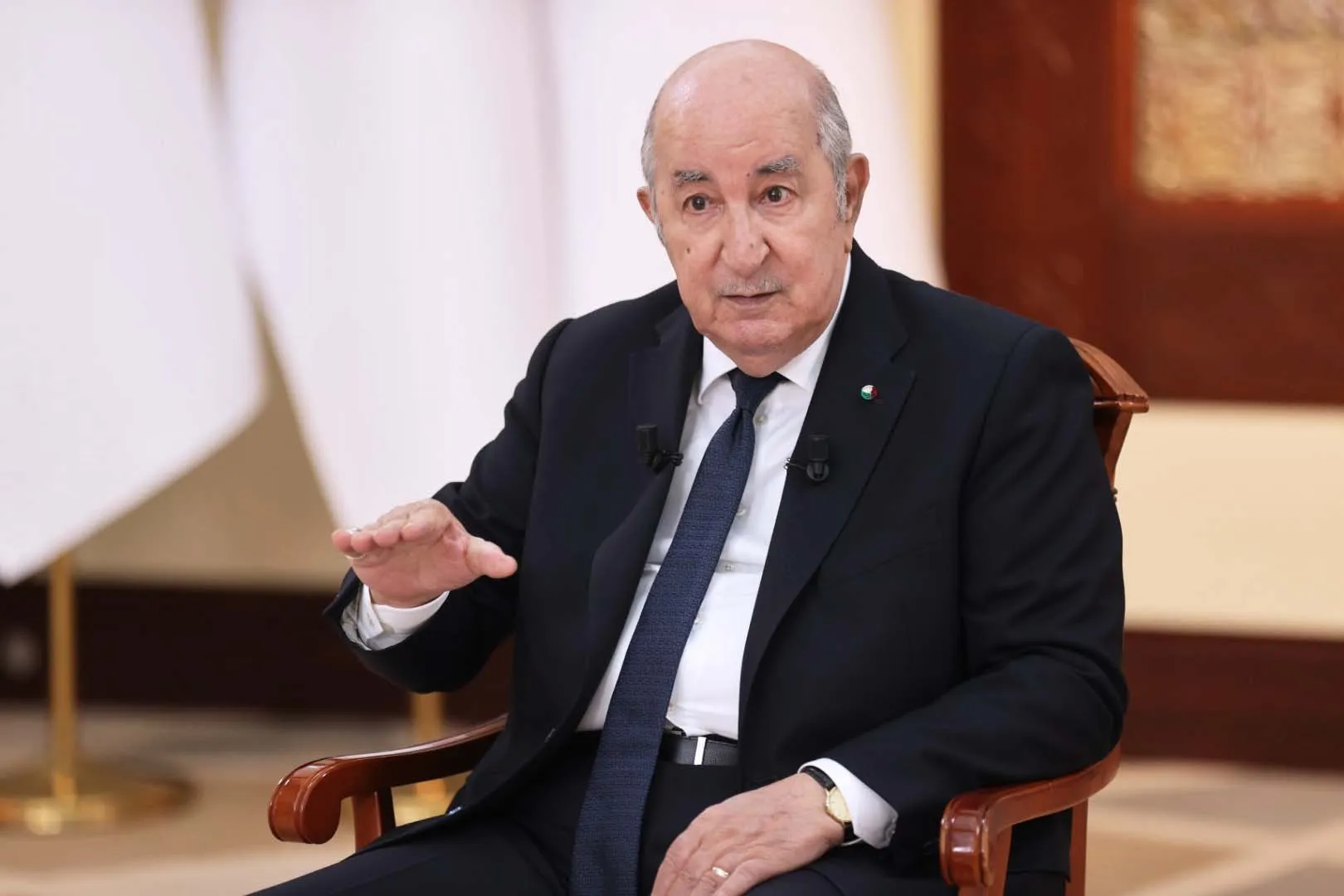
President Abdelmadjid Tebboune conveyed his country’s position in a segment of his long speech to the Algerian parliament on Tuesday, once again claiming that his regime does not interfere in its neighbors’ affairs.
Despite this non-interference claim, he directly renewed Algiers’ position challenging Morocco’s territorial integrity and sovereignty over its southern provinces in Western Sahara.
“We ask that the people be respected… And we told you: when there is a referendum, and our brothers from Saghia el-Hamra and Oued Eddahab, and those who are refugees in neighboring countries, refugees in Spain, when one of them says he wants independence, you respect his decision,” Tebboune said.
The reason for this position is Algeria’s unwavering commitment to the “principle that we should not be ‘more Sahrawi than the Sahrawis,’” he suggested, alleging that it is “unacceptable” for Algeria to stand by while a third country “attempts to suppress an entire people, and questions their land and their natural resources.”
While President Tebboune claims that his country supports “consulting people,” the remarks stand in stark contradiction to Algeria’s decades-long repression of the Kabyle independence movement.
Morocco has frequently responded to Algeria’s regime contradictions by emphasizing how the country finances Polisario’s separatism while representing Kabyles’ self-determination demands.
“You demand self-determination and the decolonization of the Sahara, and you forget to end the colonization of Kabyles, who have been under Algerian occupation since the birth of Algeria in 1962,” Morocco’s permanent ambassador to the UN Omar Hilale said in 2022.
He described the Kabylia region as an open-air prison, where the Algerian regime is depriving locals of their “most basic rights.”
The Algerian government has been reluctant to engage in the UN-led political process in Western Sahara. Recently, the UN process experienced a historic development following the adoption of Resolution 2797, which recognizes Morocco’s Autonomy Plan as the genuine and sole basis for resolving the dispute over the region.
The resolution also identified the main parties to the dispute, citing Algeria among the four parties that have to engage in roundtable talks to contribute to finding an agreed upon pathway to end the dispute.
However, Algiers has unsurprisingly attempted to downplay the significance of the historic vote.
Algerian Foreign Affairs Minister Ahmed Attaf claimed in November that Morocco “failed” to make its autonomy plan the UN’s exclusive framework for resolving the dispute.
Beyond the Sahara dispute, Tebboune insisted in his Tuesday’s speech that Algeria maintains “excellent relations” with Mauritania, claiming his country had never interfered in its internal affairs.
Mauritania is free to choose its partners, he said, portraying Algiers as a respectful and peaceful neighbor that won’t meddle in others’ affairs.
He also claimed Algeria is a stabilizing regional actor that does not interfere in the ongoing Sahel crisis, especially in Niger, Burkina Faso, and Mali.
“As for the Sahel, all of them are sister nations. The Malian people are brotherly to the Algerian people. The same goes for Niger,” he claimed, saying that there are “malicious actors” in Mali and Niger.
Yet President Tebboune’s remarks about Algeria’s supposed stabilizing role in the Sahel came after it faced a series of accusations from many countries, including Mali. In recent months, the Malian government has frequently taken issue with Algeria for being an unfriendly, hostile, interventionist neighbor whose actions it said have contributed to deepening the ongoing crisis in Mali.
Earlier this year, Mali, along with Burkina Faso and Niger, recalled their ambassadors from Algiers, condemning Algeria’s decision to shoot down a drone in April inside Malian territory.