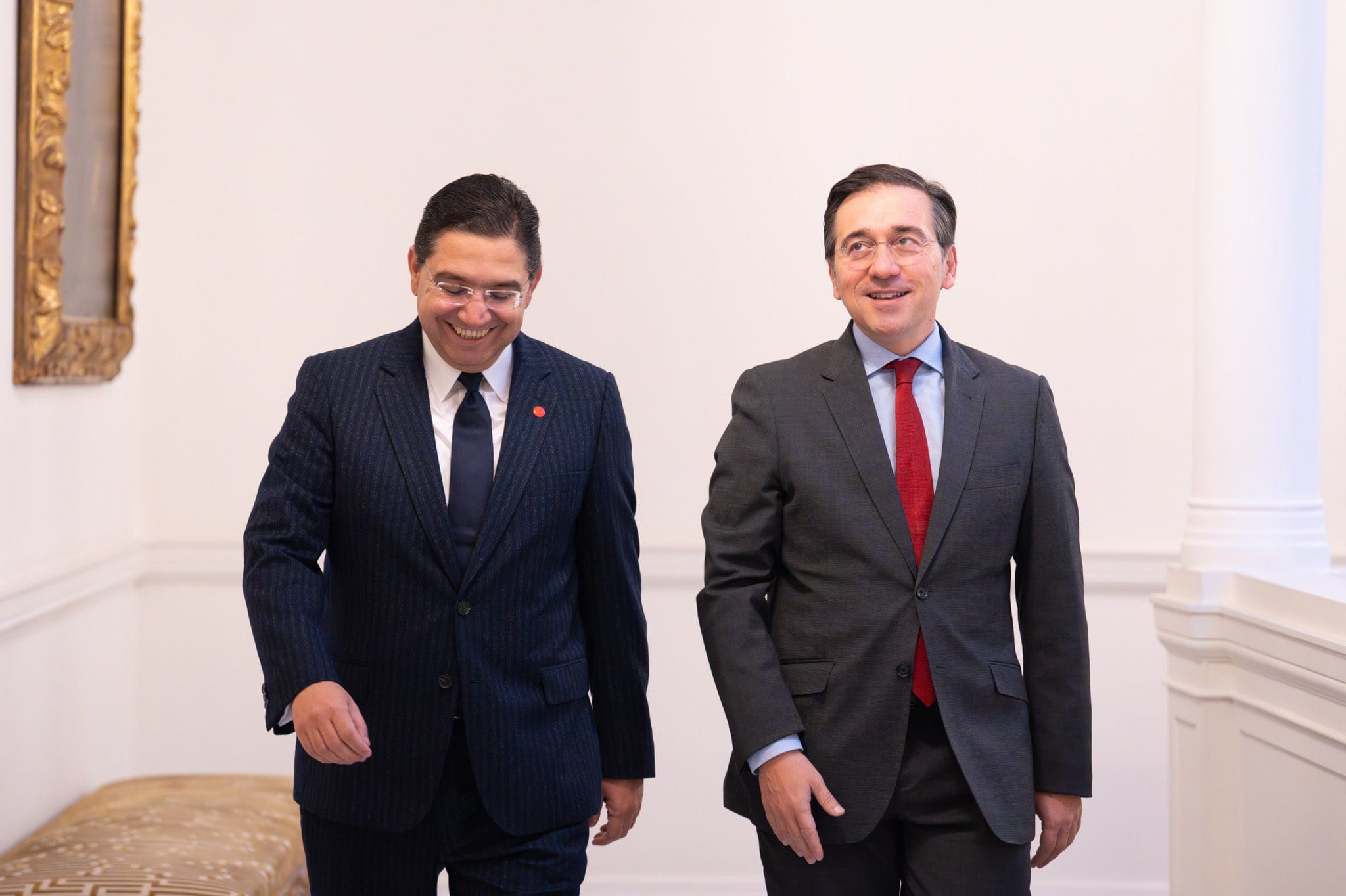
Marrakech – Spain’s customs administration has moved decisively to operationalize the European Union’s trade framework with Morocco by extending full preferential treatment to products originating from Western Sahara under Moroccan customs authority.
The measure anchors a €21-billion bilateral trade relationship in 2025 and places Spain at the forefront of translating EU-Morocco political alignment into concrete commercial practice.
Spain’s Department of Customs and Special Taxes issued an official notice on February 9 confirming that goods produced in Western Sahara and cleared under Moroccan administration now enjoy the same tariff advantages as Moroccan products under the EU-Morocco Association Agreement.
The step follows the Exchange of Notes signed on October 3, 2025, through which the European Union and Morocco updated trade protocols to reflect the territory’s integration into existing commercial arrangements.
The directive introduces precise technical mechanisms to ensure traceability and compliance. EUR.1 circulation certificates must now reference either “Dakhla-Oued Ed-Dahab” or “Laâyoune-Sakia El Hamra” in Box 7, while new TARIC classifications – U179 and U180 – have been created to standardize customs processing.
Western Sahara is also assigned the ISO origin code “EH,” completing its formal incorporation into EU customs systems.
This administrative shift crowns a broader diplomatic trajectory consolidated during Foreign Minister Nasser Bourita’s visit to Brussels for the 15th EU-Morocco Association Council on January 29.
The meeting carried added weight as it came on the eve of the 30th anniversary of the 1996 EU-Morocco Association Agreement – the most far-reaching and institutionalized partnership the EU has forged in North Africa.
Co-chaired with EU High Representative Kaja Kallas and Mediterranean Commissioner Dubravka Šuica, the meeting concluded with a 57-point declaration that brought EU institutions into open alignment with Morocco’s autonomy initiative for Western Sahara.
That declaration echoed the language of UN Security Council Resolution 2797, which placed Morocco’s autonomy proposal at the center of the political process.
For the first time, the EU – speaking with the unified voice of its 27 member states – collectively acknowledged that “genuine autonomy” represents the most realistic pathway toward resolution. By doing so, it closed the gap between long-standing member-state positions and the Union’s institutional posture.
‘A huge storm in a teacup’
The realignment also recalibrated oversight of humanitarian assistance to the Tindouf camps, granting Morocco a supervisory role amid persistent concerns over diversion and transparency. With political parameters clarified, trade integration followed naturally, opening the door to renewed momentum across agriculture, fisheries, and logistics.
Spain’s Agriculture Minister Luis Planas vigorously defended the framework in November 2025, dismissing parliamentary attempts to derail it as politically driven. Speaking to the EFE news agency, Planas said he was satisfied that what he described as a “political campaign” against the Morocco-EU agricultural agreement had failed.
He criticized attempts by the European People’s Party to challenge the labeling rules for Western Sahara products, dismissing the move as “a huge storm in a teacup with a clear political intention.”
The parliamentary objection, which required 360 votes to pass, fell short by a single vote, securing 359 in favor, 188 against, and 76 abstentions.
“I believe there has been a political campaign, particularly by the Spanish People’s Party, which has tried to lead a movement against this agreement,” Planas said, calling the initiative “surprising” given that neither quotas nor entry prices would be affected by the labeling decision.
Planas stressed that all agricultural products entering the EU must meet European Food Safety Authority standards regardless of labeling specifics.
Under the current regime, agricultural products from Western Sahara enter the EU market labeled according to Moroccan administrative regions, without the need for a separate country designation. Spain’s implementation secures continuity for exporters while reinforcing, through practice rather than rhetoric, Morocco’s sovereignty within European trade architecture.
In parallel, Brussels is preparing to relaunch fisheries negotiations with Morocco, openly sidelining the European Court of Justice’s obstructionist rulings.
After the 2023 protocol expiry, the European Commission – backed by member states – has chosen strategic continuity over legal posturing, signaling that Europe’s fishing fleets, food security, and Mediterranean interests will not be held hostage by activist litigation or pro-Polisario pressure campaigns.
Read also: Albares Describes Morocco-Spain Ties as ‘Most Powerful’ Following Bourita Meeting