
 Join on WhatsApp
 Join on Telegram
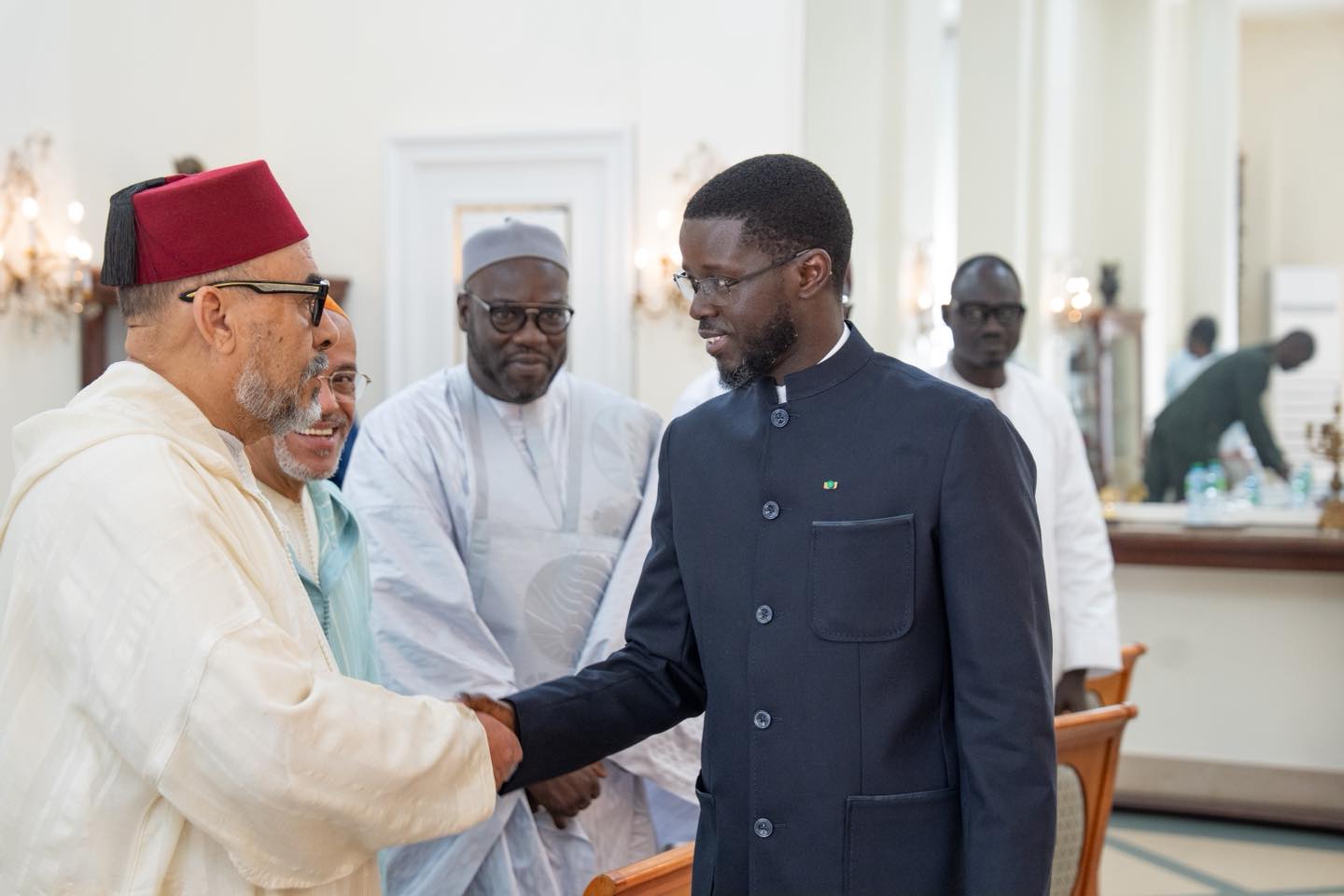
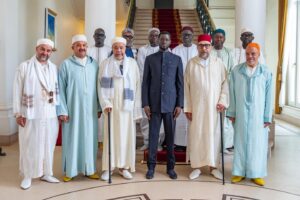
Rabat – Senegal President Bassirou Diomaye Faye received a high-level Moroccan religious delegation on Tuesday, the country’s government said in a statement. The group was led by the Khalif general of the Tijaniyya in Morocco, Sidi Mohamed El Kefbir.
Talks focused on the national Hadaratoul Jummah, a religious and cultural gathering started by Serigne Abdoul Aziz Al Amine and continued by his descendants. It is linked to the Tijaniyya Sufi order, especially in Senegal.
Representatives of Senegal’s Tijaniyya community attended the meeting, along with local religious organizers. Sidy Ahmed Sy and Pape Moctar Kebe represented the Khalif General of the Tijaniyya in Senegal.
The Tijaniyya is one of the most influential Islamic brotherhoods in Senegal, with deep social and spiritual influence across the country.
The government statement recalled the long, spiritual bonds between the two countries and said prayers were offered for continued peace and friendly relations between Morocco and Senegal.
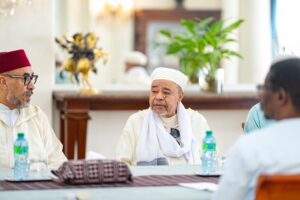
“The talks also reaffirmed the strength of the long-standing relations between Senegal and the Kingdom of Morocco, based on deep spiritual brotherhood and exemplary cooperation,” concluded the statement.
The meeting comes after a busy month of diplomacy between the two capitals. Rabat hosted the 15th session of the Morocco-Senegal high joint partnership commission in late January, where ministers and officials discussed trade, investment, and cooperation projects. The session produced a series of new agreements meant to deepen economic and political ties.
Read also: A Single Match Cannot Eclipse Morocco-Senegal’s Palimpsest Ties
In the wake of strong tensions after the Africa Cup of Nations (AFCON) final in Rabat, the two countries have publicly stressed that their relationship should remain strong.
The controversy began after Morocco was awarded a penalty kick, which Senegal strongly contested, with the coach and players leaving the pitch for over 15 minutes in protest.
Tensions rose even further among Senegalese fans, who physically assaulted stadium staff and attempted to storm the pitch.
The chaotic final triggered strong reactions across the continent and put Morocco and Senegal in the headlines. Many leaders and sports officials called for calm and unity while disciplinary bodies reviewed the match incidents.
Following the game, the Mashyakha of the Tijaniyya in Fez, the spiritual leadership of the Tijaniyya in the city, released a statement urging Moroccans and Senegalese to continue showing wisdom and unity. The Sufi group stressed the fraternity and brotherhood that unite both countries, calling on all supporters and people to exercise vigilance and wisdom.
Governments on both sides moved quickly to separate sport disputes from state relations. Dakar issued statements recalling the “age-old relations of friendship and solidarity” with Morocco and underlined the shared values that bind the two peoples.
Meanwhile, the Royal Cabinet released a statement from King Mohammed VI describing the scenes as “regrettable incidents” and that “deeply deplorable behavior occurred.”
The monarch called for calm and unity, adding that “nothing will alter the closeness that was fostered over centuries between our African people, nor the fruitful cooperation built hand in hand with different countries of the continent, bolstered by ever ambitious partnerships.”
At the same time, Rabat and Dakar resumed with planned meetings on trade, investment, and cultural exchanges. What this latest visit signals is a desire to keep people-to-people and religious links at the center of bilateral ties. Religious leaders and cultural organizers often play a soft-power role in West Africa and North Africa.