 Join on WhatsApp
 Join on Telegram
Talks aimed at resolving the five-decade long Sahara conflict were quietly held under U.S. mediation in both Washington, DC and Madrid over the past three weeks. Progress this year on the Sahara region may give 21st century meaning to the words of 1950s era American Secretary of State John Foster Dulles: “The measure of success is not whether you have a tough problem to deal with, but whether it is the same problem you had last year.”
The first significant talks on the issue since 2019 brought together Moroccan, Algerian, Mauritanian, Polisario Front, and United Nations representatives, including Staffan de Mistura, Special Envoy of the UN Secretary-General for Western Sahara, as well as Massad Boulos, the Trump Administration’s special envoy for Africa. The meetings were part of renewed efforts by the United Nations and the Trump administration to resolve the dispute over the Western Sahara region, an area known, too, as Morocco’s southern provinces.
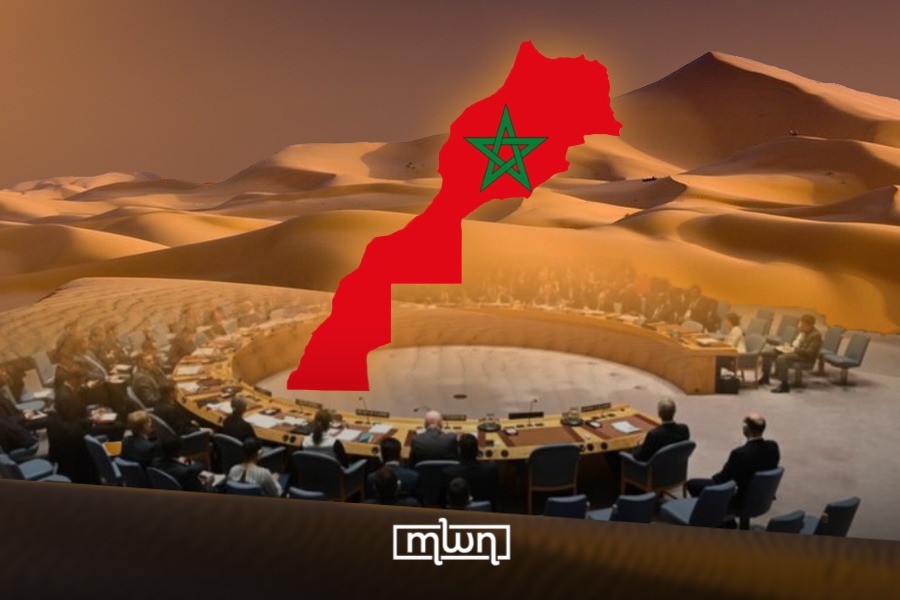
UN Resolution 2797, passed last October, renewed the UN observer mandate for another year while establishing the autonomy plan introduced by Morocco as the basis for a “mutually acceptable solution” to the simmering conflict.
As widely reported, Moroccan representatives presented a 40-page autonomy proposal at the Madrid meeting that incorporates local governance mechanisms (a regional parliament and judicial system) situated within Moroccan constitutional sovereignty (Moroccan national currency, foreign/defense affairs). The fashioning of details is what comes next, from education curriculum to culture heritage, voting procedures to development and tax policies in the region. Much to consider and discuss.
In ways large and small, the Sahara autonomy proposal, as well as the accompanying diplomatic dialogue initiatives, were informed by a unique confluence of cultures over hundreds of years at the western end of the Sahara Desert. Bedouin, Sahwari, Arab, and Berber/Sanhaja peoples created a dynamic desert neighborhood long before colonial era borders proliferated across the continent.
New eyes on familiar challenges
For Morocco, the wider Maghreb, and especially for the 600,000 residents of this Sahara region, establishing workable definitions related to governance mechanisms in 2026 may require seeing old challenges with new eyes.
Neither the 54-nation African Continental Free Trade Area (AfCFTA) nor the African Export-Import Bank—institutions that have given rise to impressive continental economic growth—existed in 1975 as Europe’s colonial experience in Africa came to a close.
In the frenzied post-colonial mid-1970s, national independence and national development sometimes existed in parallel but separate public spaces. Today, development policies and priorities on the continent have evolved, a reflection of rising consumer income and spending, intra-Africa investment and world-class trade infrastructure.
The list of established and planned national and continental development endeavors is growing, from the African Union’s Great Green Wall anti-desertification project (established in 2007) to Morocco’s massive Tanger Med industrial port facility on the Mediterranean Sea to the futuristic (and essential) 1,000 km-long Abidjan-Lagos Corridor Highway Project that breaks ground this year.
The continent is developing a hybrid model of development that celebrates dynamic re-invention, at the community, province and regional level. The common threads: public-private collaboration, regional cooperation and regional stability.
Africa reinvented
Today, the African Development Bank predicts 4% GDP growth on the continent in 2026, perhaps eclipsing growth in Asia for the first time. The median age across the continent is just 19 years. Traditional land use sectors like agriculture and herding are either fast evolving or slowly declining as the regional climate warms and young people reevaluate career and location priorities.
Regional trendsetters like Egypt, Morocco, and Nigeria are investing regionally, no longer dependent on the stewardship of European capital. As Global Finance magazine noted last November, “In support of corporate activity, many of the region’s local banks have established a cross-border footprint. Attijariwafa Bank, Morocco’s leading institution, operates in Tunisia, Mauritania, and Egypt. Algerian banks have recently expanded into Mauritania and Tunisia’s Banque International Arabe de Tunisie (BIAT) which has offices in Libya … North Africa could realize its aspiration to become a strategic hub connecting Europe, the Middle East, and sub-Saharan Africa.”
Notwithstanding neighboring instability in Mali, Mauritania’s economy, too, has grown at a respectable average annual rate of over four percent over the past decade, according to the World Bank. And the nation has significant potential in renewable energy and fishing, alongside mining.
Through significant development aid, Mauritania has benefited from cooperation with the EU on migration issues for a decade. The nation stands to benefit again on this issue as the Trump administration brings together trade, earth minerals, migration enforcement, and security priorities into a single foreign policy nexus that incentivizes regional cooperation. Algeria, too, has the opportunity to partner its oil and natural gas export capabilities with invigorated regional collaboration that will likely include the supplemental benefit of repairing relations with neighboring Spain and France.
From Tan Tan south to Dakhla and Nouakchott, the opportunity for the western end of the Sahara to become a linchpin for regional growth is clear. The traditional economy (mineral mining, livestock herding, small scale farming, commercial fishing) partnered with renewable energy, tourism, and trade infrastructure development.
Climate change, the Sahara, and a new economy
It’s worth repeating: As a regional leader in desalination infrastructure and sustainable agriculture research, Morocco is in a unique position to bolster a regional agricultural sector under siege from climate change.
The Middle East and North Africa (MENA) recorded their hottest year on record in 2024. The World Meteorological Association, the U.N. weather agency, reported last year that temperatures in the region are rising at twice the global average.
The MENA region average temperature in 2024 was just over one degree Celsius above its thirty-year average; Algeria, at 1.64 C above average, was the hottest. “Droughts are becoming more frequent and severe in one of the world’s most water-stressed regions,” the report noted.
Like the 1930s “Dust Bowl” experience in the United States, which saw 2.5 million people leave the southern Plains, drought conditions can alter the land and the trajectory of the local economy permanently. The arbitrary and unrelenting nature of climate change requires a collective paradigm shift concerning notions of security, sustainability, and prosperity, be it on the American Plains or in the North African Maghreb.
In the coming months, as Moroccan, Algerian, Sawahri and Mauritanian leaders discuss the emerging details of civil society governance, cultural appreciation, and regional economic collaboration, the promise of a reimagined future—no matter how tentative—should drive their discussions.
Progress may be incremental, autonomy plan details may evolve, but momentum has arrived. 2026 may represent the beginning of the end for a conflict that long ago stopped being about the future.