Marrakech – Le Point, one of France’s most widely read news magazines, published an article Thursday declaring Morocco “the African leader in aeronautics,” citing French aerospace group Safran’s deepening industrial presence in the country as primary evidence.
The article, written by journalist Thierry Vigoureux, focused on Safran’s latest factory announcement and framed Morocco’s emergence in the sector as a structural shift rather than a one-off investment.
The French magazine noted Morocco’s decisive geographic advantage: a component completed in Casablanca on a Friday evening can cross the Mediterranean by ferry at Gibraltar and arrive at Airbus assembly lines in Toulouse by Monday morning.
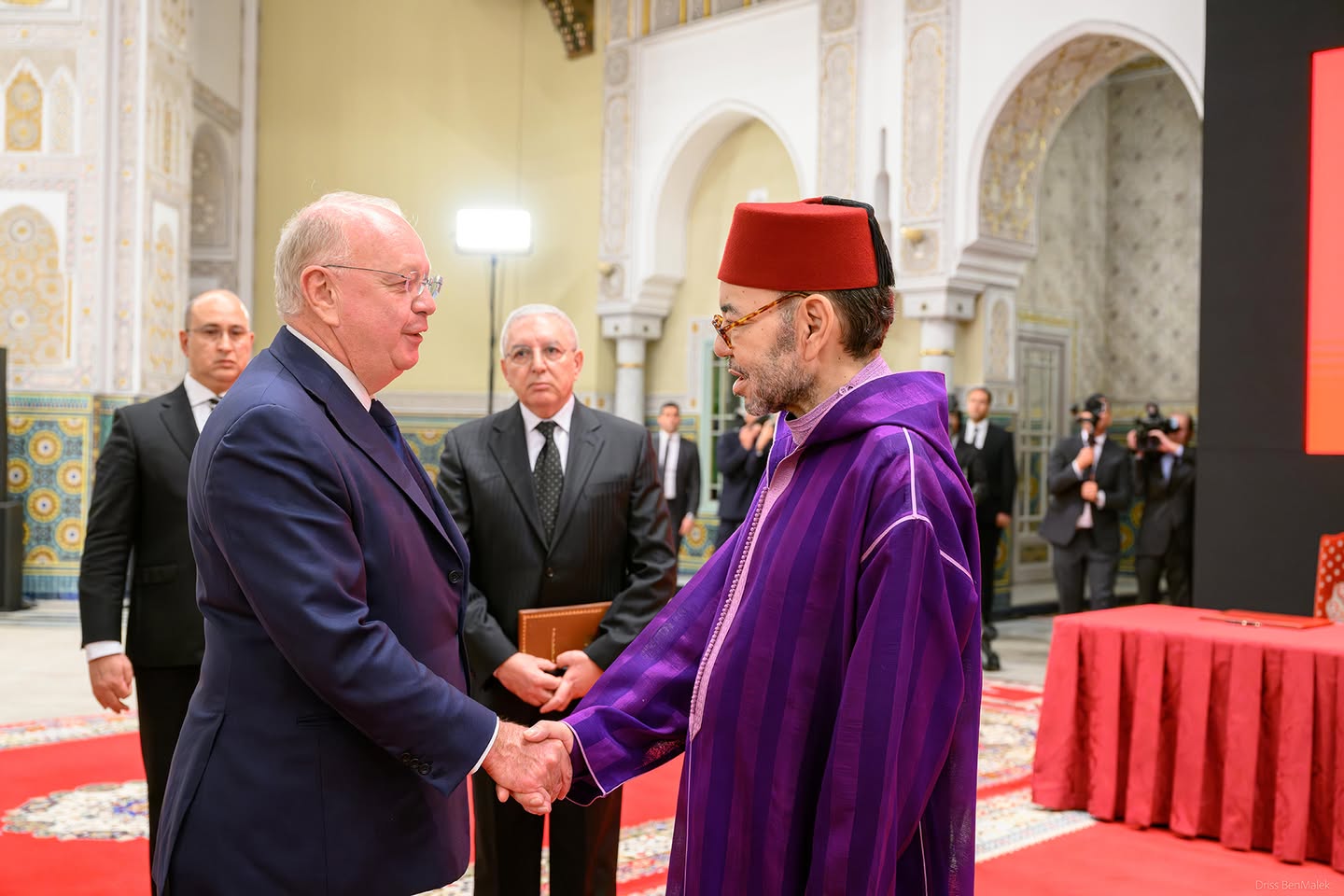
The publication was referring to an announcement made on February 13, when King Mohammed VI presided over the launch ceremony of a new Safran Landing Systems plant for the Airbus A320 at the Midparc aerospace industrial platform in Nouaceur, near Casablanca.
The facility represents an investment of over €280 million – more than MAD 3 billion – and will cover 26,000 square meters across a site of more than seven hectares. It will be dedicated to landing systems for short and medium-haul aircraft, integrating precision machining, high-tech assembly, testing, certification, and advanced maintenance.
Safran Chairman Ross McInnes described it as “one of the largest in the world for landing gear and equipment,” and noted that its proximity to Safran’s existing European assembly lines for Airbus will allow faster production and more agile industrial operations. The plant is set to be operational by 2029, employing close to 500 qualified workers.
Le Point also quoted Safran CEO Olivier Andriès: “After the recent announcements of the establishment in Casablanca of an assembly line and a maintenance center for the LEAP engine, this decision once again underlines our relationship of trust and the strategic role of the kingdom in Safran’s global industrial setup.”
In a Safran statement, Andriès added that the choice of Morocco was based on “the kingdom’s industrial robustness and the quality of its talent pool,” and that the new site would “strengthen our resilience, agility, and competitiveness, allowing us to meet our customers’ expectations – notably Airbus – and to prepare for the future generation of aircraft.”
The February 13 announcement did not come in isolation, but directly followed Safran’s October 2025 expansion moves.
During a ceremony also presided over by the Moroccan monarch, Safran broke ground on a CFM-LEAP engine maintenance and repair facility at the same Casablanca airport zone – the engine that powers the Airbus A320neo, Boeing 737 MAX, and China’s COMAC C919.
Set to become operational in 2027, the 25,000-square-meter facility will be capable of handling up to 150 LEAP engines per year, generating 600 jobs by 2030 at an estimated cost of around €120 million.
At the same October event, Safran announced a separate LEAP-1A engine assembly line for Airbus, covering 13,000 square meters and capable of producing up to 350 engines annually.
Set to be operational by the end of 2026, the facility will create 300 jobs and represents an investment of approximately €200 million. That dual-facility design established Morocco as only the second global production site for the LEAP-1A engine outside France.
The combined October investment exceeded €350 million and was projected to generate over 2,000 new hires in Morocco over five years.
Safran Chairman McInnes, speaking at the February 13 ceremony, said the group’s presence in Morocco “spanning more than 25 years, reflects our commitment to continuing to invest in a country with modern infrastructure, a stable macroeconomic environment, and recognized talent.”
Morocco seeks full aircraft assembly before the decade ends
Safran currently employs nearly 5,000 people across 10 Moroccan sites, up from 4,800 at the time of the October announcements. The company’s first Moroccan subsidiary was established in 1999. In April 2025, Safran and Royal Air Maroc agreed to increase CFM56 engine workshop visits from 70 to 100 per year.
The French magazine’s characterization of Morocco as Africa’s aeronautics leader aligns with a broader industrial trajectory the country has been building for two decades.
Aerospace export revenues have grown from less than MAD 1 billion in 2004 to a record MAD 26.45 billion in 2024 – a 26-fold increase over two decades – with the sector now contributing approximately 5% of Morocco’s total exports.
As of late 2024, the aeronautical ecosystem in Morocco consists of nearly 150 companies with a turnover of around $2.6 billion in exports and 17,000 direct employees.
Morocco’s ambitions go further still. The Ministry of Industry is targeting a doubling of the sector’s turnover to MAD 53 billion and an increase in direct employment to 50,000 jobs by 2030.
Local content is projected to reach 60%, up from 42% currently, with exports to at least 45 countries. Industry and Trade Minister Ryad Mezzour has gone even further, stating publicly that Morocco’s ultimate goal is to achieve full aircraft assembly within its borders before the end of the decade.
Morocco ranks fifth among the most dynamic countries in the world in aeronautics and first in Africa. Major manufacturers with a Moroccan footprint now include Airbus, Boeing, Thales, Pratt & Whitney, Dassault, and Bombardier.
The Midparc industrial zone in Nouaceur, where the new Safran facilities are concentrated, serves as the sector’s main anchor – a dedicated aerospace free zone that has become the most advanced of its kind on the African continent.
The article indicated that Safran Landing Systems equips more than 35,000 aircraft globally and that its equipment performs over 100,000 landings daily.
For Le Point, the story is ultimately about what Safran’s successive choices say about Morocco’s standing in European aerospace supply chains – not just its African ranking.
When France’s third-largest aerospace group builds its most advanced production infrastructure outside France – twice in five months in the same country – the label tends to follow.