 Join on WhatsApp
 Join on Telegram
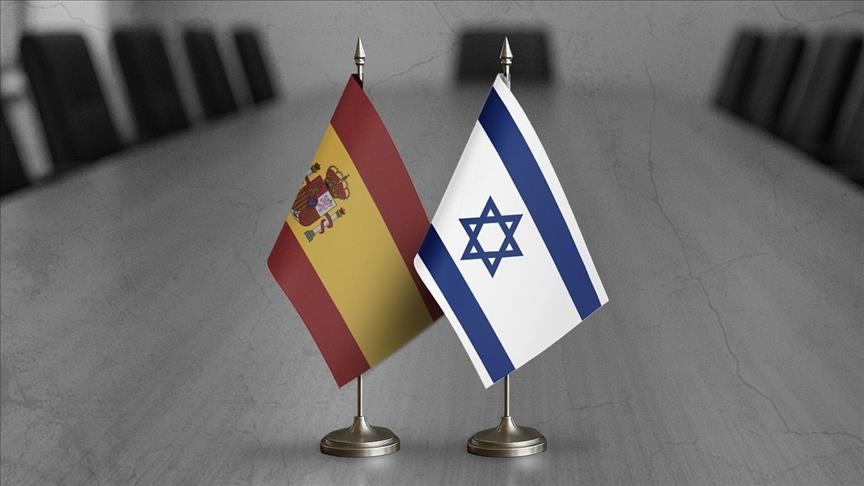
Marrakech – Spain has formally terminated the appointment of its ambassador to Israel, Ana María Salomón Pérez, marking the most definitive break yet in relations that collapsed entirely the moment Israeli forces began their genocide in Gaza in October 2023.
The decision was published Wednesday in Spain’s official state gazette, following approval by the Council of Ministers at the proposal of Foreign Minister José Manuel Albares. Spain’s embassy in Tel Aviv will now be led by a charge d’affaires indefinitely.
Israel’s mission in Madrid is also run by a charge d’affaires, after Tel Aviv recalled its own ambassador in May 2024 in protest at Spain’s recognition of a Palestinian state. Both countries are now effectively without ambassadors in each other’s capitals.
Salomón had served as Spain’s envoy to Israel since July 2021. She was first recalled to Madrid in September last year following a diplomatic dispute after Prime Minister Pedro Sánchez imposed nine measures against Israel, including a full arms embargo. Wednesday’s gazette announcement formalized what had already become a de facto severance.
The broader context is one of sustained Spanish opposition to Israeli actions. Spain only recognized Israel in 1986, four decades after the country’s founding. Most recently, Spain was among the first European countries to recognize a Palestinian state in May 2024.
Its parliament later enshrined into law a total arms embargo on Israel, permanently banning the sale of weapons, dual-use technology, and military equipment. Spain also banned ships and aircraft carrying weapons to Israel from using Spanish ports or airspace.
Israeli Foreign Minister Gideon Sa’ar denounced those measures as antisemitic. In early March, he accused Spain of “standing with tyrants” over its opposition to the ongoing US-Israeli war on Iran.
Read also: EU ‘Ready’ to Act Against Trump’s Threats to Sever Trade With Spain
That war has sharply accelerated the breakdown in relations. Sánchez condemned the US-Israeli military campaign against Iran as “unjustifiable” and “illegal,” and refused to allow the United States to use jointly operated military bases in southern Spain for operations linked to strikes on Iran.
The refusal triggered a direct confrontation with US President Donald Trump, who called Spain “unfriendly” and threatened a full trade embargo against Madrid. Trump also cited Spain’s refusal to meet NATO’s new defence spending target of five percent of GDP.
In a defiant 10-minute televised address on March 4, Sánchez distilled his government’s position into three words: “No to war.”
He described the US and Israeli strikes as “reckless and illegal,” vowing that Spain would “not be complicit in something that is bad for the world – and that is also contrary to our values and interests – simply out of fear of reprisals from someone.” He warned that the escalating conflict risked “playing Russian roulette” with the lives of millions.
Drawing a direct comparison with the US-led invasion of Iraq in 2003, he cautioned against repeating the mistakes of the past, warning that wars launched on false pretexts produce not stability but devastation.
Sánchez called on the US, Israel, and Iran to halt the conflict “before it is too late,” insisting that the question was not whether Spain supported the ayatollahs – which he insisted it did not – but whether it stood on the side of international law and peace.
Spanish Foreign Minister Albares said on Tuesday that despite the tension, Spain-US relations were “operating normally,” with both embassies functioning with “absolute normalcy.”
Spain’s position has been consistent. Sánchez has been one of the few European leaders to explicitly label Israel’s campaign in Gaza a genocide and to translate that position into concrete legal and diplomatic measures. The formal withdrawal of the ambassador is the latest, and most definitive, expression of that stance.
Any future Spanish ambassador to Israel would require approval from the Israeli government before taking up the post.