
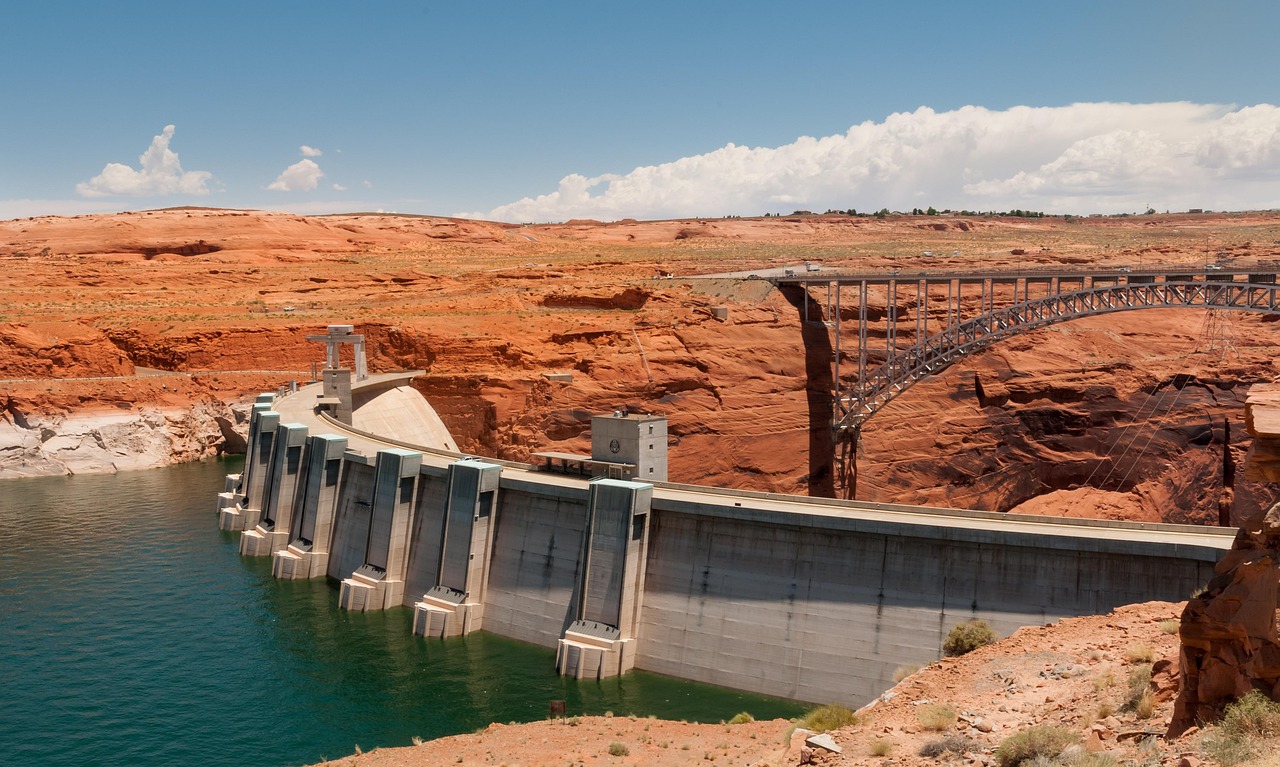
Agadir – The Moroccan Ministry of Equipment and Water and the National Agency for Water and Forests (ANEF) signed on Monday in Rabat a framework partnership agreement to address the increasing problem of dam siltation in Morocco.
The agreement was signed by Minister Nizar Baraka and ANEF Director General Abderrahim Houmy, with the purpose of coordinating the efforts of the two parties to decrease the sedimentation in the dams.
The agreement aims to improve the management of water resources while protecting watersheds and dam infrastructure.
The project targets the development and management of upstream basins that supply hydraulic structures with the aim of reducing sediment inflows, which contribute to the reduction of the storage capacity of the reservoirs.
The accumulation of sediment in the reservoirs of dams remains a major concern for water resource management in Morocco.
This issue is primarily attributed to soil erosion in the upper watersheds and results in the reduction of the storage capacity of dams, which may impact the supply of water for drinking, irrigation, and power generation.
Through the partnership, the two institutions will work to enhance cooperation on data and technical coordination in the course of executing joint watershed management projects and soil conservation projects.
These efforts are intended to minimize sediment runoff into reservoirs and ensure the sustainability of the hydraulic infrastructure in Morocco.
Morocco reaching a prominent capacity
The reserves of the dams in Morocco have recently shown a significant level of recovery. Recent statistics show that the country’s reservoirs were filled to a capacity of 71.2% as of March 13, as opposed to 31.3% in 2025.
The level of water in the dams has increased to 12.35 billion cubic meters, as opposed to 5.27 billion cubic meters a year ago, due to the effects of rainfall in various hydraulic basins.
Some of the basins that registered high levels include Sebou, Bouregreg, and Loukkos basins, where most of the dams were either at or near full capacity. However, there are other areas such as Souss-Massa and Draa-Oued Noun that are still registering low levels of filling.