


 Join on WhatsApp
  Join on Telegram
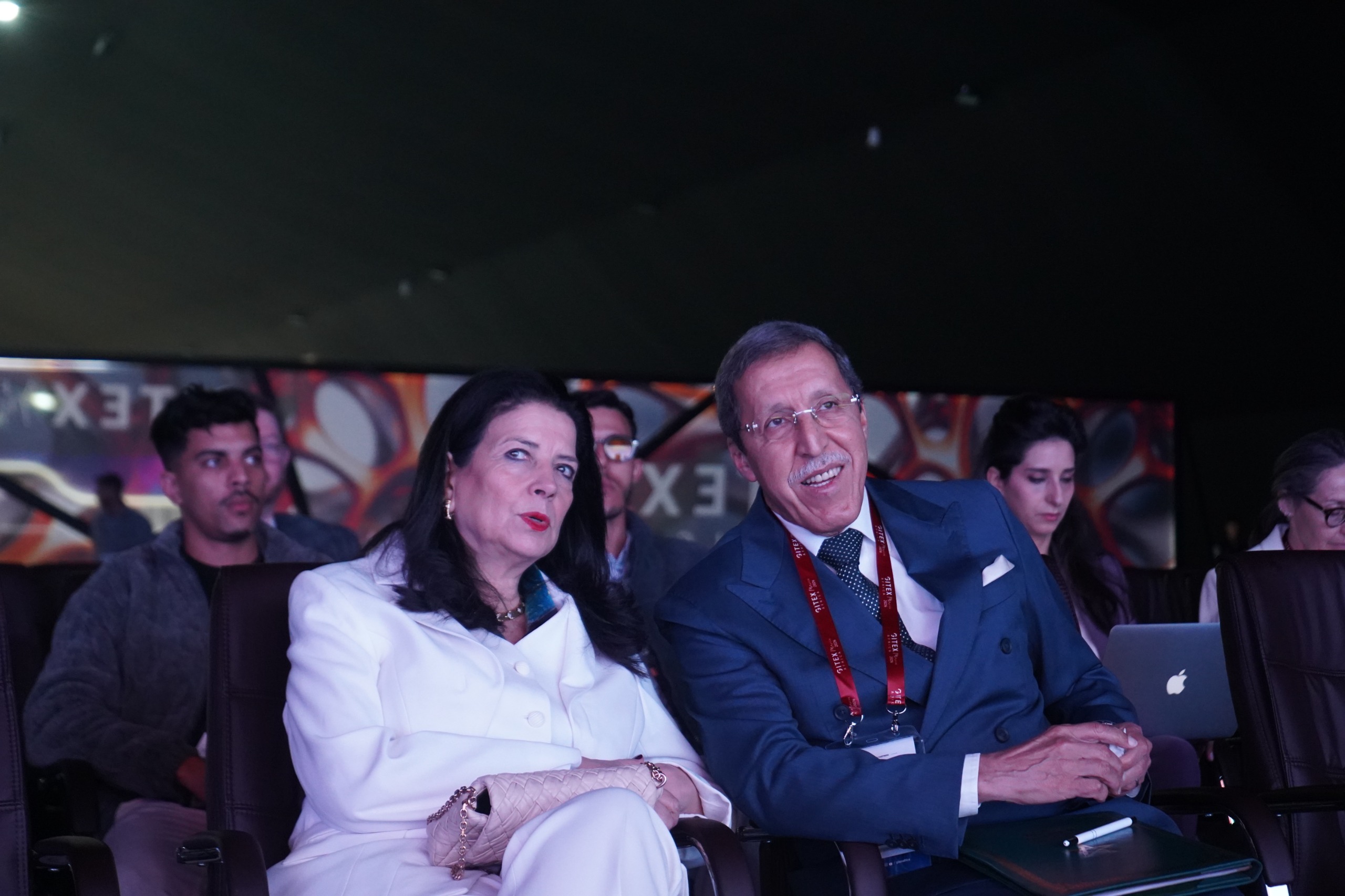
 Marrakech – On Day 2 of GITEX Africa Morocco 2026, Representative of Morocco to the United Nations, Omar Hilale, delivered a keynote that reframed artificial intelligence not as a technological trend, but as a structural force reshaping global power.
“Artificial intelligence is no longer simply an asset or a technological tool; it has now become a lever of power,” he said.
“It influences economic competitiveness, national security, control of knowledge, and the geopolitical balance.”
This framing set the tone for a deeply strategic intervention, one that positioned AI at the center of global competition, rather than innovation alone.
Hilale pointed to the explosive growth of the AI economy:
“The global AI market is estimated at $1 trillion in 2025 and could reach $5 trillion by 2033.”
Yet he immediately challenged the optimism surrounding these figures, “However, this growth is profoundly unequal.”
His critique goes beyond access to technology, it is about control over the systems that govern it.
Africa: Marginal in market share, absent in rule-making
Hilale’s most pointed analysis focused on Africa’s position within this system, or lack thereof.
“The size of the African market barely reaches 2.5% of the global share and captures only 1.5% of investments.”
This is not just an economic gap; it is a strategic vulnerability. Without investment, infrastructure, or regulatory frameworks, African countries risk becoming passive consumers rather than active shapers of AI systems.
“90% of UN member states do not have specific AI regulations, and 55% do not have a national strategy.”
This governance vacuum creates a dangerous asymmetry: technologies are advancing faster than the policies meant to regulate them, especially in emerging markets.
Who sets the rules?
Hilale distilled the entire AI debate into one fundamental issue, stating, “Today, the question is no longer whether AI should be governed, but rather who will set its rules, with what capacity, and for whose benefit.”
This is where his keynote moved from observation to geopolitical warning.
“A technology that develops faster than governments’ ability to regulate it will benefit primarily those who already control infrastructure, data, capital, human talent, and computing power,” he stated.
“This is not a hypothesis, it is already the reality of global technological architecture.”
The message is stark: without intervention, AI will deepen global inequalities rather than reduce them.
Hilale acknowledged that efforts are underway to address these challenges, particularly through the United Nations, “In 2024, the United Nations adopted the Global Digital Compact, laying the foundations for a common framework for digital cooperation.”
He also referenced subsequent global initiatives, including “the creation of an international scientific panel and the launch of a global dialogue on AI confirmed that multilateralism has reached an important milestone.”
However, he was clear that these efforts remain insufficient:
“The progress is significant, but it remains incomplete, and sometimes even disordered.”
From Paris to New Delhi, multiple forums are emerging with overlapping ambitions but limited coordination.
“This simultaneity, without objective coordination, fuels the fragmentation that these forums are trying to avoid.”
The real divide
One of the most important shifts in Hilale’s argument is his focus on capability, not just access.
“The gap is not only widening in terms of access, but also in terms of the capacity to use and appropriate these technologies.”
This distinction is critical. Even when technologies are available, the lack of skills, infrastructure, and institutional frameworks prevents meaningful adoption.
His call to action was explicit: “International cooperation must be carried through concrete mechanisms to generate shared dividends, particularly in training, knowledge sharing, and infrastructure financing.”
Beyond the stage at GITEX
Hilale’s keynote ultimately positions GITEX Africa Morocco 2026 as more than a marketplace for startups and investors. It becomes a space where strategic narratives are contested.
While founders pitch solutions and companies scale products, a deeper battle is unfolding, over governance, standards, and control.
The takeaway is not just that Africa is behind in AI. It is that the current trajectory risks locking that position in.
Hilale’s intervention forces a reframing: AI is not just about innovation cycles or funding rounds. It is about sovereignty, influence, and long-term global positioning.
And as he made clear, the window to shape that future is still open, but narrowing fast.
“GITEX Marrakech is good, but I believe that Marrakech is now mature enough to host a truly Moroccan event, dedicated to artificial intelligence, its applications, and cooperation” Hilal said.
This aspect reflects a growing belief that Morocco is ready to move from hosting global tech events to creating its own platform that showcases national expertise and innovation.
“It should be something that can be embraced and driven by Moroccan talent, both within the country and abroad.”
With skilled professionals and international partnerships, Morocco aims to become a key player in AI, by supporting innovation and working with global partners: “No country can succeed alone, this must be done within international frameworks.” he added.
By building on its progress and creating its own initiatives, Morocco can shape its future and strengthen its position globally.


