

Rabat – A national meeting in Rabat brought together young people, officials, and human rights actors to discuss the abolition of the death penalty in Morocco, in a context of renewed national debate on justice reform and human rights.
The Moroccan National Human Rights Council organized the meeting under the theme “Youth for Abolition.” It followed regional consultations that involved around 300 young men and women from across the country. From this group, 24 participants were selected to join the final meeting through a structured and transparent process.
According to organizers, four of these young participants will be chosen to take part in an international conference against the death penalty in Paris next month.
Amina Bouayach, president of the council, said the initiative is part of a wider effort to engage youth in public debate and human rights issues. She said the discussions are not only about capital punishment but also about broader social change in Morocco.
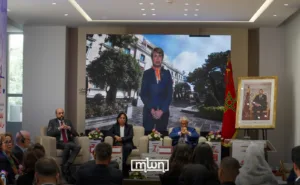
“The question has many aspects and must be assessed by society and human rights organizations,” she told Morocco World News on the sidelines of the event, adding that “some areas have progressed, while others remain inconsistent with the 2011 Constitution.”
She also referred to Morocco’s recent international position, noting its vote in December 2024 in favor of a UN resolution calling for a global moratorium on the death penalty. She said this reflects important progress but added that contradictions still exist between national laws and international standards.
Abderrahim Jamaï, coordinator of the Moroccan Coalition against the Death Penalty, said the issue should be seen within a broader human rights framework.
“Morocco has made important progress, but inconsistencies remain within its legal system,” he told MWN. He added that while there is a moratorium in practice, “the highest standard is the full protection of the right to life, which requires abolition of the death penalty.”
He also said Morocco should align its legislation with international conventions it has ratified and take a clearer position on human rights issues internationally.
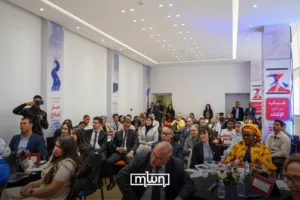
Souad Fahim, a representative of the Regional Human Rights Commission of Fes-Meknes, said the death penalty is increasingly seen as incompatible with modern criminal policy and human rights standards.
“The death penalty does not aim at reform or rehabilitation, but at elimination,” she said. She also noted that Morocco is currently in a de facto moratorium, meaning executions are not carried out, but courts still issue death sentences.
She stated that abolition must be made explicit in law, warning that as long as it remains in the penal code, “there is always the possibility of its reactivation.”
The meeting highlighted that 300 young participants are now included in the CNDH database. This will allow the council to continue consulting them on other public policy issues beyond the death penalty.
Officials said the goal is to strengthen youth participation in decision-making and encourage them to contribute to broader discussions on justice reform, human rights, and public policy in Morocco.
The discussions come at a time when Morocco continues to apply a de facto moratorium on executions, with the last execution recorded in 1993, while debate continues over whether to move toward full legal abolition.