
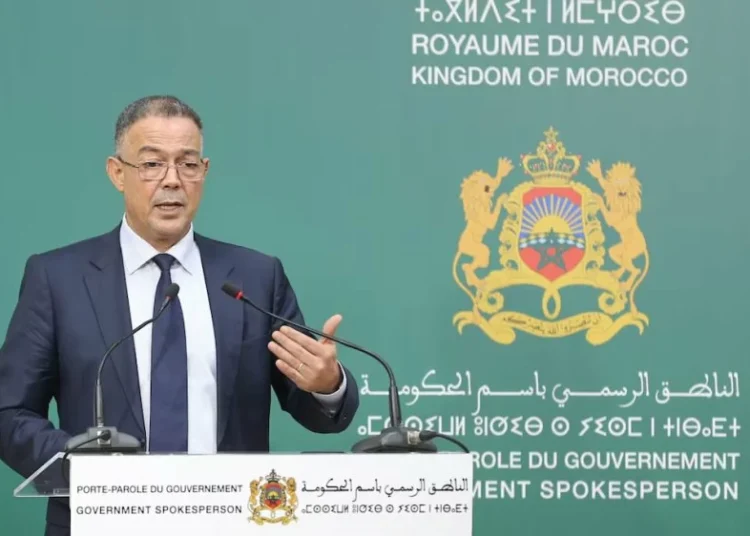
Casablanca — Morocco’s government has opened MAD 20 billion in additional budget credits aimed at supporting subsidies, covering exceptional expenses, strengthening public institutions, and responding to flood damage in parts of the country, Delegate Minister in charge of the Budget Faouzi Lekjaa said Monday.
Lekjaa presented the details during a meeting of the Finance and Economic Development Committee at the House of Representatives, which was held to review the decree approved by the government council during its latest session.
According to the minister, MAD 8 billion will go to the compensation fund to help preserve citizens’ purchasing power by maintaining stable prices for butane gas as well as passenger and freight transport.
Another MAD 6 billion was allocated to cover exceptional and unforeseen expenditures linked to developments in the international situation and not initially included in the 2026 finance law.
The government also earmarked MAD 4 billion as capital contributions to several public institutions and state-owned companies. An additional MAD 2 billion will be used to cover expenses related to floods that recently affected areas in northern Morocco.
Tax revenues continue to rise
Lekjaa said the additional credits were made possible by strong tax revenue collection during the first four months of 2026.
Tax revenues increased by MAD 10.9 billion, up 8.9% compared with the same period last year. The achievement rate reached 36.4% of the forecasts set under the 2026 finance law.
The increase was mainly driven by higher corporate tax revenues, which rose by MAD 9 billion, or 24.9%. Value added tax revenues also increased by MAD 1.2 billion, marking a 3.9% rise.
The minister said Morocco is still maintaining its financial balance targets in line with the initial forecasts of the finance law.
He stated that the budget deficit is expected to be limited to around 3% of gross domestic product in 2026, down from 3.5% in 2025.
Lekjaa also pointed to the continued downward trend in Treasury debt as a share of GDP, which is expected to stand at around 66% in 2026.
He added that ordinary revenues of the general budget recorded average annual growth of 13.5% between 2021 and 2025, while tax revenues rose by an annual average of 12.4% during the same period.
According to the minister, these indicators reflect improved tax collection, the impact of tax reforms, and the widening and diversification of the tax base.
Morocco World News is also on X — check out our latest posts now! Get MWN on iOS and Android for instant access to breaking news.