 Join on WhatsApp
 Join on Telegram
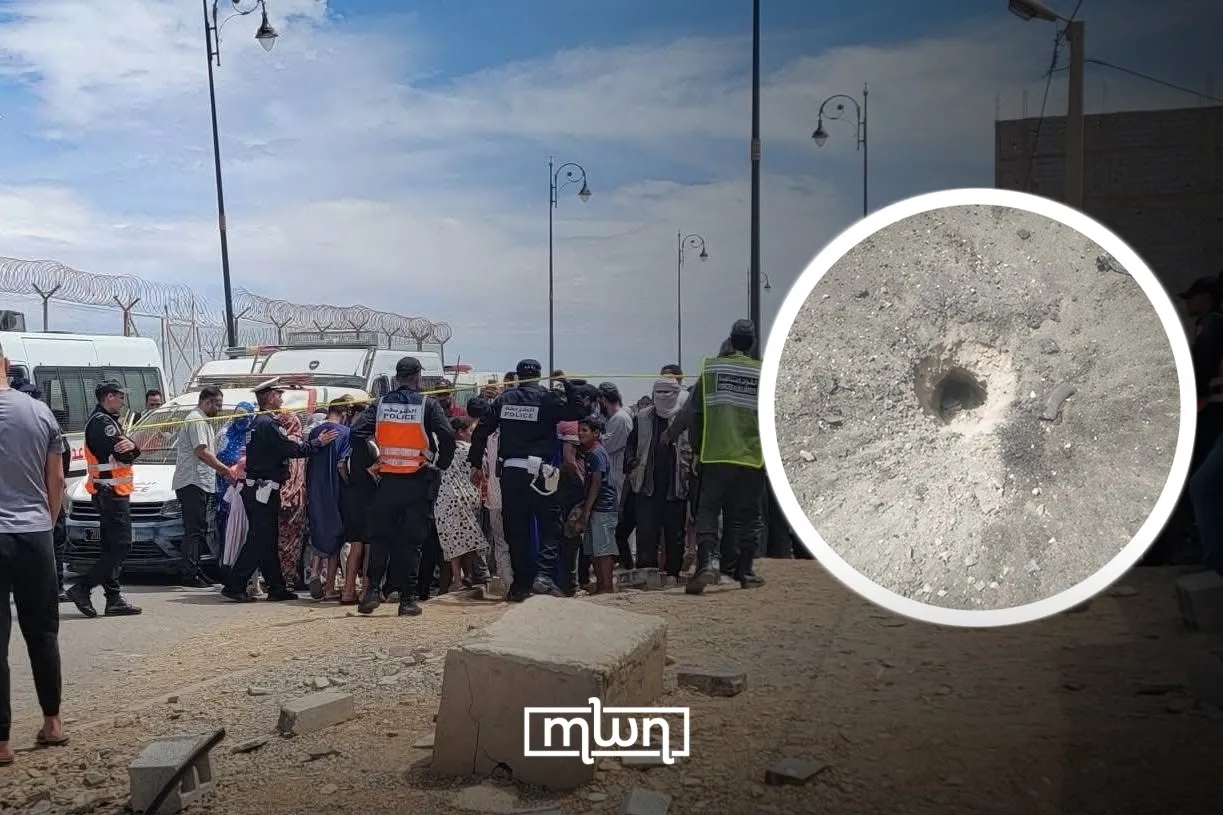
Rabat – Ireland has expressed concern over the Polisario’s recent attacks on Morocco’s Es-Semara region.
Ireland’s Minister of State at the Department of Foreign Affairs, Neale Richmond, conveyed these concerns on May 21 in response to pro-Polisario questions from Deputy Donnchadh Ó Laoghaire on the Western Sahara dispute.
“Ireland shares the concerns expressed by the Personal Envoy of the Secretary General for Western Sahara, Staffan de Mistura, and MINURSO, the UN Peacekeeping Mission in Western Sahara, concerning the recent attacks by the Frente Polisario near Smara,” Richmond said.
He recalled de Mistura’s warnings, stressing that such attacks undermine and hinder dialogue and negotiations.
“The Personal Envoy… has emphasized that this is a time for dialogue and negotiations, not a time for military escalation,” the Irish official said.
Ireland also reiterated its position on the Sahara, stating that it is in line with UN Security Council Resolution 2797, distancing itself from the pro-Polisario framing advanced by Deputy Ó Laoghaire during the discussion.
In the official response, Minister Richmond said that Ireland’s approach remains guided by international law and the principle of a “just and lasting political solution” to the situation.
Ireland’s support for the latest UN resolution reinforces the emerging international consensus around negotiated solutions grounded in Morocco’s Autonomy Plan as the basis for a realistic and mutually acceptable political settlement that addresses, within a pragmatic framework, the long-standing “self-determination” narrative.
Morocco’s Foreign Affairs Minister Nasser Bourita has recently clarified the concept of “self-determination” and how it is often misinterpreted by some parties aligning with separatist agendas, including calls for a referendum in the case of Algeria’s regime.
For years, Algeria’s regime has backed the Polisario Front, a separatist group claiming independence in Western Sahara, while continuing to promote an outdated narrative centered on self-determination and referendum options.
In December last year, Bourita responded to interpretations, suggesting that the latest UN resolutions refer to “self-determination” or a “referendum” on Western Sahara as the only solution.
In his interview with EFE, Bourita emphasized that “no one has ever said that self-determination is synonymous with a referendum.”
He added that the concept refers to an expression of will that can take different forms within the framework of Morocco’s Autonomy Plan.
“The resolution has never said self-determination means a referendum,” Bourita explained.
“What it says is that the right to self-determination allows the parties to express their will. I don’t think that when a person signs an agreement following negotiations, they are not expressing a will,” the FM added.
Ireland also distanced itself from calls for the recognition of the self-proclaimed Sahrawi Arab Democratic Republic (SADR) when pressed on the issue by the pro-Polisario deputy during the parliamentary exchange.
Instead, Richmond stressed Ireland’s support for the ongoing UN-led political process aimed at reaching a mutually acceptable political solution. Richmond also pointed to the impact of renewed violence in the region, a clear reference to the Polisario’s recent attacks in Es-Semara, reiterating that Ireland’s position is to uphold and support the UN process.