 Join on WhatsApp
 Join on Telegram
Marrakech – A broad majority in the Tweede Kamer, the House of Representatives and lower chamber of the bicameral parliament of the Netherlands, supports a bilateral extradition treaty with Morocco that would allow both countries to transfer suspects across a significantly wider range of criminal offenses.
Justice Minister David van Weel defended the agreement during a parliamentary debate on May 28, calling Morocco “an important partner for us, given the close intertwining of criminal networks in the Netherlands and Morocco.”
The treaty, signed on December 18, 2023, by former Justice Minister Dilan Yeşilgöz and her Moroccan counterpart, expands extradition beyond the scope of existing UN conventions. Those instruments are limited to serious international crimes such as terrorism, large-scale drug trafficking, and transnational organized crime.
The new framework lowers the threshold to any offense carrying a minimum sentence of one year, covering murder, assault, fraud, money laundering, and other violent or financial crimes. Morocco’s parliament has already approved the agreement. A final Dutch vote on the bill is scheduled for June 9.
The agreement fits into a series of similar accords the Netherlands signed under Yeşilgöz, including with the UAE and Colombia.
Van Weel told lawmakers the treaty carries a deterrent message. “It signals that you cannot escape the consequences of committing criminal offenses in one of the two countries by staying in the other.”
He pointed to the large Moroccan diaspora in the Netherlands as a relevant factor and acknowledged the current gap is being exploited. “It is being concretely used by deliberately sitting in Morocco,” he added, drawing a direct parallel with the UAE, where a similar accord produced concrete results.
“That treaty truly made the difference, not only in concrete numbers, but also in the deterrent effect it had on criminals,” he argued, adding that he expects “the same dynamic” with Morocco. “Since we have an extradition treaty with the UAE, that location has become less appealing.”
Van Weel declared that “with this treaty, they are less safe than they currently believe themselves to be,” and revealed that Morocco recently extradited a suspect to the Netherlands even before the treaty entered into force, calling it evidence of the agreement’s positive spillover.
VVD lawmaker Ulysse Ellian framed the treaty as essential to dismantling criminal safe havens. He described Morocco as “a refuge for many criminals from the so-called Mocro mafia” and pointed to suspects in the 2021 assassination of journalist Peter R. de Vries, believed to be in Morocco, as a case where the agreement could apply direct pressure.
“The essence of this treaty is that, by signing these agreements, we are trying to eliminate the safe havens that the Emirates and Morocco represented,” he told the chamber.
According to De Telegraaf, the treaty draws support from VVD, D66, CDA, PN, JA21, Groep Markuszower, and 50Plus. CDA lawmaker Jeltje Straatman called the treaty “a very important step in the right direction.”
Questions persist over the treaty’s reciprocal nature. Morocco’s constitution prohibits the extradition of its own nationals, while the Netherlands can do so under certain conditions. Straatman and JA21 lawmaker Simon Ceulemans called for more clarity on “the balance” of the arrangement.
Van Weel acknowledged Morocco “will absolutely never” deviate from its constitutional provision but stressed that if nationality is the sole ground for refusal, the non-extraditing country must assume prosecution within six months. He also confirmed that individuals sentenced in Morocco can serve their prison terms in the Netherlands under an existing transfer agreement.
Some lawmakers also raised concerns about potential risks for Moroccan political refugees residing in the Netherlands.
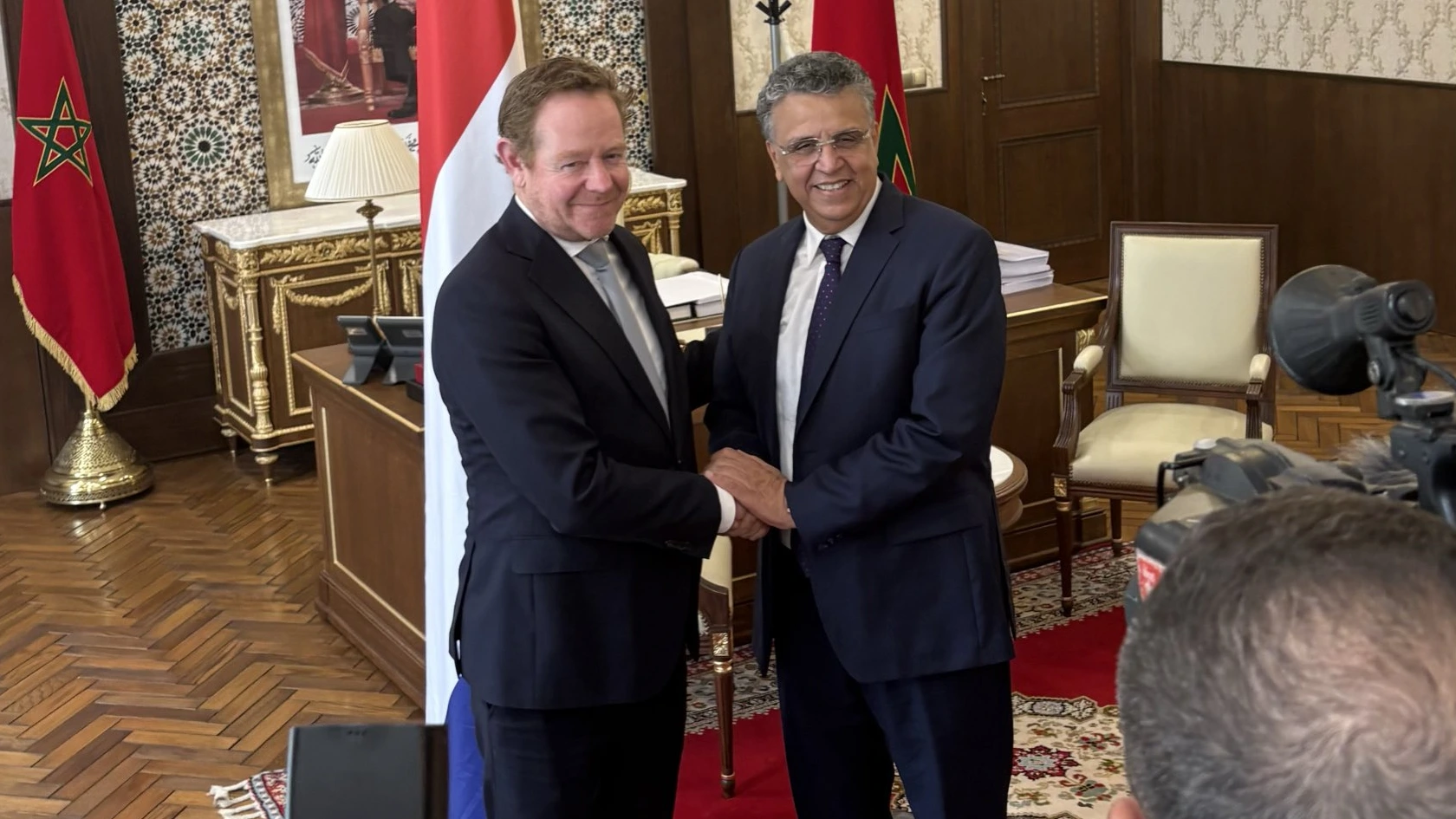
The parliamentary debate follows an April 7 visit to Rabat by Van Weel and Foreign Minister Tom Berendsen. During meetings with Moroccan Justice Minister Abdellatif Ouahbi, both sides discussed expanding judicial cooperation, combating organized crime and terrorism, and establishing mechanisms for seizing criminal assets held in Morocco.
Van Weel reported a steady increase in extradition requests between the two countries in recent years, and Berendsen framed the trip as a response to evolving geopolitical realities requiring stronger partnerships beyond the EU.
Read also: The Netherlands Owes Thousands of Moroccan Families More Than Money