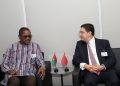
On June 1, 2026, in a last-ditch effort, Algeria attempted to involve the Polisario Front in the first Korea-Africa Foreign Ministers’ Meeting dedicated to implementing the decisions made at the 2024 Korea-Africa Summit.
A rejection that Seoul has always upheld since 2006, the year the Korea-Africa Forum was launched. Algeria is playing the same scenario that it is trying to implement in the relations between the African Union and the European Union, whereas the Accra summit, held on July 23, 2024, had decided that only the member states of the United Nations are authorized to participate in international partnership forums between Africa and its international partners.
It is certain that Algeria will no longer have the opportunity to do so with Brussels, whatever the future participation formula, at a time when the European Union has adopted a clear position of support for resolution 2797 of October 31, 2025, which decided that the autonomy plan under Moroccan sovereignty is the only plausible and credible solution to resolve the Northwest African conflict over the Sahara.
To date, 130 member countries of the United Nations either fully recognize Morocco’s sovereignty over the Sahara or support the autonomy plan proposed by Morocco in 2007 and refined since October 2025. Similarly, out of the 54 member states of the African Union, only twelve maintain their recognition of the so-called Sadr, half of which are in standby or de facto freeze situations.
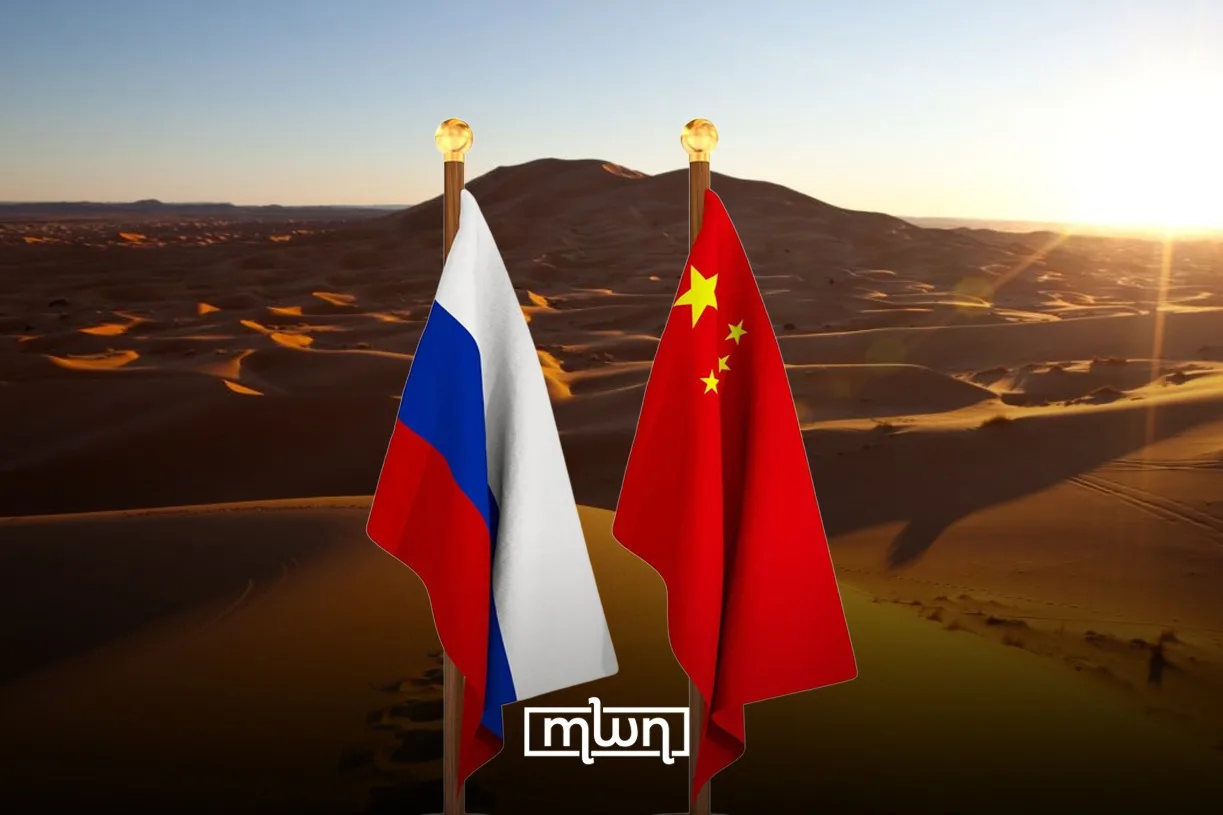
These new developments offer me the opportunity to revisit the positions of China and Russia, who still hesitate to jump on the bandwagon to seriously help resolve the Northwest African conflict over the Sahara definitively.
Indeed, on Thursday, 30/4/2026, Aziz Bouceta and Adil Abdelali hosted me at their show Medias24. Shrewd as they have always proven to be, they asked me a question about my reading of China’s and Russia’s positions regarding the Northwest African conflict over the Sahara. They were eager to learn whether Morocco could expect Russia and China to abandon their neutrality and take a definitive stance in support of the autonomy plan under Moroccan sovereignty in the Southern provinces.
I provided a response that was honest and measured, avoiding any sharpness or exaggeration of my optimism regarding the imminent outcome of the regional conflict over the Moroccan Sahara. I could have been happier that China and Russia abstained during the vote on resolution 2797 on October 31, 2025, endorsing the Moroccan autonomy plan as the most realistic solution to resolve this regional conflict.
I couldn’t help remember how the Algerian media and decision-makers expressed their anger. They lamented that neither Russia nor China used their veto power to abort the aforementioned resolution. I watched the show later. Then, I thought that clarifications were necessary to refine my perception and be in tune with the evolution of the issue, which keeps bouncing back at a medium pace.
Then, on May 5, 2026, the Polisario Front attacked Smara in the southern provinces. This attack caused a massive shockwave. Several capitals in Europe, Asia, and America, as well as regional and international organizations, expressed their condemnation of such an action. Some statements went even further and used the word “terrorist” to stigmatize the attack.
Algeria, undoubtedly the sponsor of this attack—among other state and non-state actors—did not expect that such an uncalculated action would ignite international blame and condemnation. Algerian decision-makers are totally aware that continuing to provide refuge to a movement, which is in the process of being classified as terrorist will soon place their country in the uncomfortable position of a rogue state.
The Algerian decision-makers are even more aware that the procedure related to the bills submitted to the appropriate committees within the U.S. House of Representatives and Senate, classifying the Polisario Front as a terrorist movement, follows its course and has a serious chance to pass.
The attempted coup in Mali using the Azawad Liberation Front (FLA) and the Support Group for Islam and Muslims (Jnim) on April 25, 2026, has drawn attention to Algeria’s behavior as a sponsor of movements seeking full destabilization in cahoots with networks of organized crime. Terrorism and separatism are depicted as two sides of the same coin.
Separatism associated with terrorism dismiss a narrative that has long justified violence against civilian populations on the pretext that the war for “national liberation” can cause collateral damage in areas far from the battlefield.
Therefore, Russia’s and China’s positions on the regional conflict over the Sahara deserve to be debated in order to find a tangible explanation. The geopolitical analysis is essential in this regard. It can mean that the two countries have interests in North Africa and Sub-Saharan Africa. Therefore, they ought to sustain some sort of constructive neutrality.
Indeed, China intends to confirm a balanced position between Morocco and Algeria. China voted for consensus resolutions promoting the autonomy initiative Morocco proposed in 2007, particularly in 2021 (resolution 2602). However, in October 2025, as the resolution process took a new turn, China abstained from voting on resolution 2797.
Flat neutrality doesn’t meet the job description
Moreover, despite the pressures Algeria and South Africa exerted, China does not invite the Polisario Front or so-called Sadr to the Forum on China-Africa Cooperation (FOCAC) summit, founded in 2000. They have put forward the pretext that this entity was a member of the African Union and therefore was entitled to participate.
The last FOCAC was held in Beijing in September 2024 and confirmed China’s unequivocal position on the participation criteria, particularly the one that stipulates that only countries that are members of the United Nations Organization are eligible to participate.
Russia, for its part, abstained during the vote on resolution 2797, arguing that it was unbalanced and imposed by the United States. It confirms the position it has adopted since 2018. However, Russia does not invite the Polisario or the so-called Sadr to the Russia-Africa Partnership Forum. Three editions of the Forum have been organized, respectively, in Sochi (October 2019), Saint Petersburg (July 2023), and Cairo (December 2025).
The same observation on the participation criteria is being put forward: Russia gives a flat refusal to Algeria, South Africa, and the last handful of African countries still recognizing the Polisario Front or the so-called Sadr. During the 3rd edition of the Russia-Africa Forum in Cairo, Algiers and Pretoria tried to pressure Moscow and Cairo to allow the participation of this entity in the Forum and enter freely in a country that is both Arab and African.
Thus, Algiers and Pretoria would later make a break into the Russia-Arab World Cooperation Forum. This forum is very important. The first meeting took place in Moscow in 2009. The 6th edition was held in Marrakech in December 2023. As a result, Algeria did not participate, on the pretext that it had severed diplomatic relations with Morocco in August 2021.
These arguments are not convincing according to independent commentators and politicians, as Resolution 2797 has put an end to past ambiguities. They are not, especially since China and Russia have been facing attempts at separatism and destabilization for decades already.
I wouldn’t venture into the justification or refutation of the claims dissident movements put forward in both China and Russia; however, I relay on unbiased observers’ views in this specific matter. They were confused by the ambivalence of Beijing and Moscow’s positions regarding the regional conflict over the Sahara.
Some attempts are rooted in the tumultuous history of the two countries; others are the result of foreign interests, either within the framework of the East-West conflict, the Cold War, or the reshaping of geostrategic spaces.
China and Russia use the argument that they oppose the United States’ control over this issue and not necessarily target Morocco. This argument seems to be a smokescreen. On other hot topics, this argument is not—or is timidly—put forward by both countries to make amends.
Similarly, the argument according to which Russia and China seek to maintain a certain balance within the Security Council to keep the door open for initiatives to resolve complex conflicts such as that of the Sahara lacks flair. This argument is contradicted by their perceptions and behavior with respect to other issues directly linked to their vital interests.
Let’s take a closer look. If for Russia, the status of the Russian republics in the North Caucasus gives a precise idea of the autonomy regime within the Russian Federation, the case of China deserves particular attention. This is all the more imperative as my reading of the behind-the-scenes of the Trump-Putin summit in Alaska (August 2025) seems relevant (Hami H., Geopolitics as an Exact Science, Morocco World News, August 14, 2025
This reading is relevant for a couple of reasons. Let’s start with China. Lately, a story has not been noticed. It confirms the idea that the media often get carried away and are manipulated. They deal only with preconditioned topics. They don’t pay attention beyond the path competitive interests laid out to blur them.
I am referring to Cheng Li Wan’s visit to Beijing on April 10, 2026, by Cheng Li Wan. She is the head of the Kuomintang-KMT, Taiwan’s opposition party. This is a historic visit, the first of its kind by a KMT official in three decades. This visit is part of a peace mission aimed at easing tensions between Beijing and Taipei.
It is worth recalling that the attempts at rapprochement between Beijing and Taipei date back to the 1992 consensus. This consensus is based on the idea of “one China with multiple interpretations.” As expected, the Taiwanese government, led by the Democratic Progressive Party (DPP), a nationalist party advocating for independence, stigmatized Cheng Li Wan’s initiative.
Gone Fishing …
Taiwan is a complex story that reflects an endless tug-of-war between two entities that neutralize each other through cooperation. This presents a situation that intrigues foreign observers. The specificity of China (mainland China and regions enjoying special administrative organization) is that it combines unshakable ideology with openness to capitalism. Shanghai and Hong Kong offer an eloquent example in this matter.
Established observers see there a political and diplomatic subtlety that commands admiration, much to the chagrin of detractors of a country that does not doubt its means and its ability to achieve strategic parity with the United States and Russia within the next two decades.
Hence the profound significance of the phrase President Xi Jinping used during President Donald Trump’s visit to Beijing on May 14, 2026. He warns that the United States and China should not fall into the Thucydide’s Trap.
This expression was used by international relations theorist Graham Allison in 2011. He emphasized it in his book he published in 2017 (G. Allison, Destined for War: Can America and China Escape Thucydides’ Trap?). Thucydides’ Trap recalls the struggle for power and dominance between a dominant power and an emerging power.
If a direct military confrontation were to occur, both contenders for maintaining or achieving power would end up weakened. This is what happened in the aftermath of the Peloponnesian War (431 to 404 BC). Sparta would be the United States and Athens would be China.
This expression was used by international relations theorist Graham Allison in 2011. He emphasized it in his book he published in 2017 (G. Allison, Destined for War: Can America and China Escape Thucydides’ Trap?). Thucydides’ Trap recalls the struggle for power and dominance between a dominant power and an emerging power.
If a direct military confrontation were to occur, both contenders for maintaining or achieving power would end up weakened. This is what happened in the aftermath of the Peloponnesian War (431 to 404 BC). In this case, Sparta would be the United States and Athens would be China.
Indeed, the Thucydides Trap that Graham Allison has studied in sixteen cases throughout history spares contemporary geopolitical space, including North Africa. This time, the concept might apply to rising medium powers that, in their eagerness to break free from the status of proxy, would fall into the trap of stubbornly trying to curb the rise of their neighbors’ ascendancy.
Similarly, to remain in the same spirit of historical borrowings, one can refer to Nero (37 AD – 68 AD). This Roman emperor ordered the burning of Rome and used it as a pretext in the hope of maintaining his internal power and creating discord in the neighboring geopolitical areas.
The attack on Smara and the attempted coup in Mali by proxy agents are not far from recalling Nero’s suicidal temptation. The reckless advance witnessed in the aftermath of October 31, 2026, is not only aimed at stalling the process of resolving the Sahara conflict but also at keeping MINURSO alive, whose mission will inevitably come to an end in the coming months.
China and Russia are expected in October 2026 to find out if any changes are observed in their perceptions of how the Sahara conflict would be resolved in the spirit and letter of resolution 2797. The position of the two countries regarding the future mandate of MINURSO would be scrutinized closely. This mandate must be reviewed so that the Security Council remains faithful to the logic of the compromise reached on October 31, 2026.
Let’s get to the heart of the matter now. What is the relationship between China’s position on the Moroccan Sahara and Taiwan? What does the visit of the Taiwanese opposition leader to Beijing represent? To answer this tricky question, I put forward a series of explanations.
First of all, on a more general note, I would say that the Alaska summit between Presidents Donald Trump and Vladimir Putin in August 2025 was an opportunity for Russia and the United States to share influence in a faltering, zigzagging international system heading into the void.
Secondly, China is among the countries encompassed in the attempts to scaffold new three-headed geopolitics dominating their respective spaces: the United States, Russia, and China. President Trump’s visit to Beijing from May 13 to 15, 2026, confirms this potential scenario.
Western and Asian observers fear that the United States and China might strike a deal that would endanger the classical alliances that some countries have with Washington and Beijing. Obviously, the war between the United States, Israel, and Iran was dealt with; however, it was not the main focus of the talks between Donald Trump and Xi Jinping.
Thirdly, on another specific note, I would like to stress that on several occasions, foreign friends have approached me to inquire about the slowness of issuing business visas to Taiwanese nationals for visiting Morocco. I explained, as best as I could, in an attempt to be politically correct, the ins and outs of this procedure.
Morocco adopts the “One China” policy, or “Single China” policy. The issuance of business visas is subject to specific conditions. Some people still don’t understand this procedure. I may add that they don’t want to understand anything. Too bad.
Fourthly, China strongly fights separatism. This is an undeniable fact. The Muslim autonomous region of Xinjiang in northwestern China means that Beijing cannot take the risk of opening a breach that could be fatal to its policy to some extent. Moreover, the administrative organization in China is characterized by the existence of five autonomous regions, including Tibet, Inner Mongolia, Ningxia, Guangxi, and Xinjiang.
Just as the Kashmir conflict has been a thorn in China’s side since the first Indo-Pakistani war in 1947. For the record, China controls the Aksai Chin region and the Shaksgam Valley. India controls Jammu and Kashmir and Ladakh, while Pakistan administers Azad Kashmir and Gilgit-Baltistan.
Separatism: There is no such thing as a smooth hedgehog
Fifthly, Taiwan might not be a priority in the tug-of-war between China and the United States. Not only as a result, I presume, of the arrangements reached in Alaska, but also to entice Beijing and lead it to accept a certain form of strategic parity sooner than Chinese decision-makers envision.
Obviously, the tripartite war between the United States, Israel, and Iran has watered down President Trump’s wine a little. This is a metaphor, as the American president has stated in the past that he has never drunk alcohol in his life.
Why is the visit of the Taiwanese opposition leader KMT to Beijing unprecedented? To answer, one must recall certain historical facts. They highlight a kind of clash of nationalist legitimacies in China. Mao Zedong’s victory over Chiang Kai-shek is perceived by the latter as a usurpation of power. He kept arguing that reunification with mainland China must occur to his advantage regardless of the sacrifices.
Mao Zedong believes that his victory is legitimate because it is the culmination of a long march (1934-1935) that marks the triumph of the Chinese people, which was also confirmed against the Japanese invasion (1937-1945). Chiang Kai-shek settled in Taipei and ruled Taiwan from 1949 until his death in 1975.
Why does China have every interest in stepping out of its comfort zone with respect to the Northwest Africa conflict? The idea of autonomy Morocco proposed for the southern provinces would be inspiring for managing China’s territorial issues. How? Simple. The idea of the 1992 consensus may be wise. The precedents of Hong Kong and Macao are enlightening enough to open the debate on the issue of China’s territorial integrity.
Now Russia and the North Caucasus. Intellectual curiosity and strategic imperatives deserve attention to try to understand the confusion many analysts brought about regarding a couple of principles, such as the right of peoples to self-determination, territorial integrity, federation, confederation, and, of course, autonomy in its various forms.
The North Caucasus includes seven autonomous republics within the Russian Federation. The most important republics that have been in the spotlight over the past three decades are Dagestan, Chechnya, Ingushetia, and Tatarstan. They were integrated into the Russian Empire in the wake of the Caucasian War, which lasted forty-four years (1818-1864). The other republics are North Ossetia, Kabardino-Balkaria, Karachay-Cherkessia, and Stavropol Krai.
Beyond the surface area of these republics, which does not allow them to live independently from the Russian Federation, what must be emphasized in this respect is the administrative organization that the central power in Moscow is good at implementing.
Autonomy and the Right to Self-Determination: The Soundness of Resolution 2625/1970
The North Caucasus saw the short-lived creation of the Mountain Republic of the North Caucasus (1919-1920). After the victory of the Bolsheviks, this republic changed its name and became the Autonomous Soviet Socialist Republic of the Mountain. Yet, the aspiration to full independence is still nurtured in this neighborhood.
First of all, there was the Chechen War (1994-1996, 1999-2000, and 2009), which recorded the participation of foreign fighters labeled as mujahideen. Then there was the war in Dagestan (1999), during which fighters from Chechnya, supported by foreign militias, participated. The intervention of Russian troops restored order. However, dissent remains strong, as the tensions that erupted in 2024 evidenced.
Two other less publicized wars can be mentioned in this regard. On the one hand, the war that took place between 2007 and 2015, pitting Ingushetia against Chechnya. It was part of the uprising that followed the Chechen War. The border agreement signed in 2018 between Ingushetia and Chechnya, under which the latter annexed 9% of the former’s territory, triggered an unprecedented uprising.
On the other hand, the conflict that pitted North Ossetia against Ingushetia in 1992. The North Ossetia case cannot be separated from that of South Ossetia that Georgia keeps claiming altogether with Abkhazia. Both declared their unilateral independence in 2008. Only Russia, Venezuela, Nicaragua, Nauru, and Syria recognized them as sovereign states.
However, there is a strong feeling among the concerned populations for the reunification of North Ossetia and South Ossetia. Russia is thought to have encouraged such a trend at first, before halting the process when attempts at destabilization resumed in other strategic regions for Moscow.
Precisely, Russia is known for being accurate when it comes to readings of international relations. However, this time, Moscow seems to give seasoned observers a hard time. So why does Moscow not go beyond the threshold of equivocation and declare that the autonomy plan is a tangible expression of the right of peoples to self-determination and clearly recognizes Moroccan sovereignty over the Southern provinces?
In this respect, a precedent might inspire the Russian decision-makers. This applies to the pretext that the United Kingdom put forward for decades to champion the right of peoples to self-determination. This was fully consistent with its own interest with respect to the Falkland Islands and Gibraltar Rock.
Indeed, whenever a referendum was held to decide on the future of the latter, the population, mostly British, voted to remain within the United Kingdom. For the record, this happened particularly in 1967 and 2022 in Gibraltar, and in 1986 and 2012-2013 in the Falkland Islands. It is worth mentioning that Spain and Argentina, respectively, claim Gibraltar and the Falkland Islands as their own territories.
Spain denounces the terms of the Treaty of Utrecht signed in 1713 between France and Great Britain, which ended the War of the Spanish Succession and handed Gibraltar over to Great Britain. Lately, Madrid took note of the de facto situation Brexit brought about, particularly the framework agreement of 2025-2026 between the European Union and the United Kingdom aimed at delimitating land borders and integrating Gibraltar into the Schengen area.
Argentina does not give up on its sovereignty over the Falkland Islands. A was waged in 1982 that the United Kingdom won. Yet, the dispute is not solved. Because the conflict goes back further. The control of the Islands passed respectively from France (1764) to Spain and the United Kingdom (1770). Since 1833, the Falkland Islands have been controlled by the United Kingdom.
For a long time, the United Kingdom hesitated to publicly acknowledge the validity of Moroccan territorial claims, even though it was a co-author of the scenarios that preceded the establishment of the protectorate over Morocco in 1912.
To sustain this claim, one can refer to the 1895 agreement signed between Morocco and the United Kingdom, recognizing Moroccan sovereignty, including in the Sahara, as well as the secret agreement of 1904 between France and Spain sharing their influence in Morocco.
Furthermore, one can mention the Berlin Conference of 1884-1885 on the partition of Africa or the Algeciras Conference of 1906, dedicated to Morocco, to settle the dispute between France and Germany on the way to have their share in the North African country.
It’s never too late to do the right thing. The United Kingdom joins most European countries and recognizes that the Moroccan autonomy plan presents a solid and sole basis for resolving the regional conflict over the Sahara.
Sustaining in appearance the legal approach to settling disputes, the United Kingdom’s policy toward the Southern provinces until 2025 has actually been, as mentioned above, a strategy to defend British interests in the Falkland Islands and Gibraltar. The United Kingdom now adopts a clear position, supporting, without any ambiguity, the autonomy plan Morocco presented in 2007. Resolution 2797 of October 31, 2025, confirms the relevance of its choice of reason for the establishment of peace in the Euro-African space.
Bad Timing, Poor Advice
A diplomat was a witness to a heated exchange between the foreign ministers of Spain, the United Kingdom, and Russia regarding (according to the perception sustained by each party in the conflict) the annexation (or reclamation) of Crimea in 2014. He reported that Sergei Lavrov left his interlocutors speechless. He would have advised them, respectively, to hand over Ceuta and Melilla to Morocco and the Falkland Islands to Argentina before lamenting the fate of Crimea.
Certainly, Russia does not recognize the pseudo-Sadr, but it receives delegations from the Polisario on the eve of the annual meetings of the United Nations General Assembly. Sometimes, it abstains and often takes a stand. This does not prevent Moscow from signing a fishing agreement with Morocco that includes the southern provinces.
So, why not dare and break the ice? Strategic interests with Algeria? Repositioning in the Sahel? Willingness to make life hard for the United States within the Security Council? All this, no doubt, and more, can be put forward as a sound argument.
However, the Russian Federation includes autonomous republics in the North Caucasus that enjoy self-rule. Such a status would not rule out the propensity of their population to request more and even jeopardize Russia’s security and strategic priorities in its vital regional space.
The tripartite war between the United States, Israel, and Iran has sharply raised the issue of straits and respect for the United Nations Convention on the Law of the Sea (1982), in general. The blockade of the Strait of Hormuz has taken center stage in analyses maritime affairs specialists made, particularly on the issue of freedom of navigation.
Some are questioning the interpretation of the clauses of the Convention on the Law of the Sea in times of crisis. If we push the analysis further, we may say that some countries would gain more advantages than others. The race is not over, anyway.
Recalling my argument that the summit meeting in Alaska between Presidents Trump and Putin would have defined new geopolitical arrangements, I would then say that the Hormuz blockade consolidates China’s security perception in its sub-region. It is in this spirit that the meeting between President Xi Jinping and Cheng Li Wan, the head of the Kuomintang-KMT, should be understood.
Obviously, China intends to take advantage of this situation to assert once again its sphere of influence. China is not the sole country to benefit from this sort of geopolitical breach. Middle Eastern countries will seize this opportunity to set new parameters pertaining to military security and the control of maritime routes. There is no need to elaborate on President Trump’s visit to Beijing on May 13 and 14, 2026. However, a relative flexibility in the American position on Taiwan has been witnessed. Taipei would have a lot to worry about in the near future. Taipei has already denounced the American president’s remarks warning the island against investing too much in its claim for full independence.
Although Taiwan has decided to transfer part of the semiconductor technology intended for electric cars and other uses to the United States, the latter is aware that Taipei would only transfer part of this technology. This presents its sound shield against a potential setback from Washington in the future as part of an unavoidable strategic realignment in Asia based on a new division of labor between the United States, China, and Russia.
In a few years from now, tongues will be loosened, and revelations will be made about what happened between 2020 and 2026 on the global strategic chessboard. Certainly, one would be surprised by the irrelevance of certain readings, scattered here and there, on an international system whose mechanisms give hard time to everyone, including the most astute military planners and strategists.
So, why don’t China and Russia step out of their comfort zone regarding the Northwest Africa conflict and openly endorse the autonomy plan that has unequivocally accounted for full sovereignty and, therefore, help solve the dispute once and forever? Would it be how they perceive time management or their overrated balancing behavior?
Certainly, China and Russia always rehearse their respect for international law and the primacy of the United Nations in resolving international conflicts; however, they cannot, seriously and honestly, ignore the evolution of the UN’s perception of the right of peoples to self-determination and the necessity of respecting the territorial integrity of sovereign states.
This evolution has shifted from the divergent interpretation of the resolutions adopted by the United Nations General Assembly, specifically resolution 1514 of December 14, 1960, and resolution 1541 of December 15, 1960, to a broader and more sound interpretation enshrined in resolution 2625 of October 24, 1970.
The adoption of resolution 2625 took place the day after Morocco recovered Sidi Ifni in 1969, in execution of resolution 2072 adopted in 1965, calling on Spain to engage in negotiations with Morocco on the way to return Sidi Ifni and Spanish Sahara to the latter.
Moreover, autonomy as an innovative expression of the right to self-determination is applied in different ways in China, Russia, France, the United Kingdom, Spain, Brazil, and Mexico, to name but a few. So why do Beijing and Moscow hesitate after the adoption of resolution 2797? They give no public explanation, which some commentators perceived as a sign of goodwill towards Rabat.
Needless to say, China and Russia are the targets of separatist attempts that they have so far managed as best they can. However, the threat is constant. Far from their own vital space, they have investments in the Middle East, North Africa, and Sub-Saharan Africa. These investments are at risk. Indeed, some extremist movements advocating destabilization as an existential approach have been controlling the space for years.
The Sahel-Saharan region would not be safer or immune either. Niger, Mali, Burkina Faso, and Chad are prime targets for separatist movements, regardless of the banner under which they align. The connection between North Africa and Sub-Saharan Africa depends on peace and security in the broader space stretching from Europe and the Middle East to Africa.
Comfort zone and shadow zone: No exist Strategy
Recently, the United States and Nigeria announced that they had conducted a joint operation that led to the elimination of Abou Bilal al-Minouti, the deputy leader of the Islamic State group, in Bornu. Abou Bilal had been announced dead in 2024, but this time, the information confirmed by Presidents Donald Trump and Bola Ahmed Tinubu seems more credible and accurate.
Russia has made it clear that it has no intention to give up its presence in certain African Sahel countries, despite the messages recently sent to it through the attacks on Niger and Mali. Would it be through the former Wagner or the “Africa Corps”? For Russia, it’s all the same; the Russian presence, Moscow argues, is based on agreements with the existing governments regardless of the colour and the form of their political institutions.
China, for its part, is watching what is happening more closely. It risks suffering the same fate it experienced in Venezuela when Nicolás Maduro was overthrown. China lost most of its oil supplies from such an important producing country. Losing its growing interests in Africa due to excessive geopolitical caution is obviously ungrounded.
China can capitalize on the results scored following President Donald Trump’s visit to Beijing to secure a place in the Atlantic space that matches its ambitions by 2050. China would have scored the same favorable win with President Vladimir Putin’s visit to Beijing on May 19 and 20, 2026. If Beijing took such a bold step, it would save its bet in the heat of the geopolitical turbulence that is shaking a precarious transitional international system.
The interpretation I put forward regarding the results of the Alaska summit in August 2025 confirms its relevance. A distribution of roles and spheres of influence is becoming clearer. Unbeknownst to many, Africa has been dealt with in the discussions between Vladimir Putin and Xi Jinping—particularly the latest developments in North Africa, the Sahel, and Central Africa, where China and Russia have interests related to rare earths and other strategic resources.
Moreover, the blockade of the Strait of Hormuz, the blockage of maritime traffic in the Suez Canal (2021), the regular geopolitical tensions in the Strait of Malacca, the risks faced in Bab al-Mandab in the Red Sea, the change of hands in the Panama Canal, the maritime altercations in the Black Sea, and the gesticulations around the Bosphorus Strait, etc., pose a major security and strategic threat for global trade.
China’s ambitions for the Silk Road and Russia’s need for secure access to warm seas would be compromised if the Strait of Gibraltar and security in the western Mediterranean were threatened. It goes without saying that the need to preserve this area, as a crucial passage for international trade, is more urgent than ever. This would help in order to keep it away from sterile geopolitical bargaining.
For the record, it is worth recalling that in 2023 Brigadier General Mohamed Reza Naqdi, a senior officer within the Iranian Revolutionary Guards (IRGC), threatened to engage in a showdown with the United States and Europeans at the gates of Gibraltar, allegedly in retaliation for the dramatic situation in Gaza.
This type of threat was also made against Morocco in 2020, following the severance of diplomatic relations (2018) by a former diplomat affiliated with the IRGC. Indeed, the IRGC intends to use the services of proxy movements. Established observers note that extremist movements in the region, including the Polisario separatists, in collusion with a branch of the Algerian army, would serve as Iran’s advanced arms to carry out a similar mission aimed at playing a full scale of destabilization in the region.
It would be up to two countries belonging to the Maghreb-Sub-Saharan Africa region to further review their roadmaps. On one hand, Mauritania, although still hesitant, seems to realize where its vital interest lies. Mauritanian decision-makers are showing more firmness regarding the freedom of movement on their borders with Algeria, particularly to curb the maneuvers of elements affiliated with terrorist networks.
On the other hand, Senegal must get on board, as the risks of separatism are still very much alive in Casamance, with memories dating back to 1982. Indeed, military clashes have pitted the Senegalese army against the Movement of Democratic Forces of Casamance (MFDC). The signing of a peace agreement in 2025 in Bissau is certainly promising. However, with the resurgence of separatist movements’ activism in Niger (March 2026) and Mali (April 2026), such an agreement could fall apart at a glance.
Most West African countries are aware that the Atlantic Ocean promises better development and growth in the next three decades. Endemic conflicts and disputes must be resolved for the sake of implementing these projects. The termination of proxy movements’ role and the neutralization of rogue states are part of this challenging and yet promising plan.
The seasoned experts are watching. The Moroccans, too, are doubling their vigilance. The prism of the Sahara issue in Morocco’s international relations allies to all. A dynamic has already been set in motion in the southern provinces. It draws its legitimacy and strength from the adherence of numerous countries to the settlement process through an unequivocal recognition of Morocco’s sovereignty.
Only a handful of recalcitrant obstructers are still sulking. Stunning fate the latter might be facing; they are already facing attempts at dissent and separatism. There will come a time when they will wish that the autonomy regime was applied in regions of their own countries that already claim total independence—and unless there is a bit of realism and pragmatism, this is bound to happen.
On June 1, 2026, in a last-ditch effort, Algeria attempted to involve the Polisario Front in the first Korea-Africa Foreign Ministers’ Meeting dedicated to implementing the decisions made at the 2024 Korea-Africa Summit.
A rejection that Seoul has always upheld since 2006, the year the Korea-Africa Forum was launched. Algeria is playing the same scenario that it is trying to implement in the relations between the African Union and the European Union, whereas the Accra summit, held on July 23, 2024, had decided that only the member states of the United Nations are authorized to participate in international partnership forums between Africa and its international partners.
It is certain that Algeria will no longer have the opportunity to do so with Brussels, whatever the future participation formula, at a time when the European Union has adopted a clear position of support for resolution 2797 of October 31, 2025, which decided that the autonomy plan under Moroccan sovereignty is the only plausible and credible solution to resolve the Northwest African conflict over the Sahara.
To date, 130 member countries of the United Nations fully recognize Morocco’s sovereignty over the Sahara or support the autonomy plan proposed by Morocco in 2007 and refined since October 2026. Similarly, out of the 54 member states of the African Union, only twelve maintain their recognition of the pseudo-Sadr, half of which are in standby or de facto freeze situations.
These new developments offer me the opportunity to revisit the positions of China and Russia, who hesitate to jump on the bandwagon to help resolve the Northwest African conflict over the Sahara definitively.