 Join on WhatsApp
 Join on Telegram
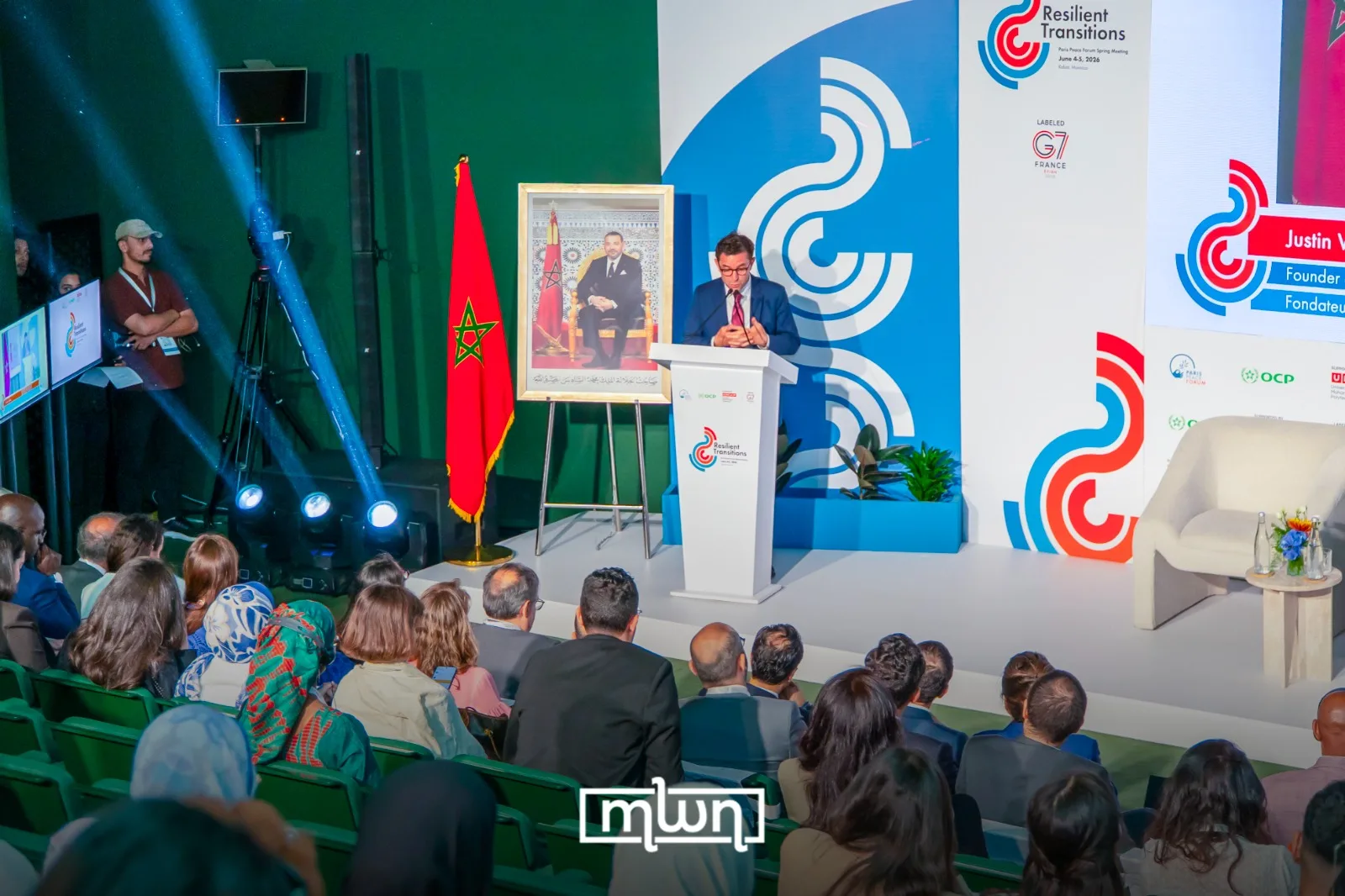
Rabat – Against a backdrop of growing geopolitical tensions, climate challenges, and rapid technological change, international leaders, policymakers, researchers, investors, and civil society representatives gathered in Rabat on Thursday for the Paris Peace Forum’s 2026 Spring Meeting.
Hosted by the Paris Peace Forum in partnership with OCP Group and with the support of the Mohammed VI Polytechnic University (UM6P), the two-day event is taking place under the theme “Resilient Transitions.” The meeting seeks to explore how societies can adapt to global disruptions while continuing to pursue sustainable development goals.
Opening the forum, Justin Vaïsse, Founder and Director General of the Paris Peace Forum, spoke about the importance of sustaining international cooperation at a time when multilateral institutions are under increasing pressure from geopolitical rivalry, populism, and global fragmentation. He acknowledged that the international system is currently marked by instability and competing priorities, but argued that cooperation remains not only possible but necessary.
He referred to what he called a “glass half full” perspective, noting that despite tensions between major powers, multilateralism continues to “resist the assaults of populism” and remains relevant in addressing long-term global challenges. These include global health, food security, agricultural systems, technological governance, and humanitarian action, areas that often receive less attention amid short-term geopolitical crises.
Vaïsse also stated that the Paris Peace Forum is not a traditional think tank. Instead of producing reports or policy papers, he described it as a platform for “assembling” solutions, bringing together governments, international organisations, businesses, universities, NGOs, foundations, and development banks to connect fragmented initiatives and turn ideas into actionable cooperation. In his words, the Forum works upstream to “make positions converge” and unlock collective action where institutions alone often struggle to do so.
A world in search of resilience
He recalled that the Forum had already met in Morocco in 2024 in Benguerir to discuss “just transitions,” and explained that this 2026 edition in Rabat continues that reflection by focusing on “resilient transitions” to explore how agricultural, energy, health, and development transitions can withstand geopolitical shocks and ongoing global disruptions.
He also emphasized Africa’s central role in these transformations, describing the continent as one of the key spaces where new models of development and cooperation are already taking shape.
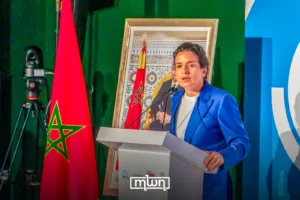
Meanwhile, Leila Benali, Morocco’s Minister of Energy Transition and Sustainable Development, used her speech to highlight the growing need for resilience in an increasingly volatile world. She stated that countries today face a unique combination of challenges, including armed conflicts, energy crises, pandemics, geopolitical tensions, and the disruptive impact of artificial intelligence.
“In Morocco, in Africa, we know a thing or two about resilience,” she told the audience. “We definitely know a few things about resilient transitions.” She noted that resilience is no longer simply about responding to crises after they occur but about preparing societies and economies to absorb shocks and adapt quickly.
“Our ecosystems today, and our economies, need to be able to absorb these shocks,” she said. “They need to be able to adapt quickly. They need to be able to keep functioning effectively in a changing world.”
At the same time, Benali argued that crises can create opportunities for transformation. “Never miss a crisis,” she said, describing a principle that has guided her ministry since she took office in 2021.
Critical minerals and Africa’s new social contract
A major focus of her remarks was the growing demand for critical minerals needed for the global energy transition and the digital economy. According to Benali, the shift toward renewable energy, electric mobility, artificial intelligence, and data centers is driving unprecedented demand for metals such as copper, cobalt, lithium, and rare earth elements.
“We need to extract in the next 30 years the equivalent of what humanity has extracted since its creation,” she said, describing the scale of the challenge facing the mining sector. She warned that current production levels are insufficient to meet future needs, citing projections that copper extraction must increase by 25% over the next six years, cobalt production by 100%, and lithium extraction by more than 300%.
Yet Benali stressed that the debate is about far more than energy or technology.
“The resilient transitions that you are talking about today are not energy and digital transitions,” she said. “These are social and economic transitions that we are talking about. They are reshaping our societies and they are reshaping our democracies.”
The minister also recalled Morocco’s efforts to promote more sustainable and inclusive mining practices. She pointed to the launch of an African-led Environmental, Social, and Governance (ESG) framework for the mining sector, developed with more than 40 African countries.
The initiative, launched in Marrakech in November 2025, aims to establish standards that reflect African realities while helping unlock financing for mining projects across the continent.
“We can continue pretending that we can finance those projects, but we can’t,” Benali said, explaining why African countries chose to create their own framework rather than rely solely on standards developed elsewhere.
She also announced progress in Morocco’s mining reforms, including the digitalization of the country’s mining cadastre and plans to open up large areas for new mining permits through public tenders.
Transforming African agriculture through investment
While mining and energy dominated much of the keynote address, agriculture was another central theme during the opening session. Speaking on behalf of OCP Group’s innovation ecosystem, Younes Addou discussed the enormous potential of African agriculture despite persistent structural challenges.
“Agriculture is not only central to Africa’s future in terms of food security,” Addou said, “but also one of the greatest opportunities to drive growth, climate resilience, and economic transformation across the continent.”
He noted that agriculture employs roughly 60% of Africa’s workforce and contributes more than one-fifth of the continent’s GDP. Despite its importance, however, the sector remains fragmented, underinvested, and often lacks access to financing and innovation.
Addou, who is Vice President for Agribusiness and Sustainability Solutions at INNOVX, argued that solving these challenges requires greater coordination among governments, financial institutions, businesses, and development partners. “Addressing these challenges requires more than financing alone,” he said. “It requires coordination, it requires partnerships, and it requires a collective effort.”
He highlighted two initiatives designed to support agricultural transformation across Africa, including the Agricultural Transition Lab for African Solutions (ATLAS) and MARA, a platform created through a partnership between the International Finance Corporation and OCP Group.
Together, he said, the initiatives seek to connect national development priorities with investment opportunities to help farmers and entrepreneurs gain access to financing, technology, and global markets.
“The challenge now is no longer innovation itself,” Addou said. “The challenge is how to scale these innovations and create enabling ecosystems that allow them to reach millions of farmers.”
The Rabat meeting comes at a key moment in the international calendar. Organized under the French presidency of the G7, it follows the Africa Forward Summit in Nairobi and precedes the G7 Summit later this month.
Over the next two days, participants will discuss food systems, agricultural transformation, child welfare, future generations, and the governance of critical minerals, with organizers hoping the conversations will help shape concrete policy initiatives ahead of the annual Paris Peace Forum in November.