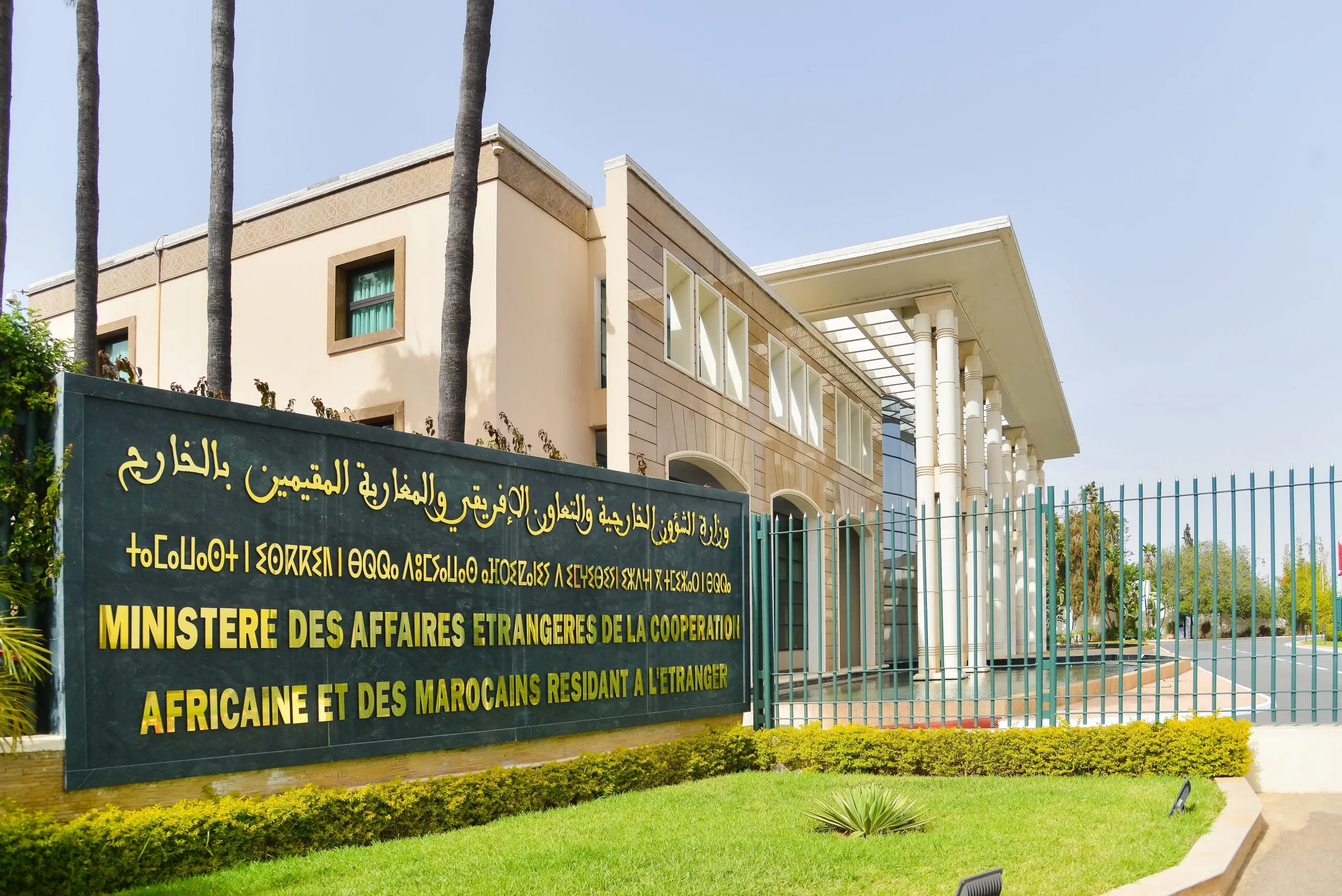
Marrakech – Today, Morocco welcomed the memorandum of understanding reached between the United States and Iran to end their war after more than 100 days of conflict. In an official statement, Rabat described the agreement as “of particular importance in consolidating the ceasefire and ensuring the lasting freedom of maritime navigation through the Strait of Hormuz.”
The deal, mediated by Pakistani Prime Minister Shehbaz Sharif, declared an immediate end to hostilities. Key issues, including Iran’s nuclear program and access to the Strait of Hormuz, remain subject to broader negotiations set for Friday.
Morocco called for “the swift implementation and full respect of this agreement” and expressed appreciation to the mediators. Rabat voiced hope that the deal “will contribute, in accordance with international law, to the resolution of other outstanding issues.”
The statement came as global reactions poured in following the announcement late Sunday by US President Donald Trump and Iranian officials. Sharif confirmed that a formal signing ceremony will take place on Friday in Geneva.
Iran’s deputy foreign minister, Kazem Gharibabadi, stated that the text has been finalized and that “a permanent and immediate end to the war has been declared on all fronts, including Lebanon.”
The 14-point memorandum of understanding codifies the ceasefire and sets up a 60-day negotiation window over Iran’s nuclear program, sanctions relief, and other unresolved matters. The full text has not been released publicly.
Trump focused his initial reaction almost entirely on the Strait of Hormuz, through which roughly a fifth of the world’s oil supplies flow. “I hereby fully authorize the toll free opening of the Strait of Hormuz, and, simultaneously herewith, authorize the immediate removal of the United States Naval blockade. Ships of the World, start your engines. Let the oil flow!” he wrote on Truth Social. He later clarified the opening would begin “for purposes of mine removal” upon Friday’s signing.
Iran’s state news agency Mehr reported that the strait’s reopening would occur within 30 days under “Iranian arrangements.” Tehran also indicated in the final hours of negotiations that it secured maritime service fees for passage through Hormuz. The US has long rejected any tolling arrangement on the waterway.
Vice President JD Vance told CNBC on Monday that the administration expects the strait to be opened “in a toll-free way for the long term,” adding that technical details will be resolved during the 60-day talks.
Iran’s Supreme National Security Council confirmed that the deal includes an immediate suspension of military operations on all fronts, including in Lebanon. Trump, however, made no mention of Lebanon in his announcements.
Israel, which is not a party to the agreement, responded cautiously. Defense Minister Israel Katz stated Monday that Israeli forces would remain in southern Lebanon, Gaza and Syria “for an unlimited period of time.”
Trump had earlier criticized Israeli Prime Minister Benjamin Netanyahu over a strike on Beirut’s southern suburbs that nearly derailed the deal, telling Axios: “Why did Bibi have to do a f****** attack? He has no f****** judgement.”
On the nuclear file, Trump reiterated that “Iran will never have a nuclear weapon.” Vance told CBS that Washington is working with Tehran and the UN nuclear watchdog to destroy Iran’s enriched uranium stockpile, though the technical process remains undefined. Iran holds an estimated 440kg of uranium enriched to 60%, well above civilian use thresholds.
A dispute also emerged over frozen Iranian assets. Iran’s Revolutionary Guard (IRGC) stated that $24 billion in frozen funds would be released during the negotiation period. Vance flatly denied the figure, telling CBS that “$24 billion just doesn’t appear anywhere in any of the texts.”
Oil prices fell sharply after the announcement. Brent crude dropped roughly 4% to just under $84 a barrel, one of its lowest levels since the war began in late February. US stock futures rose, with S&P 500 and Nasdaq contracts gaining approximately 1% and 1.6%.
Analysts cautioned that structural damage to Gulf energy infrastructure and unresolved political disputes could delay a full return to pre-war shipping levels by months.
Read also: US-Iran Deal Raises Hopes for Regional Peace Despite Israeli Pushback