
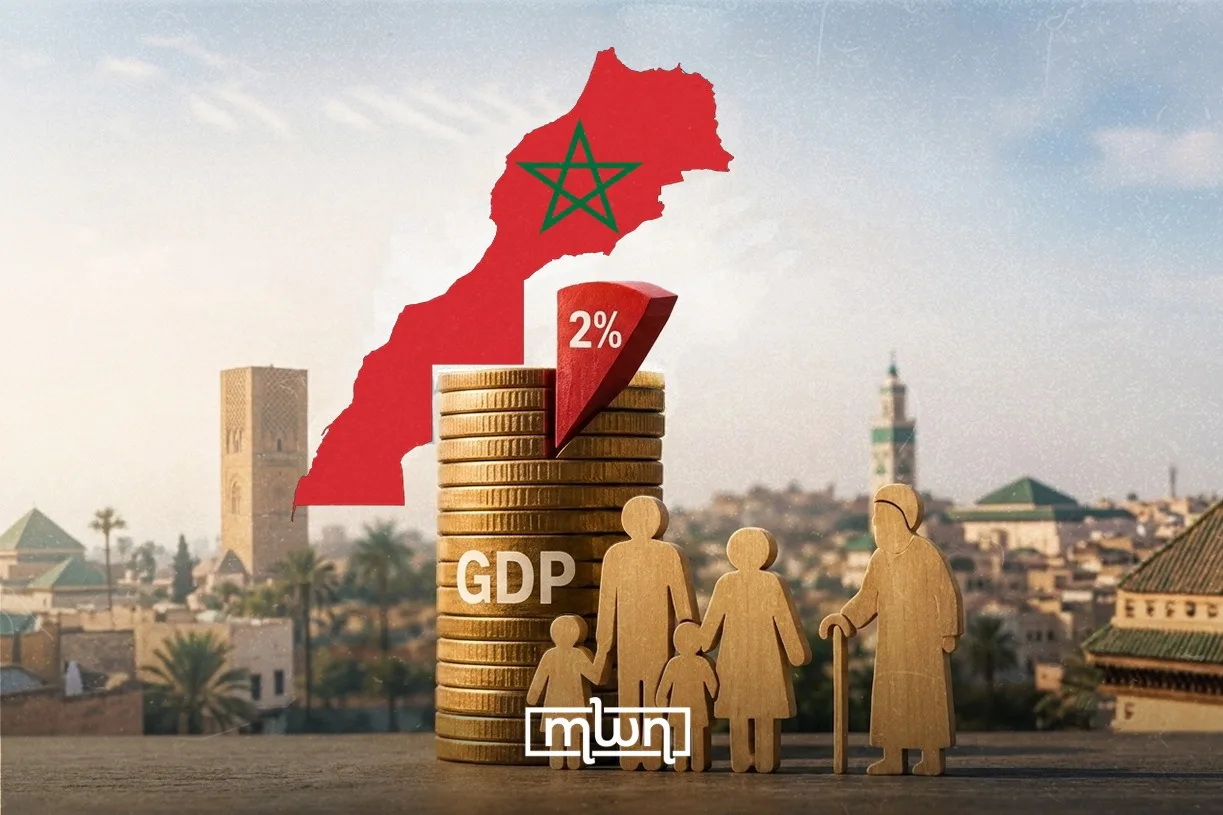
Casablanca — Morocco spent MAD 51 billion by the end of 2025 on its new Direct Social Aid program. According to the first annual report from the National Social Support Agency (ANSS), this represents nearly 2% of the country’s GDP.
This is a major financial commitment for a developing country that still faces deep economic challenges and frequent climate-related shocks such as drought.
The program currently supports 3.9 million households across Morocco. It covers around 5.5 million children under the age of 21 and 1.7 million elderly people. According to the report, the system is highly targeted, with 84% of the aid reaching the poorest 30% of the population.
Around 60% of beneficiaries live in rural areas, reflecting where poverty is most concentrated. The ANSS also says it keeps operating costs very low, with administrative expenses accounting for less than 0.8% of total program spending.
Concerns over replacing subsidies with cash transfers
The government is funding the MAD 51 billion program by gradually scaling back the Compensation Fund, which has traditionally helped keep the prices of basic goods such as butane gas, sugar, and flour affordable. New corporate taxes and solidarity contributions are also helping finance the reform.
However, the shift raises concerns. While the poorest families receive direct financial support, many working-class and lower-middle-income households who earn slightly too much to qualify for assistance may be left exposed to rising prices without receiving any compensation.
The scale of the program is unusual among developing countries. Few emerging economies spend around 2% of their GDP on direct cash transfers. By comparison, the United Kingdom spends roughly 4.5% of its GDP on cash benefits, supported by a large tax base and social security contributions.
The United States spends around 1.5% of GDP on direct cash support, much of it through targeted tax credits. Morocco is pursuing a large-scale cash transfer system without the same level of formal employment and tax revenues that help support welfare systems in wealthier countries.
Another challenge is the risk of long-term dependency. While the ANSS report found that 90% of beneficiaries are satisfied with the aid, around 40% said they would prefer access to jobs or income-generating opportunities. The agency estimates that 2.3 million households receiving support are ready to move toward economic inclusion.
If the economy fails to create enough formal jobs for these families, Morocco could face increasing pressure to maintain a costly social assistance system for years to come, raising questions about its long-term sustainability.
Morocco World News is also on X — check out our latest posts now! Get MWN on iOS and Android for instant access to breaking news.