
 Join on WhatsApp
 Join on Telegram
As I argued two weeks ago, while the Security Council now approaches this dossier as a regional dispute requiring a genuine political process aimed at achieving a realistic, lasting, and mutually acceptable solution, the C-24 continues to see and debate it through the lens of decolonization.
A committee stuck in the past
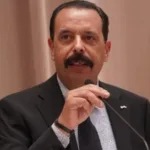
It was therefore no surprise that, when given the floor to address the ideological committee’s latest proceedings, Morocco’s ambassador and permanent representative to the United Nations, Omar Hilale, delivered a rigorous, coherent, and legally well-grounded speech.
Hilale’s intervention notably sought to dismantle the foundations of the continued inclusion of the Sahara question on the C-24’s agenda and to expose the growing disconnect between the Committee’s ahistorical, largely sidelined approach and the institutional reality that now governs the dossier within the United Nations.
Underpinning this argument is the essential observation that while the Sahara question has undergone major political developments and remains the subject of ongoing consultations under the auspices of the United Nations and the Security Council, the Committee continues to reproduce debates inherited from another era. In other words, the Sahara dossier dossier is no longer treated according to the frameworks that prevailed during the decolonization period. It is now embedded in a broader political process led by the United Nations toward a negotiated settlement of the dispute.
Hilale recalled a fundamental historical fact to illustrate this contradiction at the core of the C24’s functioning: the decolonization process linked to the Sahara came to an end in 1975, when Morocco recovered its southern provinces following the Green March and the Madrid Accords.
Spanish colonial presence in the territory ceased with that glorious march, and the Sahara is no longer subject to foreign colonial administration. As such, continuing to present this question as a decolonization matter is an insult to history and the geopolitical developments the dossier has undergone over the past half-century.
This historical reality takes on particular significance when one recalls that it was Morocco itself that requested, in 1963, the inclusion of the Sahara on the United Nations list of non-self-governing territories, at a time when the territory was under Spanish colonial administration. That listing reflected the international context of the period, marked by the UN’s vast decolonization effort.
But the political and legal circumstances that justified this classification changed profoundly after the end of the Spanish presence in the territory in 1975. Therefore, framing the question within the same conceptual model more than six decades later no longer reflects the major transformations this dossier has undergone.
No longer competent or legitimate to make recommendations on the Sahara dossier
This observation raises the question of which institutional framework is appropriate within the United Nations. Since 1991, the dossier has fallen directly under the purview of the Security Council, which oversees the political process charged with finding a lasting solution to the dispute. Article 12 of the UN Charter was designed precisely to avoid overlapping jurisdiction among various UN bodies. It stipulates that when the Security Council is exercising its functions in respect of any dispute or situation, the General Assembly and its subsidiary organs shall not make recommendations on that matter unless the Council so requests. Keeping the Sahara question before the C-24 thus creates a form of institutional duality that sits uneasily with the clarity and coherence of the UN process.
The problem with this continued quest for a parallel resolution of the Sahara question is even more evident when one considers the very nature of the Committee of Twenty-Four. Created in 1961 by General Assembly resolution 1654, the Committee was tasked with monitoring the implementation of the 1960 Declaration on the Granting of Independence to Colonial Countries and Peoples.
In other words, it is a body specialized in decolonization matters, whose recommendations are forwarded to the Fourth Committee and then to the General Assembly. By contrast, the Security Council is the organ to which the Charter assigns primary responsibility for maintaining international peace and security. The recommendations of the C-24 and the General Assembly remain non-binding in nature, whereas the Security Council today constitutes the institutional framework that effectively follows the dossier through its resolutions, the reports of the Secretary-General, and the efforts of his Personal Envoy.
Faced with this evolution, Algeria’s UN representative continues to defend a traditional reading that equates the Sahara question with an unfinished decolonization process. In so doing, Algiers’s goal is to keep the dossier within a political and legal framework that has been largely superseded by current realities. Despite the transformations of recent decades, its repetition of the decolonization-focused discourse only prolongs the dispute and locks the debate into circular logic, rather than supporting the political dynamic led by the Security Council.
Resolution 2797 sealed the triumph of the Moroccan stance
The Moroccan Sahara question underwent a significant evolution with the adoption of Security Council resolution 2797 on October 31, 2025. Rather than a mere extension of MINURSO’s mandate, the resolution marks an important step in the dossier’s evolution and lays out a clear roadmap toward its resolution.
It strengthens the standing of the Moroccan autonomy initiative, calling for a solution that upholds Moroccan sovereignty as the most serious, credible, and realistic basis for a working settlement. And perhaps more critically, the resolution also reaffirms the responsibility of the four parties concerned by the dispute, namely Morocco, Algeria, Mauritania, and the Polisario. This is a clear and unblinking rebuke of Algeria’s tendency to shirk its responsibility in the dispute by misleadingly portraying itself as only a concerned observer and neighbor.
Recent developments further show that international debate no longer centers on defining the general framework for a settlement, but increasingly on the actual content of the solution and the modalities of its implementation. Morocco’s autonomy plan is now the subject of concrete political discussions. The parties concerned have been brought to examine its provisions and mechanisms within the ongoing political process.
This shift reflects the move from a debate of principle to a reflection on operational solutions. Moreover, successive Security Council resolutions have progressively enshrined the notions of a “realistic, pragmatic, lasting solution based on compromise,” illustrating the gradual shift in the UN’s approach from a logic of decolonization to one of negotiated political settlement.
At the same time, the C-24’s recent proceedings have highlighted the profound evolution of the international environment surrounding this question. While Algeria continues to defend the decolonization thesis, several Arab and African states have expressed their support for the autonomy initiative and for the political process led by the Security Council.
Read also: Here Is Why Morocco Has Won the Legal Battle Over Western Sahara
This shift reflects a growing international trend in favor of the realistic approach championed by Morocco, in line with the positions of the United States, France, Spain, the Gulf Cooperation Council countries, and a growing number of African states. This growing international support for Morocco’s territorial integrity has materialized notably through the opening of more than thirty consulates general in Laâyoune and Dakhla, as well as the backing expressed by more than 130 states for the Moroccan autonomy initiative.
The solidity of Morocco’s position, however, does not rest on diplomatic support alone. It also draws on the profound transformations the southern provinces have undergone in recent years. More than 87 billion dirhams have been invested in the region through major projects in infrastructure, economic and social development, and the strengthening of advanced regionalization and local democratic participation.
Keeping the Sahara dossier within the C-24 today sustains an institutional ambiguity that no longer reflects the reality of how the UN treats the question. While the Security Council approaches the lingering dispute within a political process aimed at achieving a realistic, lasting, and mutually acceptable solution, opponents of Morocco’s territorial integrity continue to invoke its listing before the Decolonization Committee to suggest that the United Nations still views it through the irrelevant lenses of the 1960s. Such a reading corresponds neither to the nature of current debates nor to the direction of the resolutions adopted by the Security Council in recent years.
The era in which the Sahara question fell under decolonization is now over. Today, the dossier is handled by the Security Council within a clearly defined political process aimed at achieving a realistic, lasting, and mutually acceptable solution that upholds and preserves Morocco’s sovereignty over its southern provinces. Keeping this question before the Committee of Twenty-Four therefore no longer helps bring positions closer together or advance the settlement of the dispute. It only perpetuates an outdated approach that has long hindered the search for a genuine solution, thus delaying the emergence of a stable, integrated, and forward-looking Maghreb.