Marrakech – Aimé Césaire, the Martinican poet-revolutionary who dissected the rotting carcass of the French colonial project with surgical eloquence, once declared that colonization works “to decivilize the colonizer, to brutalize him in the true sense of the word, to degrade him, to awaken him to buried instincts, to covetousness, violence, race hatred, and moral relativism.” He wrote those words in 1950.
Seventy-six years later, in the summer of 2026, the French Republic has proved, on the immaculately manicured pitches of North America, that Césaire’s prophetic diagnosis may have been woefully understated. For what France now performs at the FIFA World Cup is not simply football. It is the continuation of extraction by other means – a mission civilisatrice in cleats, where African talent is harvested, repackaged in tricolore wrapping, and sold back to the world as Gallic genius.
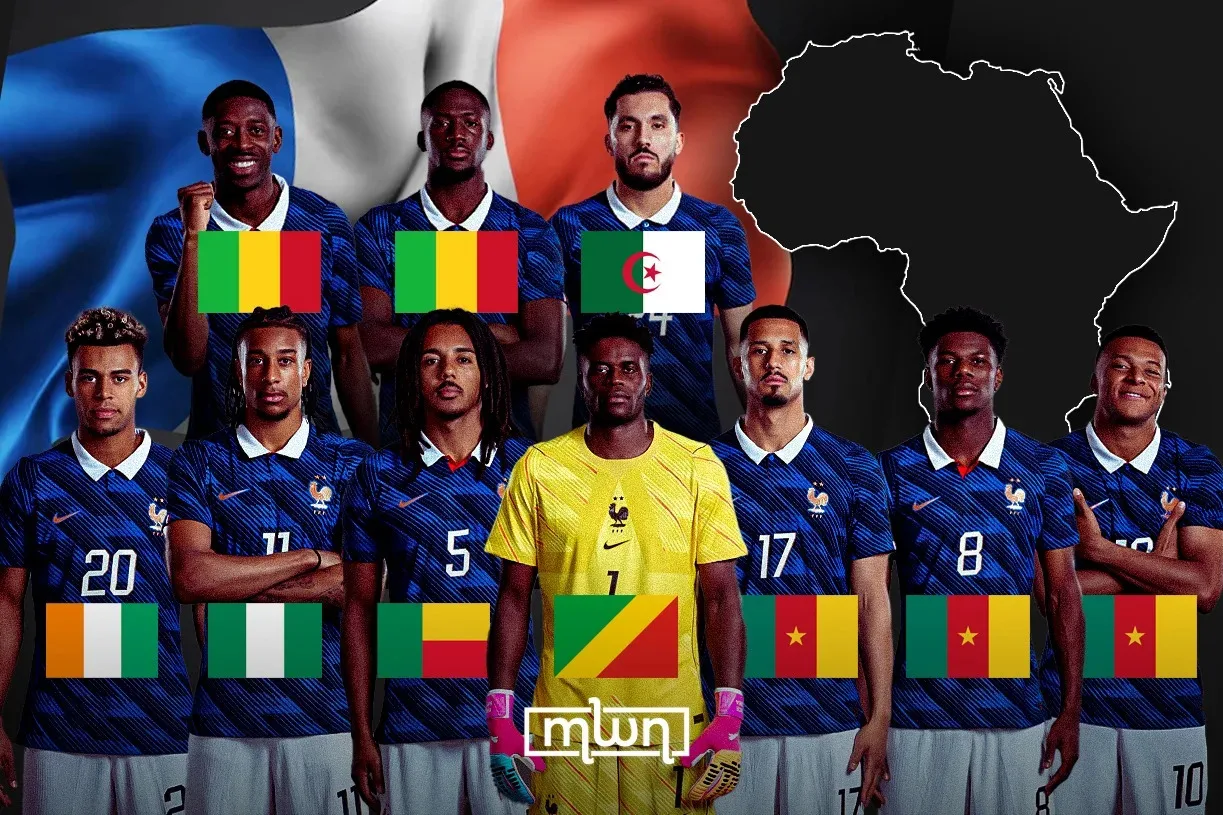
Let us speak plainly, because the subject demands it: eight of the eleven players who started for France against Senegal on June 16 were first- or second-generation immigrants of African descent. They are Les Bleus in name only. Kylian Mbappé, born to a Cameroonian father. Bradley Barcola, son of a Togolese father. Michael Olise, born in London to a Nigerian father and a French-Algerian mother. Ousmane Dembélé, of Malian, Mauritanian, and Senegalese parentage. The list unfurls like a colonial census in reverse.
View this post on Instagram
After all, Ousmane Sonko – Senegal’s president of the National Assembly, a man whose anti-colonial credentials require no footnotes – was not wrong when he told RFI and France 24 before the France-Senegal match that “whatever the result, it is Africa that will have beaten Africa.” He then twisted the blade further: “Just by looking at the composition of the French national team, you understand where the real needs lie in the relationship between France and Africa.”
And then came the coup de grâce, a message addressed not to Paris but to the entire continent: “If we know our value and own it – we have abundant natural resources, abundant human resources, a young and surging population, and the strategic positioning – then the relationship between Africa and the West will change entirely, and so will the perception of questions like immigration.” Even France’s opponents now diagnose the fraud in real time – and prescribe the antidote in the same breath.
View this post on Instagram
And yet, when French media outlets – Le Monde, L’Équipe, RMC Sport, and their dutiful chorus of pundits – turned their editorial gaze toward Morocco’s Atlas Lions, they produced not admiration but arithmetic. “Only one player born in Morocco,” they chirped, as if birthplace were a litmus test for belonging, as if identity could be adjudicated by a hospital’s GPS coordinates.
View this post on Instagram
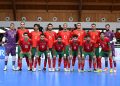
Should the World Cup bracket conspire to reunite Morocco and France as it did in Qatar 2022, the uninitiated spectator – armed with nothing but a television screen and a passing knowledge of continental geography – might be forgiven for assuming that the squad draped in red is the European side and the one wrapped in blue is the African. On sheer genealogical evidence alone, Didier Deschamps fields a more convincing African XI than half the continent’s own federations, while Mohamed Ouahbi’s Atlas Lions, with their La Liga composure and Ligue 1 polish, play the kind of tactically immaculate European football that France once believed was its monopoly to export.
The François de la Croix paradox
Consider, if you will, a thought experiment that demolishes the entire French narrative with the elegance of a geometric proof. Imagine a French couple – let us call them the de la Croix family – who relocate to Marrakech for work. Their son, François de la Croix, is born in a Marrakech hospital, raised in a Marrakech neighborhood, and registers his first kicks in the red-earth playgrounds of the city’s medina.
Is François Moroccan? By the logic that French commentators apply to Morocco’s diaspora players – the logic that conflates birthplace with nationhood – he must be. But of course, no one in Paris would dream of claiming that François de la Croix’s Moroccan birth certificate makes him Moroccan. No French journalist would write a headline declaring, “Morocco steals French-born talent raised in its academies.” The suggestion would be met with derision.
And therein lies the fraud. The standard is applied in one direction only. When a child of Moroccan parents is born in Lyon or Amsterdam or Madrid and later chooses to represent the Atlas Lions, the Western press cries “recruitment” and “poaching.”
But when the sons and grandsons of Cameroon, Senegal, Togo, Algeria, the Democratic Republic of Congo, and Nigeria pull on Les Bleus jersey, it is celebrated as the triumph of Republican universalism. As Edward Said wrote in Culture and Imperialism, “the power to narrate, or to block other narratives from forming and emerging, is very important to culture and imperialism.” France does not merely narrate its own football story; it actively suppresses the counter-narrative that its entire footballing edifice is an African construction painted blue.
And the competition, apparently, extends well beyond the pitch. France’s institutional apparatus has demonstrated a remarkably theatrical sense of timing. On June 19, mere hours before Morocco’s crucial World Cup clash against Scotland in Boston, the Versailles Court of Appeal elected – from a calendar of three hundred and sixty-five available days – to announce that Achraf Hakimi, Morocco’s captain and talisman, would stand trial in a rape case he has consistently denied. The coincidence strains credulity to its breaking point, for in the grammar of geopolitical sabotage, there are no accidental publication dates – only strategically detonated ones.
The settler’s arithmetic, inverted
The numbers are obscene in their clarity. According to data compiled from official 2026 World Cup rosters, ninety-nine players born in France were registered across all participating teams. Of those, seventy-six chose to represent countries other than France – overwhelmingly African and Caribbean nations: Algeria, Morocco, Senegal, Tunisia, Haiti, Ivory Coast, Cape Verde, the Democratic Republic of Congo, and Ghana. When nearly four out of every five France-born players at the world’s grandest sporting tournament elect to wear a different flag, the question is not why they leave. The question is what France failed to build inside them.
Frantz Fanon, that other Martinican who understood French pathology better than the French ever understood themselves, articulated this with brutal precision: “Every colonized people – in other words, every people in whose soul an inferiority complex has been created by the death and burial of its local cultural originality – finds itself face to face with the language of the civilizing nation.”
What Fanon described in the clinical theaters of Algiers, we witness now in the footballing theaters of MetLife Stadium and Lincoln Financial Field: the children of the colonized, perpetually face to face with a France that claims them when they score and discards them when they miss.
Even Mbappé himself – the captain, the record-chaser, the tricolore’s most prized asset – conceded the genealogical truth when he told The Bridge podcast that, had he chosen an African federation, he would have picked Cameroon over Algeria, because that is where his deeper emotional gravity resides. The flagship of French football publicly confessing that his heart’s compass points to Yaoundé, not Paris – and yet it is Morocco that gets audited for its players’ birthplaces.
A Nigerien editorial in Le Sahel captured the absurdity with biting economy: “The French national team is the only domain where French media do not attack immigration.”
Remember 2022. When Aurélien Tchouaméni and Kingsley Coman missed their penalties in the World Cup final against Argentina, the racist abuse was instantaneous. The mob revoked their Frenchness as swiftly as it had been conferred by the goals of earlier rounds. This is what Césaire meant by the moral disease of the colonizer: a civilization that distributes identity as a revocable license, contingent on performance, redeemable only by utility.
In Morocco, belonging is not a contract but an inheritance
Now contrast this with what Morocco has built – not through coercion, not through the assimilationist machinery of a mission civilisatrice, but through something that no Western sociological model can adequately quantify: civilizational gravity.
Morocco’s statehood dates to 788 CE, when the Idrisid dynasty established in Fez the first independent Islamic polity in the westernmost Maghreb. And that is merely the Islamic chapter of a far older manuscript, for if one were to invoke the pre-Islamic Amazigh kingdoms of Mauretania and the Mauri dynasty that treated with Rome as sovereign equals while Gaul was still a colonial province, the timeline retreats into an antiquity so distant it becomes almost unseemly to mention in the same breath as France.
But let us be generous, and start only at 788 – which is still centuries before the consolidation of the French state, centuries before Spain completed its Reconquista, centuries before England had a parliament, and an entire millennium before the concept of “nationalism” was even theorized in European Enlightenment salons.
The Almoravids, the Almohads, the Marinids, the Saadians, the Alaouites – the dynastic chain is unbroken. Morocco is not a nation-state born of Westphalian convenience or post-Versailles cartography. It is a civilizational continuum, and that continuum does not end at the border.
View this post on Instagram
This is why Hakimi, born in Madrid and trained at Real Madrid’s Valdebebas academy, felt “at home” in the Moroccan squad in a way he never did in Las Rozas. This is why Hakim Ziyech, when the Dutch federation asked him to choose with his heart, chose Morocco without hesitation. This is why Ayyoub Bouaddi – the eighteen-year-old Lille prodigy who captained France’s youth teams, whom Zinedine Zidane himself contacted to retain for Les Bleus – chose the Atlas Lions.
When Zidane, the future French manager, told him candidly, “I like you, but I cannot promise you anything,” Bouaddi heard the truth that France never speaks aloud: you are useful, but we cannot give you unconditional love and belonging.
And the darkest irony of all is that the messenger himself – Zinedine Yazid Zidane, whose surname rings unmistakably Amazigh, whose parents emigrated from Kabylia before he was born in La Castellane, Marseille’s most neglected housing project – is the living embodiment of the very condition he was asking Bouaddi to accept. Zidane’s comment is the ultimate personification of the decorated North African son who scaled the Republic’s highest summit only to be handed the authority to tell the next generation of North African sons that their place in the house remains, as ever, provisional.
Morocco, by contrast, did not merely promise Bouaddi a squad place. It offered him what Fanon called “psycho-affective equilibrium” – the restoration of a self severed by the colonial condition.
Fouzi Lekjaa, president of the Royal Moroccan Football Federation (FRMF), revealed on Al Jazeera’s Maghareb program that he had personally traveled to France to recruit Bouaddi into Morocco’s long-term project years before the young man reached the senior level. “We explain the program directly to the player and his family,” Lekjaa recounted. “This is not work that starts a few weeks before announcing a squad list.”
And what did France offer in return? Ambiguity. Bureaucratic indifference. The conditional belonging of a guest who is tolerated but never truly invited.
The primes that were never discussed
Perhaps the most devastating rebuttal to the Western narrative came from Lekjaa himself, during that same Al Jazeera interview, when he addressed the accusation – circulated in Arab and European media alike – that Morocco “buys” its dual-national players.
“Before leaving for the United States, I met with the players. Not a single Atlas Lions player raised the issue of bonuses with me,” Lekjaa stated. “What prime can you give Achraf Hakimi, Brahim Diaz, or Noussair Mazraoui? They earn millions of euros. They do not need money.” He went further: several Moroccan internationals finance charitable projects in Morocco from their own pockets. The attachment is not transactional. It is ontological.
This is the dimension that Western commentary, imprisoned within its own utilitarian epistemology, cannot fathom. The idea that a young man born in a Parisian banlieue might feel a gravitational pull toward Rabat or Casablanca – not because of money, not because of playing time, but because something irreducible in his identity demands it – is incomprehensible to a culture that has spent three centuries reducing human beings to economic units. Césaire had a word for it: thingification. The colonial gaze turns people into objects, belongings into transactions, and then wonders why the objects refuse to stay on the shelf.
Just Fontaine and the unspoken precedent
History, as always, is the great equalizer of hypocrites. Just Fontaine – the man who holds the most untouchable record in World Cup history, thirteen goals in a single tournament at Sweden 1958 – was born in Marrakech. Born to French parents living in the French Protectorate of Morocco. Raised in Casablanca. Educated at the Lycée Lyautey. Trained at USM Casablanca before moving to Nice at the age of nineteen.
By the very logic that French media applies to Morocco’s squad, Fontaine was a Moroccan-born talent who was “poached” by France. Yet no French historian has ever framed it that way. No pundit has ever asterisked Fontaine’s record with a note about his Marrakech birth certificate. In the French imagination, Fontaine is simply French – because Frenchness, in the colonial grammar, is a universal solvent that absorbs all origins when convenient and rejects them when not.
And Fontaine’s story does not end there. After his playing career, he returned to Morocco – to coach the Atlas Lions to third place at the 1980 Africa Cup of Nations, mentoring Badou Zaki and Aziz Bouderbala. The boomerang of belonging: Morocco shaped him, France claimed him, and Morocco reclaimed him. The empire’s own football mythology is threaded with Moroccan soil, yet the empire has the gall to question who counts as Moroccan.
The envy beneath the critique
Let us name what hides beneath the French media’s obsession with Morocco’s squad composition, because euphemism serves no one: it is corrosive, undisguised envy. France is losing the allegiance war. Bouaddi’s defection was not an isolated event; it was a strategic humiliation. French media reported it with the grief-stricken tenor of a jilted suitor.
L’Équipe gave Bouaddi 8/10 after his masterclass against Brazil, then lamented in the very same column that France had “lost an exceptional talent.” Eurosport’s French edition described him as “a gift” to Morocco, as though the young man were a package mislabeled by the postal service rather than a human being exercising sovereign will. Olivier Giroud, formerly of France’s own squad, compared Bouaddi to Patrick Vieira and Sergio Busquets – in other words, to legends – and could not conceal the wound.
Lekjaa, ever the strategist, also revealed Morocco’s unsuccessful attempt to recruit Barcelona’s Lamine Yamal, whose father is Moroccan. “He told me he wanted to play for Spain,” Lekjaa recounted. “I respected his choice.” Then he added, with the quiet confidence of a man who knows the ledger is tilting in his direction: “I hope Morocco and Spain meet in a future World Cup final. Then we will see on the field whether the choice was the right one.”
The American stage and the persistence of empire
It is no small irony that this drama unfolds on American soil – a nation whose own tortured relationship with race, immigration, and belonging provides no moral high ground from which to arbitrate. The United States, host of the 2026 World Cup, is simultaneously imposing visa restrictions on citizens of over twenty African nations, curtailing the very presence of African supporters at a tournament built on African talent.
The Trump administration’s travel bans did not merely restrict entry; they performed, at the border, the same act of selective recognition that France performs on the pitch: you may contribute your labor, but you may not claim your presence.
Edward Said, that tireless cartographer of imperialism’s cultural infrastructure, warned that “no one today is purely one thing,” yet “imperialism’s worst and most paradoxical gift was to allow people to believe that they were only, mainly, exclusively, white, or Black, or Western, or Oriental.”
The 2026 World Cup is a living laboratory of this paradox. France insists its African-origin players are exclusively French – until they miss a penalty. Western media insist Morocco’s diaspora players are not truly Moroccan – until they produce a moment of brilliance that demands explanation.
You can leave Morocco, but Morocco never leaves you
The Moroccan model succeeds where France’s assimilationist apparatus fails because it does not require its children to amputate their origins. There is no demand to choose between Casablanca and Paris, between Darija and French, between the tajine and the baguette. Moroccan identity, rooted in twelve centuries of continuous statehood, in Amazigh and Arab and Andalusian and sub-Saharan tributaries flowing into a single civilizational river, is capacious enough to hold multiplicity.
In the apt words of senior political analyst Samir Bennis, Moroccan identity “is shaped by a shared history, culture, heritage, and sense of belonging. It is rooted in a civilization with profound historical depth and a remarkably rich cultural legacy, one that continues to unite Moroccans across generations and continents.”
Regardless of where they were born or where they happen to live, “whether… in Paris, New York, Mars, or even the Moon,” Samir has insightfully argued, a Moroccan is and will remain Moroccan, he asserted.
View this post on Instagram
France, by contrast, built a nationalism barely two centuries old on the wreckage of revolution, and now watches in bewilderment as the children of its former colonies choose the older, deeper allegiance. The French state offered Mbappé and Olise and Dembélé a passport and a jersey. Morocco offers its diaspora something France cannot manufacture in any ministry or academy: the unshakeable knowledge of where you come from.
Fanon wrote, “In the world through which I travel, I am endlessly creating myself.” The seventy-six France-born players who chose other flags at this World Cup are not defectors. They are not mercenaries. They are Fanon’s sentence made flesh – human beings endlessly creating themselves, refusing the colonial boundaries that would tell them who they are permitted to be. And Morocco, the nation that Western pundits love to audit with their spreadsheets of birthplaces, is perhaps the most eloquent answer to the oldest colonial lie of all: that belonging is something the empire gets to define.
It does not. It never did.