
 Join on WhatsApp
 Join on Telegram
Rabat – Cultural and creative industries have often been viewed as secondary to sectors such as manufacturing, agriculture, or technology, despite their growing contribution to economies around the world.
Increasingly, however, governments and international organizations are recognizing that culture, creativity, and innovation can generate jobs, attract investment, strengthen tourism, and preserve national identity, all while driving sustainable economic growth.
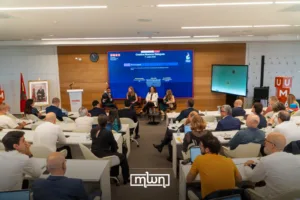
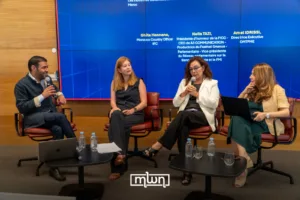
Against this backdrop, stakeholders, experts, policymakers, researchers, and institutional representatives gathered at Mohammed VI Polytechnic University (UM6P) in Rabat for the Creative Morocco Dialogues, a high-level event exploring how Morocco can unlock the full potential of its cultural and creative industries and position them as a key pillar of the country’s development strategy.
Organized by UM6P and the Federation of Cultural and Creative Industries (FICC), the event came at a pivotal moment for the country as Morocco prepares for major international milestones, including the 2030 FIFA World Cup, which it will co-host alongside Spain and Portugal. Participants argued that while investments in infrastructure, tourism, and sports are essential, culture should also be placed at the heart of Morocco’s long-term development strategy.
“Cultural and creative industries” refer to sectors such as music, cinema, design, architecture, fashion, publishing, gaming, crafts, digital content, performing arts, and cultural heritage. According to UNESCO, these industries generate millions of jobs worldwide while also preserving cultural identity and promoting innovation.
Culture beyond the arts
During the event, speakers recalled the growing economic importance of the sector in Morocco and stressed that creativity should no longer be viewed simply as a cultural asset but as a strategic economic driver.
Khalid Baddou, Chief Institutional Affairs Officer at UM6P, said the main objective of the gathering was to encourage collective thinking about how the sector can contribute to Morocco’s future. “The objective is to reflect together on the role of the ICC in development as an economic sector that can really bring added value for the Moroccan economy,” Baddou told Morocco World News (MWN).
He linked the discussion directly to Morocco’s preparations for the 2030 FIFA World Cup, noting that the country’s transformation should extend beyond infrastructure projects. “The role of the creative and cultural industries is to bring additional value by promoting the authenticity of Moroccan culture, its image, and its heritage to the people who will be visiting Morocco.”
Culture should become “part of the roadmap to prepare for Morocco 2030,” Baddou argued, adding that UM6P aims to support this transformation by making its research, innovation ecosystem, and academic expertise available to the creative sector.
Also speaking to MWN, Hélène Guiol, Chief of Education at UNESCO’s Regional Office for the Maghreb, said UNESCO sees Morocco’s growing commitment to the creative economy as a strategic opportunity. “For UNESCO, it’s very strategic to accompany and support the political will which is seen in Morocco to support the creative and cultural industries,” she said.
Guiol noted that UNESCO has already published several studies on the topic and stands ready to assist Morocco in developing education and training while protecting its rich cultural heritage.
Making the economic case
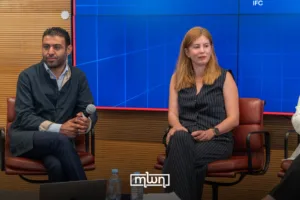
The event included the presentation of new data illustrating the economic contribution of Morocco’s creative economy. Ghita Hannane, Morocco Country Officer at the International Finance Corporation (IFC), presented the findings of a study carried out in partnership with Moroccan institutions.
According to the study, Morocco’s cultural and creative industries account for 2.4% of the country(s gross domestic product (GDP) and provide employment for around 100,000 people.
Hannane told MWN the study shows “the real economic weight of the ICCs in the Moroccan economy.” She described the figures as evidence that the sector already plays a meaningful role in the national economy and expressed hope that the discussions would contribute to future economic reforms capable of unlocking even greater growth.
Beyond the numbers, participants repeatedly emphasized that the creative economy can help address broader development challenges, particularly youth employment and regional development.
Among the voices advocating for this vision was Neila Tazi, Honorary President of the Federation of Cultural and Creative Industries (FICC), who described the sector as one of Morocco’s most promising opportunities.
“ICCs are a very important sector for the future of Morocco, for employment, for tourism, and for the development of our territories,” she told MWN. She argued that creative industries can play a particularly important role in smaller cities by supporting tourism, crafts, and local talent.
Tazi also said the event demonstrated a growing recognition among public institutions and private partners that culture should become a central element of Morocco’s development model. “There is a real awareness now that culture is part of the solution for the new model we’re trying to build in Morocco,” she said.
For many years, she noted, culture was often treated as an afterthought in public policy discussions. “Culture was considered like the last subject that had to be taken into consideration,” she said. “Now we are realizing that it has to be part of how we design the solutions on a governmental level, regional level, and local level.”
Morocco’s rich and diverse cultural identity represents both an important heritage to preserve and a powerful economic asset, according to Tazi.
“We are a very open country. We are a diverse country in terms of identity,” she said. “Culture has to be taken very seriously because it’s part of who we are and it’s an incredible intangible heritage that can be an asset for promoting our country.”
Building long-term partnerships
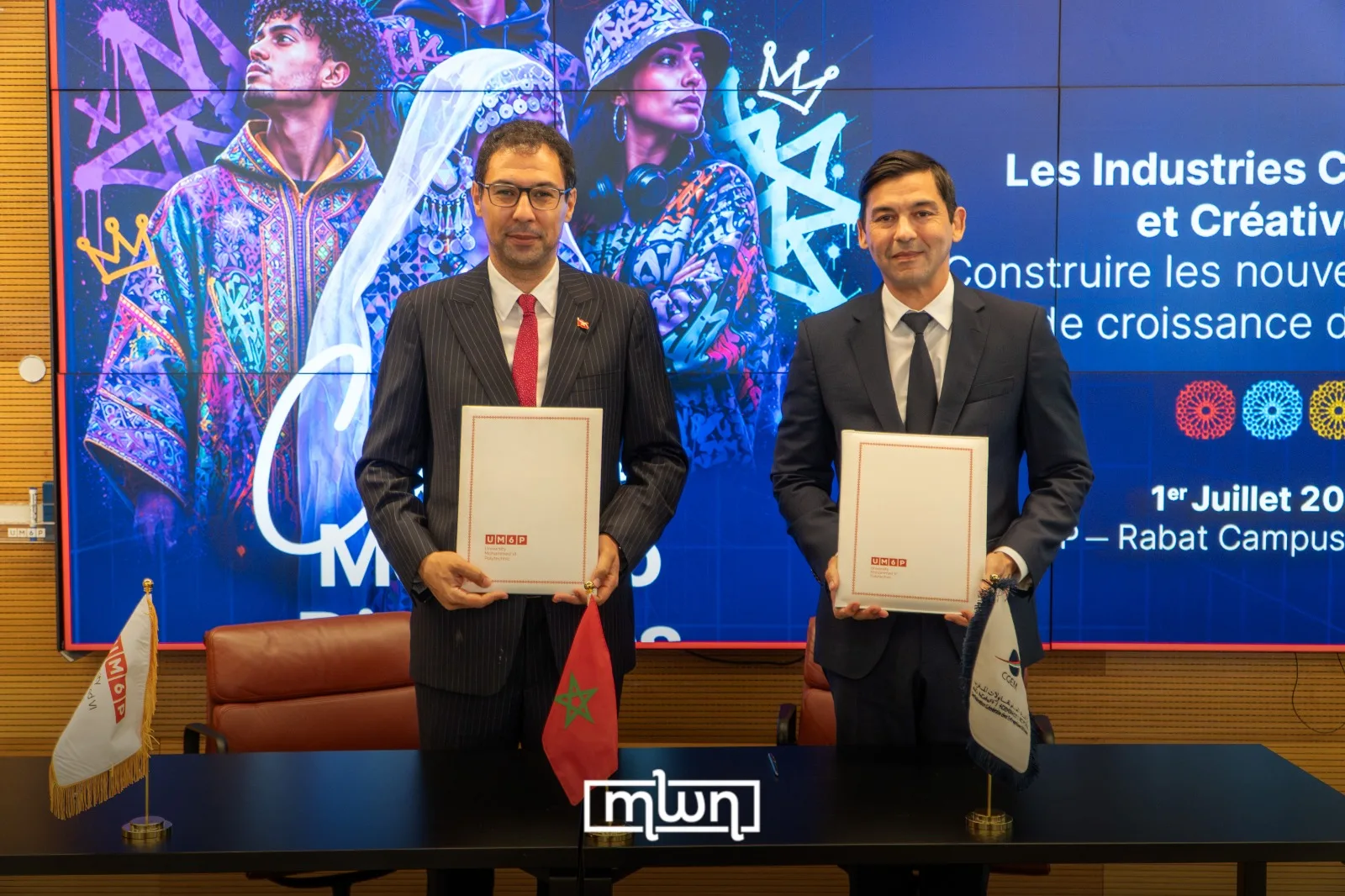
The event also saw the signing of a partnership agreement between UM6P and the FICC to build a long-term collaboration to strengthen Morocco’s cultural and creative industries.
The agreement represents the first structured partnership between the university and the federation. Rather than limiting cooperation to occasional events, the partnership establishes a strategic framework designed to connect academic research with the needs of the creative sector.
Under the agreement, UM6P will contribute its expertise in research, innovation, technology, and entrepreneurship, while the FICC will bring together actors from across Morocco’s creative industries ecosystem. Officials said the partnership will serve as a foundation for future specialized projects, encourage collaboration between stakeholders, and support the long-term organization and development of the sector.