


 Join on WhatsApp
 Join on Telegram
Some sporting achievements remain confined to stadiums and trophy cabinets. Others take on a far greater significance, becoming a reflection of a nation’s journey, its ambitions, and its place in the international system. Morocco’s rise among the world’s football elite unquestionably belongs to the latter category.
The remarkable trajectory of the Atlas Lions since the 2022 FIFA World Cup, now confirmed once again in 2026, is not simply a sporting success story. It reveals something much deeper about Morocco itself. Over the past two decades, the Kingdom has quietly built one of the most compelling examples of how sport can become an instrument of national influence. At a time when perceptions often matter as much as military capabilities or economic indicators, football has become one of Morocco’s most effective tools for projecting confidence, credibility, and ambition.
History has always shown that football and geopolitics rarely evolve independently. The countries that have traditionally dominated the sport have often been those enjoying broader political, economic, or cultural influence. Brazil projected joy and creativity, Germany discipline and efficiency, while countries such as France, England, and Italy naturally extended part of their international prestige through football. Sporting success has long been another language through which nations tell the world who they are.
A long-term vision
Morocco’s story, however, is different. It is not the emergence of another traditional football power. It is the rise of a country that has patiently constructed a coherent long-term strategy, combining institutional reforms, investment in youth, international openness, and political continuity. The results we are witnessing today are not the product of a golden generation appearing by chance but the outcome of years of planning and strategic vision.
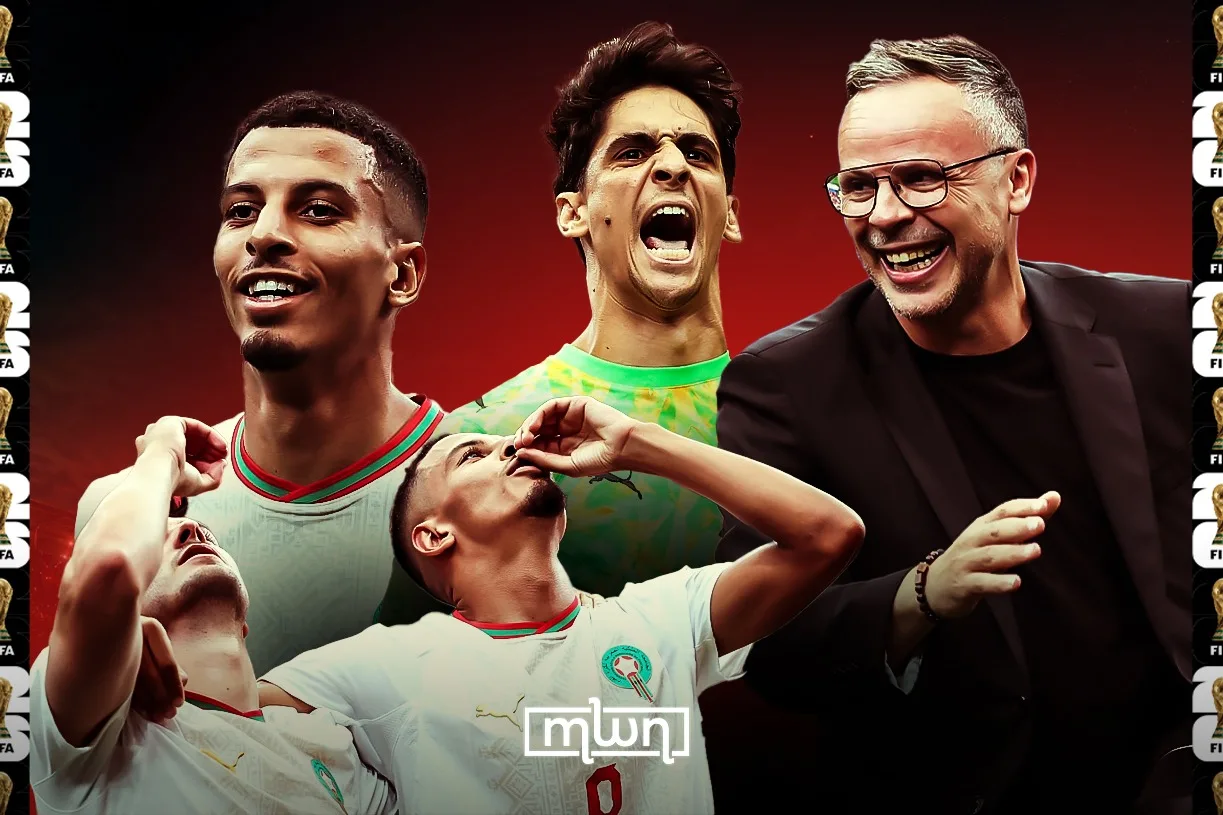
The 2022 World Cup offered the first global demonstration of this transformation. Becoming the first African and Arab nation to reach the semi-finals was, of course, a historic sporting achievement. Yet what truly stood out was the extraordinary emotional response it generated across continents. Morocco did not attract support only from its citizens, but also from millions of Africans, Arabs, and even neutral football fans who embraced the Atlas Lions as their own. In many ways, the team came to embody the possibility that countries from the Global South could compete on equal terms with football’s established powers without sacrificing their own identity.
It would, however, be misleading to attribute Morocco’s success solely to the contribution of players born abroad. Although the diaspora has played an important role, that narrative overlooks one of the country’s greatest achievements. Long before the world began celebrating the Atlas Lions, Morocco had already started transforming its football ecosystem from within.
Building at home
The Mohammed VI Football Academy perfectly illustrates this ambition. Today, it stands among the finest youth development institutions in world football, producing technically gifted, tactically intelligent, and mentally resilient players capable of competing at the highest level. Together with significant investment in infrastructure, coaching, governance, and youth competitions, it has fundamentally changed the country’s ability to develop elite footballers at home.
This domestic revolution matters because it changes the nature of Morocco’s success. The Kingdom is no longer simply identifying talented players developed elsewhere. It is increasingly producing its own. That evolution often receives less international attention than the stories of European-born internationals, yet it may well be the most important factor in ensuring that Morocco’s current success proves sustainable.
At the same time, Morocco has achieved what very few countries have managed successfully. Rather than viewing its diaspora and its domestic talent pool as competing realities, it has transformed them into complementary strengths.
This did not happen overnight. For decades, Morocco has maintained remarkably close ties with its communities abroad. Through cultural institutions, language, religion, family connections, and sustained political engagement, successive governments have consistently reinforced the relationship between the Kingdom and millions of Moroccans living overseas. These efforts have created a strong sense of belonging that cannot easily be measured and one that transcends passports and borders.
This is why reducing the decision of many dual nationals to represent Morocco to simple sporting calculations misses the point entirely. For many of these players, wearing the Moroccan jersey is not merely a career choice. It is the expression of an identity that has been carefully preserved across generations.
Many identities, one team
The national team, therefore, reflects today’s Morocco in perhaps its most authentic form. It is African, Arab, Amazigh, Mediterranean, Atlantic, and, through its diaspora, deeply European. These identities do not compete with one another. They reinforce one another, creating a country that feels comfortable navigating multiple cultural and geopolitical spaces simultaneously.
This may ultimately be Morocco’s greatest strength. In an increasingly fragmented international environment, countries capable of building bridges often enjoy advantages that extend well beyond diplomacy. The Atlas Lions embody that role. They speak several languages, come from different educational systems, play across Europe’s biggest leagues, yet remain united around a shared national project. In many ways, they are a reflection of Morocco itself.
Football has therefore become much more than a sport. It has become a powerful expression of Morocco’s broader strategic trajectory. Over the past 25 years, the Kingdom has expanded its partnerships across Africa, consolidated its relationship with Europe, strengthened its Atlantic vision, and positioned itself as one of the region’s most stable and credible actors. Football did not create this transformation. It simply made it visible to billions of people.
Every international tournament now reinforces a broader national narrative. Every victory projects an image of competence, stability, and ambition. Every player becomes an ambassador whose influence sometimes reaches audiences that traditional diplomacy could never access.
The 2030 FIFA World Cup, which Morocco will co-host alongside Spain and Portugal, represents the next chapter in that story. More than a sporting event, it will provide an unprecedented opportunity to showcase decades of economic development, institutional reforms, and international openness before the largest global audience ever assembled around a single competition.
American political scientist Joseph Nye famously argued that the ability to attract can be as important as the ability to coerce. Morocco’s football revolution offers a compelling illustration of that principle. It demonstrates that influence in the twenty-first century increasingly depends on credibility, consistency, and the capacity to inspire.
Ultimately, Morocco’s greatest victory may not lie in the number of matches it wins.
It lies in having transformed football into one of the most persuasive expressions of its national story, a story built not on slogans, but on long-term vision, patient institution-building, and the confidence to embrace every dimension of its identity.
For years, Morocco invested quietly while others attracted the headlines. Today, the world is beginning to notice. And perhaps that is the clearest sign that this football revolution was never only about football. It was always about the emergence of a country that has learned to convert sporting excellence into lasting international influence.


