
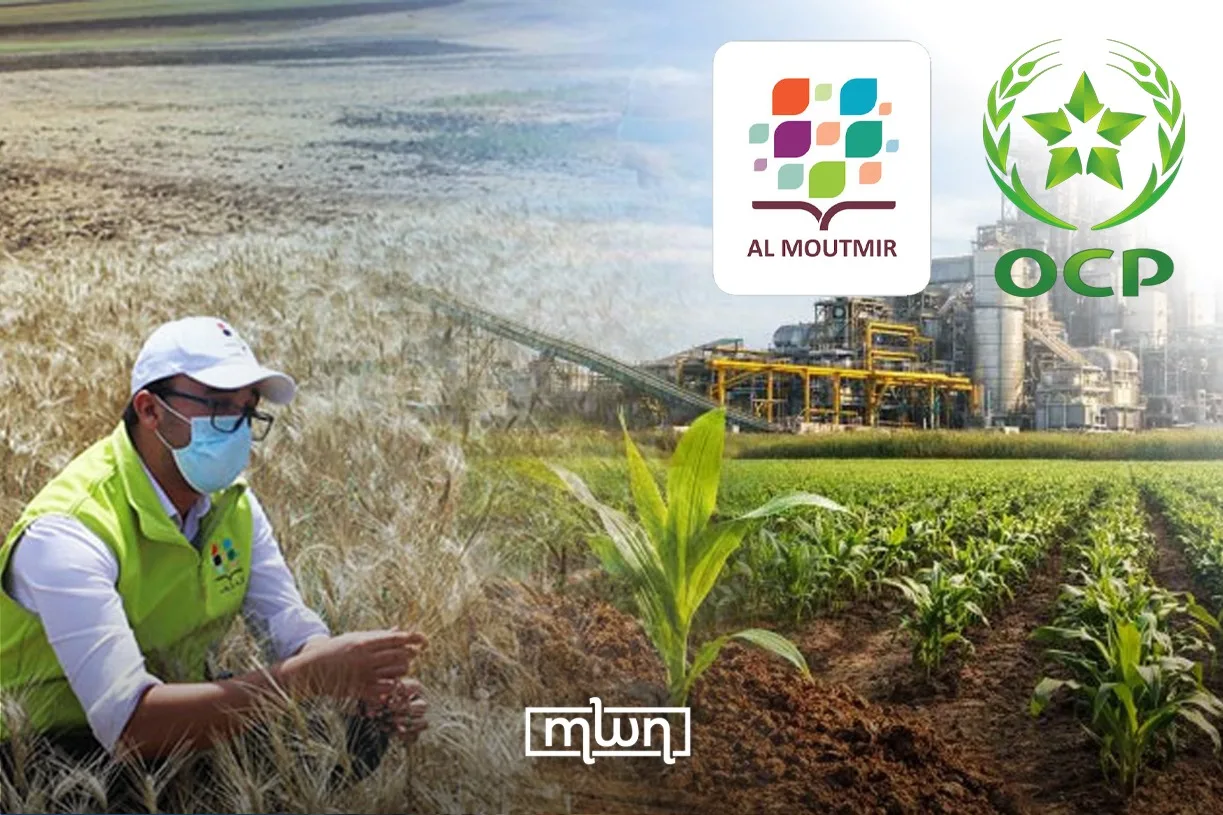
Rabat – Al Moutmir, OCP’s agricultural initiative led by Mohammed VI Polytechnic University (UM6P), says its demonstration platforms helped farmers increase cereal yields by up to 26% and legume yields by as much as 42% during Morocco’s 2025-2026 agricultural campaign.
The results come after a farming season marked by favorable rainfall across much of the country, allowing crops to reach their production potential while highlighting the impact of improved farming practices. The initiative presented the findings during the 20th edition of the Al Moutmir Open Innovation Lab, held online on July 9.
Al Moutmir works to make Moroccan agriculture more productive, resilient, and sustainable by bringing scientific research directly to farmers. Through field demonstrations, soil analysis, training, and digital tools, the initiative helps producers adopt farming techniques adapted to local conditions.
It operates through UM6P’s College of Agriculture in partnership with the OCP Foundation and works closely with the Ministry of Agriculture, the National Office of Agricultural Advisory (ONCA), and provincial agricultural authorities.
OCP, the world’s leading phosphate fertilizer producer, launched Al Moutmir in 2018 to support farmers with scientific advice, customized fertilization, and modern agricultural technologies aimed at improving productivity while protecting natural resources.
Demonstration platforms
During the 2025-2026 season, Al Moutmir established 1,152 demonstration platforms across 25 provinces, covering eight cereal and legume crops. More than 288 farmers directly hosted the platforms, while over 9,400 farmers received training through field schools, workshops, and digital support programs.
The demonstration platforms act as open-air laboratories where farmers compare their usual farming methods with optimized technical packages developed by Al Moutmir experts. The program follows an Integrated Crop Program built on four pillars, including soil analysis-based fertilization, integrated crop protection, efficient water management, and crop-specific agricultural solutions.
Al Moutmir analyzes soil samples in its laboratories before preparing customized fertilizer recommendations using its Smart Blender technology.
The initiative says the optimized farming practices increased crop yields by between 12% and 42%, depending on the crop and growing conditions. Farmers also recorded profit margin increases ranging from 19% to 40% compared with neighboring fields managed using conventional practices.
Supporting farmers
The results also appeared at the farm level. Ahmed Elhiba, a farmer from Beni Mellal, said his soft wheat field produced 70.5 quintals per hectare after following Al Moutmir’s recommendations, compared with 60 quintals per hectare on a neighboring plot managed using his usual practices.
In Settat province, farmer Othmane Essaker said a direct-seeding demonstration platform helped him increase his durum wheat yield from 32 to 40 quintals per hectare. He credited soil analysis, customized fertilization, and technical support throughout the season for the improvement.
The results also highlights the growing role of direct seeding, or no-till farming, in strengthening Morocco’s agricultural resilience.
Under its Direct Seeding Program, Al Moutmir supported more than 30,010 hectares across 130 localities in 21 provinces during the campaign. The program reached over 4,300 farmers and more than 70 local professional organizations while deploying a fleet of 68 direct-seeding machines.
The initiative also established 548 direct-seeding demonstration platforms. According to the results, direct seeding produced yields between 2% and 6% higher than conventional tillage during this year’s favorable season.
Although the difference remained modest because of abundant rainfall, Al Moutmir says direct seeding becomes even more valuable during drought years because it helps conserve soil moisture and improves the resilience of farming systems against climate shocks.
The campaign did face setbacks in northwestern Morocco after heavy rainfall caused flooding in the provinces of Kenitra, Sidi Kacem, and Larache. Flooded fields damaged or destroyed several demonstration platforms before harvest, reducing production in some locations.
Despite these localized losses, Al Moutmir says national results remained strong thanks to favorable rainfall across most production areas and the adoption of integrated farming practices that improved fertilizer efficiency and crop management.
Around 100 participants from public institutions, universities, research organizations, industry partners, farmer organizations, and the agricultural sector joined the webinar on the initiative’s results to discuss ways to improve the sustainability of Morocco’s cereal and legume value chains.
The event highlighted the importance of scientific research, innovation, and agricultural advisory services in helping farmers increase productivity while adapting to climate change. The results also show how demonstration platforms continue to serve as practical tools for transferring knowledge and encouraging the adoption of more sustainable farming practices across Morocco.