 Join on WhatsApp
 Join on Telegram
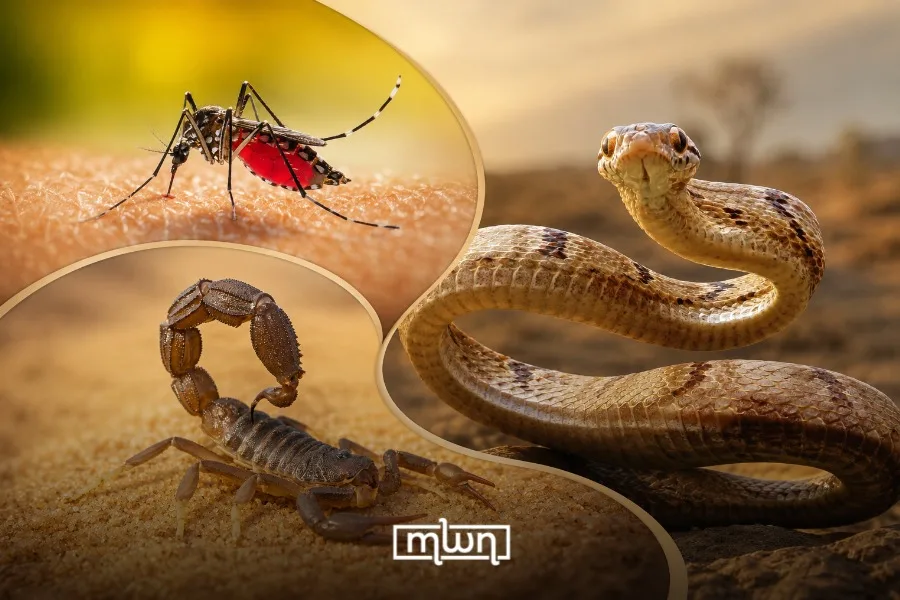
Marrakech – Every summer in Morocco, the same pattern repeats. Temperatures climb, humidity builds, and homes across the country face an unwelcome seasonal surge of scorpions, snakes, mosquitoes, and other pests that pose direct threats to public health.
This year, the Moroccan Association of Professionals in Deratization, Disinsection, Dereptilization and Disinfection (AM3D) – named after the industry’s core “3D” trades of rodent control, insect control, and disinfection, with reptile management as a fourth specialty – is renewing its call for reinforced prevention, wider public awareness, and greater reliance on qualified specialists to manage the risk.
Morocco’s first association dedicated to zoonosis prevention and professional pest control, AM3D works to advance the recognition, structuring, and professionalization of the sector.
Launched under the theme “From Prevention to Care: Acting Effectively Against Envenomations from Scorpion Stings and Snake Bites,” the initiative follows the National Prevention Week organized by the Ministry of Health and Social Protection in El Kelaa des Sraghna. Its priorities center on informing the public, training healthcare workers, and improving the care provided to victims.
The scale of the problem is well documented. According to data from the Moroccan Poison Control and Pharmacovigilance Center (CAPM), Morocco recorded 20,583 scorpion stings and 405 snake bites in 2025. Scorpion stings remain far more frequent, but snake bites carry a significantly higher fatality rate when victims do not receive timely medical attention.
AM3D attributes the summer spike to a combination of factors – heat, humidity, stagnant water, accumulated waste, and insufficient maintenance around residential areas.
Read also: FAO Warns of Desert Locust Spread Across Morocco
These conditions, the association warns, create favorable environments for mosquitoes, flies, cockroaches, rodents, scorpions, and snakes. Mosquitoes in particular are widely regarded as one of the deadliest animals on Earth due to the diseases they transmit.
To curb mosquito breeding, AM3D recommends eliminating stagnant water sources, maintaining outdoor spaces, and engaging trained professionals when infestations become significant.
For scorpions and snakes, the association advises residents to remove piles of stones, wood, and debris near homes, maintain courtyards and gardens, check shoes and clothing before use, avoid walking barefoot – especially at night – and educate children about risky behavior.
In the event of a sting or bite, AM3D urges the public to immobilize and reassure the victim, contact a health facility immediately, and avoid harmful practices such as venom aspiration, incisions, or traditional remedies that can delay proper treatment. The CAPM’s toll-free hotline – 0 801 000 180 – is available around the clock for medical guidance.
Abdelkarim Alghourfi, founding president of AM3D, described the fight against pests as “an issue of public health, prevention and collective responsibility.” Working alongside the CAPM, the Pasteur Institute and qualified professionals, Alghourfi called for “an integrated approach, from precise diagnosis to continuous monitoring.”
He also cautioned against “the systematic and uncontrolled use of pesticides by non-professionals,” warning that such practices “can create far greater risks for human health, domestic animals and the environment.”