Rabat – Morocco’s government revisited its 2026-2027 economic forecasts this month after a conflict taking place thousands of kilometers away began affecting its budget, trade balance, and subsidy bill.
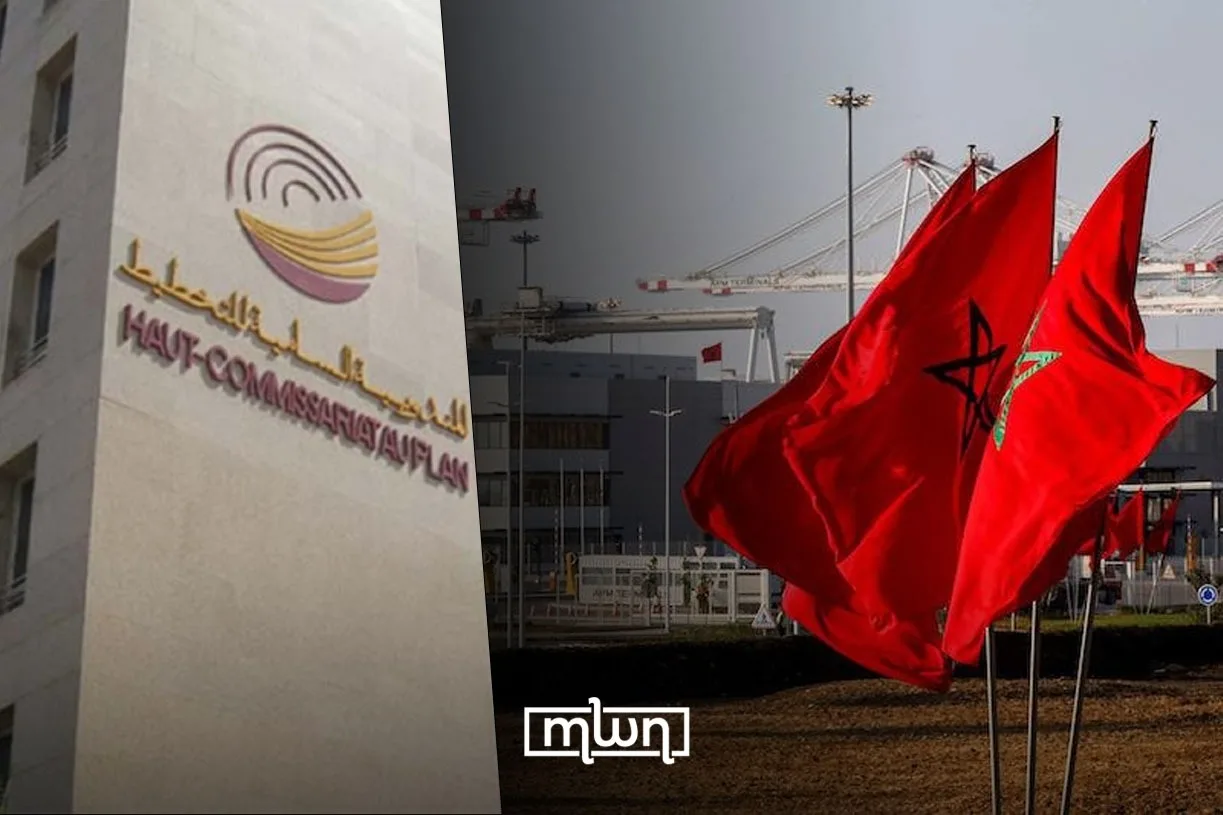
The High Commission for Planning (HCP) published Monday its “Exploratory Economic Budget 2027,” citing the closure of the Strait of Hormuz, shut by Iran since February 28 following US and Israeli air campaign against Iranian military targets, as a direct driver of higher oil and fertilizer-input costs, slower demand from Morocco’s European trading partners, and MAD 20 billion ($2 billion) emergency budget line approved to cushion the impact on Moroccan households.
The report is Morocco’s main mid-year economic reference document ahead of the 2027 Finance Bill. Energy prices, phosphate-sector input costs, and global trade figures had all been forecast on more optimistic assumptions prior to the closure of the Strait of Hormuz.
The transmission channels move in different directions, making them worth tracing individually.
Energy costs
HCP projects Brent crude averaging $89.2 (MAD 833,44) a barrel in 2026, a jump of nearly 32%, before retreating to roughly $78.7 (MAD 735,33) in 2027 as supply conditions normalize. Natural gas prices are expected to rise around 22% over the same window.
For an economy that imports the large majority of its energy, this is not an abstract commodity story; it feeds directly into the trade bill, industrial input costs, and the subsidy line of the state budget.
This matters because Morocco still maintains targeted subsidies on butane gas. The report states that butane costs have pushed past $500 per ton, exceeding what was initially budgeted this year.
To manage the shock without passing the full cost onto households, the government approved a MAD 20 billion ($2 billion) supplementary budget for 2026. This is intended to stabilize basic goods prices and cover the unbudgeted spending resulting from this crisis.
Compensation spending is projected to reach around 1.2% of GDP this year, a considerable increase from the previous year, driven mainly by butane subsidies and continued support for transport professionals and the national electricity and water utility.
The phosphate sector
Morocco’s chemical and mining industries depend on imported sulfur, urea, and ammonia, much of which historically moved through Gulf shipping routes. The report argues that Hormuz-related disruptions have pushed up the costs of these goods.
OCP, one of Morocco’s most important exporters and the country’s biggest phosphate group, is responding by shifting more of its production toward triple superphosphate rather than diammonium phosphate. The report credits this substitution with partially cushioning the blow.
Separately, and for unrelated reasons, the United States suspended countervailing duties on Moroccan fertilizer exports starting in July. This decision is expected to support the country’s exports.
However, the extractive sector’s value added is actually estimated to decline in 2026 before recovering in 2027. HCP attributes this to weaker demand for phosphate rock tied to the broader Middle East conflict.
Low demand for Moroccan exports
The disruption to global shipping and the broader tightening of financing conditions are expected to slow growth among Morocco’s main trading partners, particularly in the eurozone, which remains the primary destination for Moroccan exports.
HCP’s own measure of external demand addressed to Morocco is projected to fall from 4.9% growth in 2025 to just 2.6% in 2026, before recovering modestly to 2.9% in 2027.
The deceleration shows up directly in the trade accounts. The trade deficit is expected to widen from 20.5% of GDP in 2025 to 21.9% in 2026, while the current account deficit is projected to nearly double, from 2.4% to 3.9% of GDP, before easing slightly the following year.
Morocco is facing a squeeze from both directions at once: costlier imports because of the energy and input-price shock, and weaker export demand because its main customers are absorbing the same shock themselves.
The report expects a recovery in 2027 through a decrease in both the trade and current account deficits. This projection rests on the assumption that global commodity prices will decline and European demand will strengthen again once the acute phase of the crisis passes.
Important growth in GDP despite challenges
National GDP is still projected to expand to 4.8% in 2026, a figure that appears resilient.
That resilience, however, is directly linked to a sharp rebound in agricultural output this year following favorable rainfall, adding roughly 19% to agricultural value added and lifting the overall growth figure almost independently of developments in oil and trade.
Non-agricultural GDP growth is arguably the more relevant assessment of how the broader economy is absorbing the external shock, and it is projected at a more modest 3.3% in 2026.
Domestic demand, supported by household consumption and public investment tied to the 2030 World Cup infrastructure, is keeping the non-agriculture economy moving even as other sectors deteriorate.
Inflation
The report identifies 2026 as a year in which the external-stress component of Morocco’s economy rises sharply while the agricultural-stress component eases.
This reflects favorable rainfall offsetting an unfavorable geopolitical environment.
Global inflation is projected to rise from 4.1% to 4.7% in 2026, largely because of the same increases in energy and fertilizer prices, before easing slightly in 2027.
Domestically, HCP expects the GDP deflator to rise 1.9% in 2026. This is a relatively contained figure that assumes the government’s subsidy response and the agricultural rebound will absorb most of the imported price pressure.
The report is careful to mention that even a full de-escalation does not reset the picture. Signs of easing tension between the United States and Iran emerged in late June, although they have recently been challenged, but HCP argues that their effects remain limited.
The financial residue of the crisis is likely to outlast the acute disruption.