
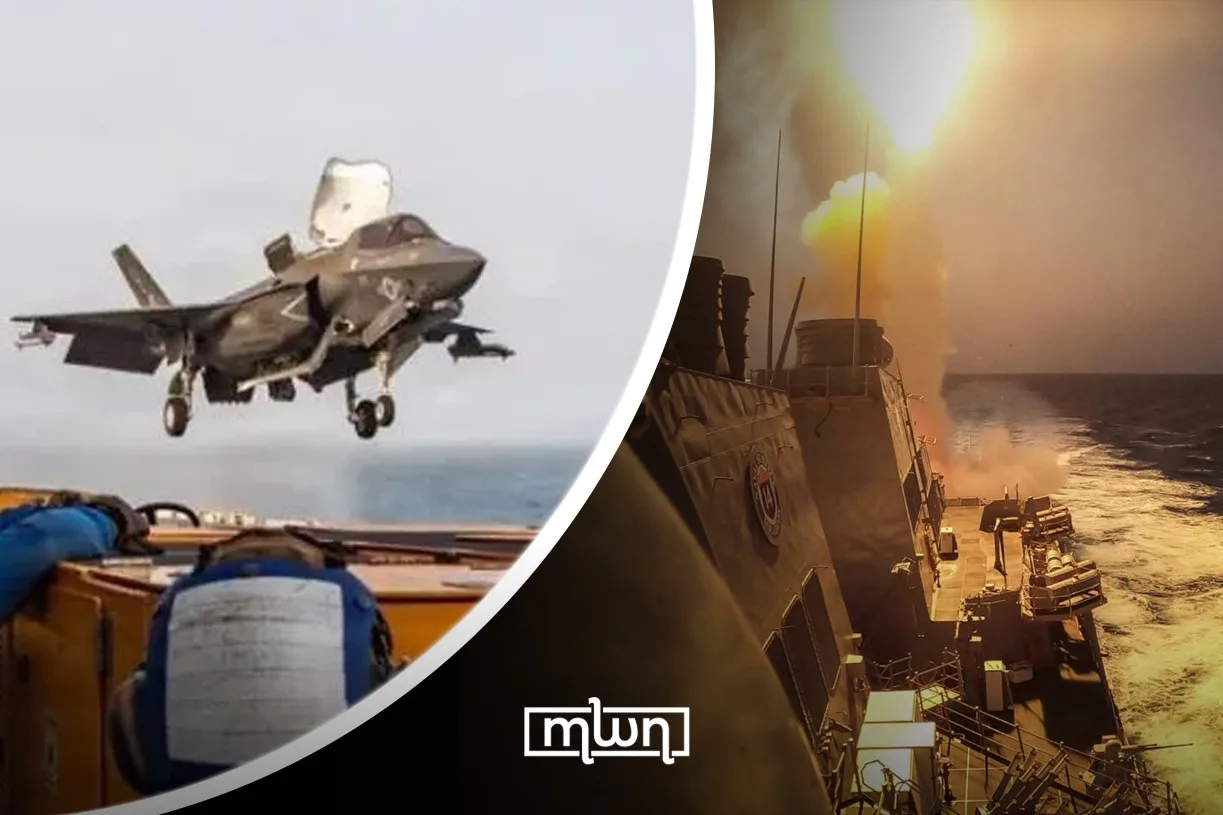
Rabat- The US military says it launched another round of strikes against Iran to “further degrade” its capabilities to attack ships in the Strait of Hormuz
According to US officials, the strikes targeted military infrastructure used by the Houthis to launch missiles and drones. Washington said the operation was aimed at degrading the group’s ability to threaten commercial shipping and regional security following a series of attacks linked to the ongoing genocidal war in Gaza.
The strikes come just days after the Houthis announced what they described as a new maritime embargo targeting Saudi Arabia, warning that vessels belonging to companies conducting business with Saudi ports could be targeted if they violate the group’s restrictions. The announcement marks an expansion of the group’s maritime campaign, which has largely focused on ships linked to Israel since late 2023.
The latest developments underscore the increasingly direct confrontation between Washington and the Houthis, despite repeated US and allied military operations intended to curb the group’s missile and drone capabilities.
While the United States has carried out many strikes against Houthi military sites over the past two years, the group has continued launching attacks in the Red Sea and surrounding waters.
The renewed exchange comes as the Red Sea remains one of the world’s most strategically important shipping routes, connecting Europe and Asia through the Bab el-Mandeb Strait and the Suez Canal.
Although maritime traffic has gradually resumed in recent months, the latest escalation has revived concerns that commercial operators could once again reconsider routes through the Red Sea if security conditions deteriorate further.
Rather than representing two isolated developments, the US strikes and the Houthis’ expanded maritime threats point to a broader trend in which the conflict is increasingly spilling into global trade. If the Houthis move to enforce their announced embargo on Saudi-linked shipping, the impact could extend far beyond Yemen, disrupting supply chains, increasing shipping costs, and adding pressure to energy markets.
For countries that rely on stable maritime trade, including Morocco, whose economy is closely tied to international shipping and Mediterranean-Atlantic logistics, the security of the Red Sea remains a strategic concern well beyond the Middle East.