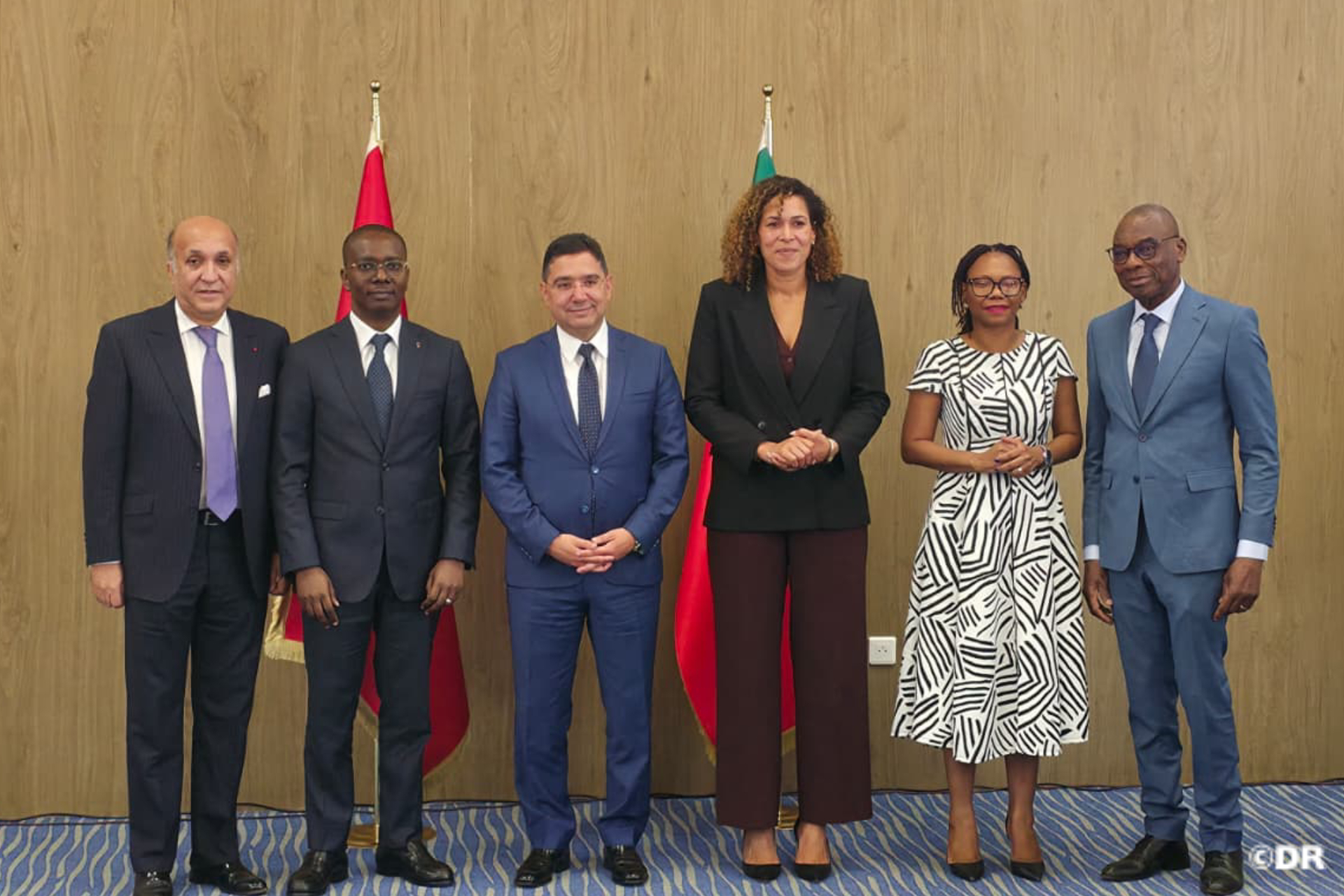
Marrakech – Benin and Morocco reviewed their bilateral cooperation in Cotonou on Tuesday, pledging to broaden and deepen cooperation as the two countries co-chaired the seventh session of their Joint Cooperation Commission.
Foreign Minister Nasser Bourita led the Moroccan side. His Beninese counterpart, Corinne Amori Brunet, minister of foreign affairs in charge of the integration of Afro-descendants, headed the host delegation, joined by delegate minister for resource mobilization and debt management Hugues Oscar Lokossou.
Both parties welcomed the progress made since King Mohammed VI’s visit to Cotonou in June 2004. They pointed to the fraternal ties between the two nations and the mutual respect between the King and President Romuald Wadagni, and expressed a shared aim to turn the partnership into a model of inter-African cooperation grounded in solidarity and exchange.
The talks mapped out sectors with strong potential, among them trade, industry, investment, tourism, agriculture, justice, security, vocational training, higher education, scientific research, health, the digital economy, and culture.
The two sides also committed to a firmer economic partnership that mobilizes the private sector of both countries to drive trade and help finance development.
On the Western Sahara, Benin restated its firm and constant support for Morocco’s territorial integrity and sovereignty over its entire territory, including the region. In the joint communiqué closing the session, Cotonou reaffirmed its backing for the Autonomy Plan as the only credible and realistic path to settling the dispute.
Read also: Morocco Co-Chair 7th Atlantic African States Process Ministerial Meeting in Cotonou
Amori Brunet welcomed the adoption of UN Security Council Resolution 2797, which anchors the Autonomy Plan under Moroccan sovereignty as the basis for a just and lasting settlement.
She announced that she would soon travel to Dakhla to observe the region’s economic and social development and explore partnership opportunities. The two governments agreed to hold the commission’s next session in that city.
Amori Brunet also hailed King Mohammed VI’s initiatives for Africa’s development. She welcomed the momentum behind the Atlantic African States Process (AASP) and the outcome of its seventh ministerial meeting, held in Cotonou on July 13.
Benin further backed the royal initiative launched on November 6, 2023, to open Atlantic access for the Sahel states and connect them to regional transport and communication networks.
The commission convened days after another milestone tied to that Atlantic agenda. On Sunday, West African leaders at the ECOWAS summit in Freetown, Sierra Leone, signed the intergovernmental agreement authorizing the Nigeria-Morocco Atlantic Gas Pipeline.
Benin, an ECOWAS member, is among the thirteen coastal countries the pipeline will traverse on its route from Nigeria to Morocco. Developed jointly by Nigeria’s NNPC and Morocco’s ONHYM, the roughly 6,800-kilometer line carries an estimated cost near $25 billion, with construction expected to begin in 2028.
Bourita was also received by President Wadagni on the margins of the session. The Beninese head of state conveyed fraternal greetings to King Mohammed VI and expressed his readiness to work with the sovereign to strengthen bilateral relations across all fields.