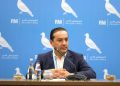
Rabat – Morocco’s National Ombudsman received 9,958 case files in 2025, up from 7,948 in 2024, marking an increase of nearly 25.29%, ombudsman Hassan Tariq said Thursday while presenting the institution’s 2025 annual report in Rabat.
Of the total, 6,770 were formal complaints, representing 67.99% of all files received. The institution also handled 3,157 requests for guidance and recorded 31 requests for amicable settlement, the highest number since its organic law entered into force.
Financial disputes accounted for the largest share of complaints with 2,528 cases. Administrative matters followed with 2,387 complaints, while 623 were linked to social assistance programs. Land-related disputes represented 544 complaints, and 337 concerned the failure of public administrations to enforce court rulings.
Other complaints involved access to public services with 157 cases, major risk management with 99, human rights with 60, digital services with 22, and 13 requests related to provisional legal aid.
According to Tariq, the distribution of complaints points to the emergence of a new type of grievance connected to public policies and social programs. These include complaints about access conditions for public assistance, eligibility criteria, monitoring mechanisms, and the impact of public decisions on people’s legal and social situations.
He said this trend gives complaints an analytical dimension that goes beyond administrative procedures and reflects changes in the relationship between citizens and public administration as the state’s social role continues to expand.
Read also: Morocco Police, Ombudsman Sign Deal to Improve and Digitalize Public Services
During 2025, the institution processed 9,006 files, including 5,825 complaints, 3,157 guidance requests, and 24 amicable settlement requests.
It also sent 2,770 letters to applicants requesting additional information and 4,316 initial letters to the administrations concerned. The institution held 690 investigation and inquiry sessions and recorded 69 cases in which summoned parties did not attend.
The report said 267 minutes were drawn up following meetings of the permanent monitoring and coordination committees, which examined 247 cases. A total of 1,653 settlement decisions covering 28 sectors were issued.
The annual report also measured how public administrations responded to the institution’s recommendations, looking at implementation rates, execution of settlement decisions, financial impact, and administrative deadlines.
Outstanding recommendations fell to 557 in 2025 from 640 in 2024 and 845 in 2023. At the same time, the average time needed to implement recommendations increased to 815 days, up by 143 days from the 672-day average recorded in 2024.