 Join on WhatsApp
 Join on Telegram
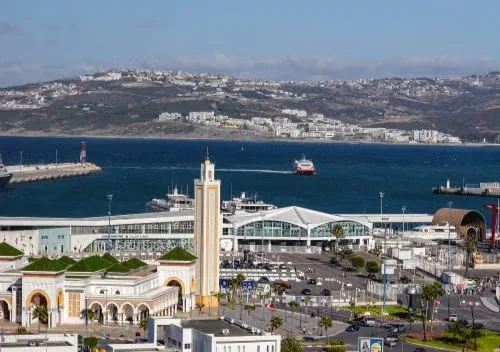
If you take a stroll along the Malabata corniche in Tangier at 10:00 PM on a July evening, or if you drive through the coastal bypass connecting M’diq, Restinga, and Martil, you will immediately notice something startling. For decades, mid-June through late July was characterized by endless bumper-to-bumper traffic jams, persistent apartment brokers wave-signaling keys at every roundabout, and frantic families searching for any available furnished flat to sleep in. This year, the ground reality feels fundamentally quiet.
Every single day, local real estate brokers, private home owners, and independent leaseholders in the Tangier-Tetouan-Al Hoceima coastline voice identical complaints: “Where are the summer vacationers? Why are our apartments sitting empty during peak July? Is the Moroccan diaspora avoiding the north, or are we priced out of our own market?”
Simultaneously, official ministry headlines, airport dispatch figures, and national port authorities announce record-breaking arrival statistics across Morocco. How can official government reports claim millions of incoming travelers while thousands of private holiday rentals in Tangier and Tetouan face empty bedrooms and zero inquiries? Living in Tangier, monitoring the local real estate ecosystem, and tracking verified market datasets reveals that we are not witnessing a total absence of visitors. Instead, we are witnessing a structural breakdown of the unregulated short-term rental market.
1. Ground reality vs. government statistics
To understand the disconnect between what real estate hosts experience in Northern Morocco and what official statistics present, we must analyze verified dataset streams from official institutions and market metrics.
National arrival metrics published by the Ministry of Tourism and the High Commission for Planning (HCP) indicate that overall arrivals to Morocco reached 7.7 million visitors between January and May 2026, reflecting a 7% expansion over 2025. Furthermore, data from the Mohammed V Foundation for Solidarity tracking this year’s Marhaba Operation reveals that between June 10 and June 30, 2026, over 704,714 Moroccan expatriates (MREs) entered the country—a 3.04% increase compared to the previous year’s maritime and air entry logs.
| Market Sector / Metric | Summer Performance Indicator | Verified Data Source & Market Realities
|
|---|---|---|
| National Tourist Arrivals (Jan–May) | 7.7 Million (+7% YoY) | Official macro growth logged across international airports (Maroc Diplomatique Data). |
| MRE Early Summer Arrivals (June 10–30) | 704,714 Passengers (+3.04%) | Sustained entry volume across ports and international air hubs. |
| Tangier Short-Term Rental Supply Growth | +112.4% Active Listings Surge | Massive influx of newly built units into short-term rental platforms (AirROI Market Data). |
| Tangier STR Annual Revenue Growth | -19.5% Year-Over-Year Drop | Realized host earnings declining rapidly due to oversupply dilution. |
| Average Tangier Nightly Rental Rate (Summer) | $101 – $111 USD / Night | Elevated asking prices creating demand resistance among domestic families. |
If millions of travelers and returning family members are physically present in Morocco, why are informal real estate operators in Tangier and Martil struggling? The core reason is that entry figures do not equal unmanaged apartment rentals. While total transit flow remains high, passenger destination patterns, accommodation preferences, and spending allocations have fundamentally shifted away from traditional informal seasonal rentals.
2. The unregulated supply surge
For years, local households and foreign investors viewed investing in a coastal apartment in Tangier, Cabo Negro, or Martil as an effortless income guarantee. People believed that buying a two-bedroom flat meant automatic 100% occupancy throughout July and August at whatever nightly rate they demanded. That era is officially over.
Verified market datasets for short-term rentals in Northern Morocco demonstrate an unprecedented supply expansion. In Tangier alone, active vacation rental listings expanded by 112.4% year-over-year according to AirROI Tangier STR Market Intelligence. Thousands of residential units built in expansion zones like Malabata, Val Fleuri, Iberia, and along the Tétouan road corridor were placed on rental markets simultaneously ahead of the summer season.
Because total supply doubled within 24 months while total tourist inflows grew at single-digit rates (3% to 7%), the available guest pool was divided across twice as many property owners. The result? Total year-over-year revenue per host dropped by 19.5%. Individual homeowners who easily rented their flats every day in 2023 or 2024 now sit vacant for three or four days a week, erroneously interpreting market oversupply as a complete absence of tourists.
3. The price trap: unrealistic expectations vs. buyer resistance
The second primary factor behind empty rental units in Tangier, Tetouan, and Martil is hyper-inflated nightly asking rates. Driven by informal street brokers and unrealistic pricing assumptions, many property owners listed standard, unserviced apartments in peripheral neighborhoods for 800 MAD to 1,500 MAD ($80 – $150 USD) per night in June and July.
According to comprehensive residential real estate reports by Sands Of Wealth Real Estate Market Analysis, long-term residential rents in Tangier rose by 6.5% in 2026, pushing monthly rates for standard two-bedroom flats to 7,800 MAD. Attempting to extract an entire month’s baseline residential rent in just five or six days of summer occupancy created severe consumer pushback.
Travelers comparing a basic $110/night apartment in Martil—lacking air conditioning, daily housekeeping, or verified security—against European coastal alternatives (such as Costa del Sol, Alicante, or southern Portugal) quickly realize the disparity. Furthermore, updated budget guides from Tilila Travel Morocco Budget Breakdown highlight that travelers are increasingly price-sensitive, refusing to pay premium tier rates for unverified residential stock.
When price expectations exceed delivered value, domestic tourists from Casablanca, Rabat, and Fes, as well as MRE families, shorten their stays, move in with relatives, or choose managed hotel residences offering guaranteed amenities.
4. Structural shifts in diaspora and European travel behavior
Beyond supply dynamics and pricing resistance, fundamental changes in travel behavior among Moroccan expatriates (MREs) directly impact the northern coast’s rental economy:
- Shift to direct air travel & mobile mobility: Historically, MREs drove across Spain via car ferry, landing in Tanger Med or Tetouan with full vehicles, encouraging long stationary stays along northern beaches. In 2026, maritime transit entries via Tanger Med shifted downward, while direct air traffic into Casablanca, Marrakech, Agadir, and Tangier airports expanded to nearly 60% of total MRE arrivals. Expatriates arriving by air rent vehicles and travel across multiple cities rather than staying isolated in a rented Martil apartment for four straight weeks.
- Diversification of destination choices: The northern coast no longer holds a monopoly on summer domestic tourism. High-speed rail infrastructure (Al Boraq) allows families arriving in Tangier to effortlessly transition down to Rabat or Casablanca, while expanded domestic air links draw travelers toward southern coastal hubs like Taghazout, Agadir, and Dakhla.
- Economic pressure in European host countries: Inflation and elevated living costs across France, Spain, Belgium, and Germany mean diaspora families are spending more conservatively. Rather than renting secondary vacation apartments for extended relatives, visiting families are consolidating stays inside inherited family properties or reducing their northern stays from three weeks down to ten days.
5. Strategic solutions: how northern hosts must adapt
The northern market is not dying; it is maturing. As Morocco prepares its urban and tourism infrastructure for major upcoming international events leading into 2030, the informal rental market can no longer operate on outdated pricing habits. Property owners in Tangier, Tétouan, and Martil must pivot toward professional hospitality standards:
- Implement dynamic pricing models: Demanding fixed peak rates of 1,000+ MAD in early June or mid-July when occupancy averages 33% to 40% guarantees empty calendar days. Hosts must drop baseline rates during shoulder weekdays and increase rates selectively during peak weekend demand.
- Focus on professional property management: Listings with verified professional cleaning, keyless check-in, high-speed fiber internet, and dedicated work desks capture over 70% of realized platform bookings. Unserviced units relying on key brokers at roundabouts are losing ground permanently.
- Shift toward mid-term and hybrid leasing: Relying exclusively on 45 days of summer income to cover 12 months of mortgage or maintenance is an unsustainable strategy. Smart property owners are transitioning to hybrid models. This means offering mid-term rentals for remote professionals, digital nomads, and logistics engineers from Tanger Med during the nine-month off-season, and reserving peak summer periods for optimized short-term guests.
Conclusion: a Local voice from the northern coast
Standing on the Tangier seafront in July 2026, it is clear that the northern region is undergoing a necessary market correction. The narrative that “nobody is coming to Morocco anymore” is flatly disproved by national border logs, record airport throughput, and rising international hotel bookings. What is disappearing is the era of easy, unearned profits from overpriced, sub-standard vacation rentals.
Tangier and Tetouan remain crown jewels of Mediterranean and Atlantic travel. For property owners and real estate entrepreneurs willing to align their rates with true market value, professionalize guest services, and adapt to modern traveler mobility, northern Morocco remains as full of opportunity as ever.