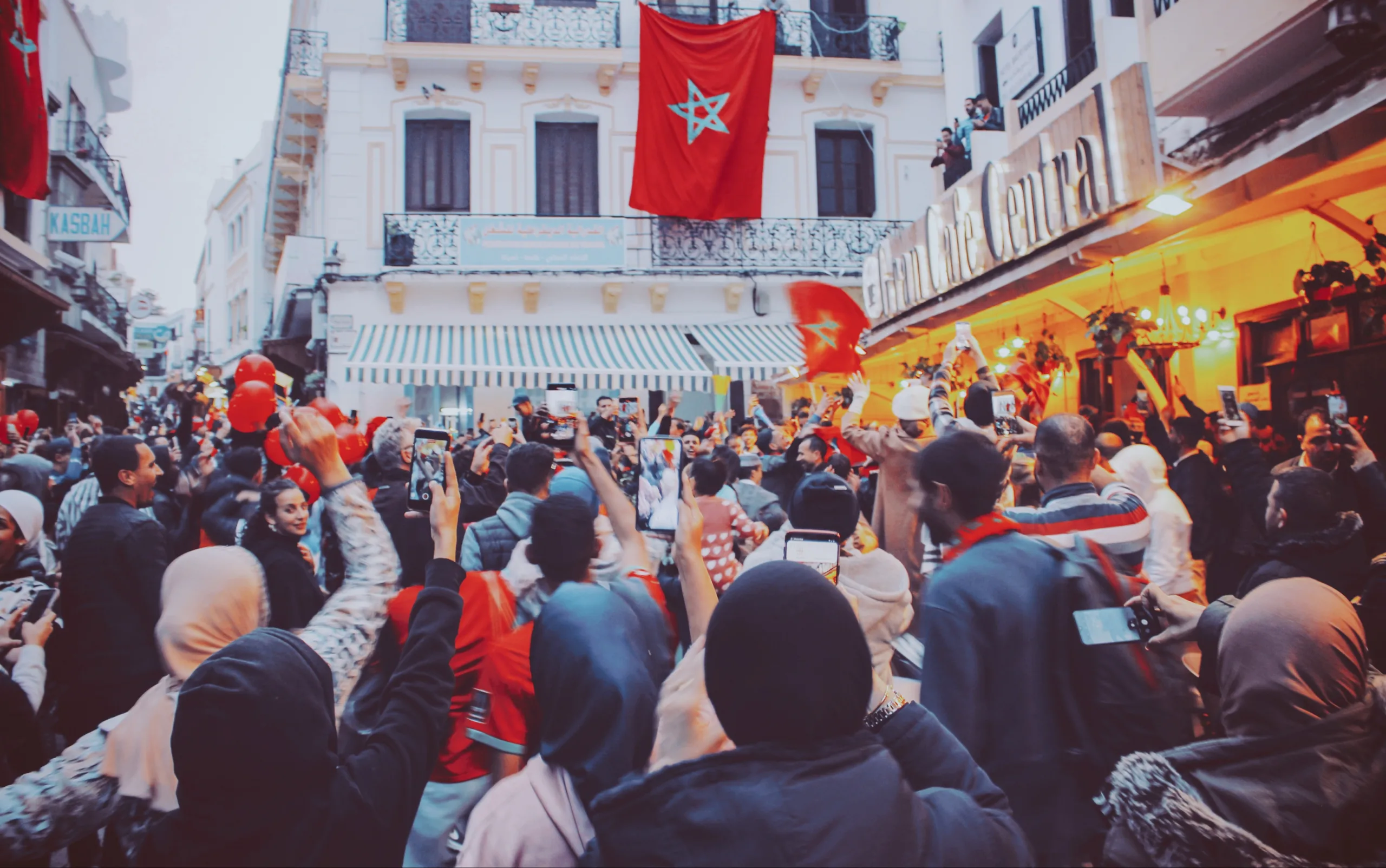
Whether football is your greatest passion or merely another game, whether you follow every match or never watch one at all, Morocco’s recent story is difficult to ignore. What has unfolded on the football pitch over the past few years has become far more than a sporting achievement. It has evolved into a powerful narrative about vision, possibility, and national ambition, a story whose significance extends well beyond the stadiums of Qatar in 2022 or those we saw at this year’s World Cup.
Yet, in this era of transitions, and within this remarkable upward trajectory, we are invited to look beyond the scoreboard. Football, in this sense, is but the visible expression of something much deeper. At a time marked by profound global and national challenges; economic, social, technological, cultural, geopolitical… we are compelled to understand these achievements within a broader intellectual perspective.
When we speak of transitions, we refer to a conceptual framework defined by rapid change. The Era of Transitions is a period of profound transformation in which established ways of thinking, living, and organizing society gradually give way to new ideas, values, and possibilities and more challenges. Rather than a single event, it is a time of adaptation and convergence, where past and future coexist to shape a new cultural, intellectual, and technological landscape.
In Morocco, the challenge has been to move beyond the difficult years that followed independence: to rebuild the country, strengthen its unity, overcome the legacy of that period, and embrace modernity in a balanced way. Within this context, the Royal Vision has distinguished itself through a series of major national projects, among them the strategic development of sport.
Morocco’s historic journey to the semi-finals of the 2022 World Cup in Qatar marked a turning point, not only in world football, but in the way we perceive possibility itself. It broke many of the assumptions that had long constrained creativity, not only in Morocco but across Africa. Suddenly, the conversation shifted towards what is possible, highlighting the importance of recognising our potential and the value of long-term and well structured strategic work.
Ouahbi represents Morocco’s assertive embrace of ambition
Today, Mohamed Ouahbi’s journey embodies this same philosophy, though in an even more compelling way. But why?
To answer that question, we must approach his experience almost as a form of simulation, projecting many of its principles onto a broader reality.
Mohamed Ouahbi speaks repeatedly about the value of work, serious work, and about patience, and above all, great patience in the pursuit of a goal. This is not motivational language; it is a
logical formula for success. Yet these two qualities alone are not enough. Equally important is the ability to adapt: to remain flexible in difficult moments, to change one’s approach when circumstances demand it, to respond quickly to different situations, and, when setbacks occur, to learn from mistakes and build upon them.
These are the very principles through which he led Morocco to the final of the U-20 Africa Cup of Nations, finishing as runners-up in Egypt, before winning the FIFA U-20 World Cup only a few months later, a historic achievement for Moroccan football, particularly at youth level. We witnessed these same principles even more clearly during the World Cup in the United States, from the match against Brazil to the encounter with France. The countless analyses that followed each game revealed what makes this coach truly exceptional.
But how can we understand these achievements beyond the emotions of celebration and national pride?
From a practical point of view, Mohamed Ouahbi holds Morocco’s potential in the highest regard. As a Moroccan who grew up in Belgium and worked at Anderlecht’s academy, where he helped develop several outstanding Belgian talents, returning to serve his own country carried a meaning unlike any other. It became a project driven by purpose. Yet this dream is not his alone; it belongs to the aspirations of an entire nation. To work and succeed in Morocco brings a unique sense of pride, especially at such a demanding level.
This is not just about football
Coach Ouahbi is also an excellent communicator. He speaks with honesty, avoids excuses, accepts criticism, and faces challenges with remarkable composure. Together with the values already mentioned, patience, discipline, careful preparation, and dedication, these qualities reflect an intellectual, emotional, and ethical maturity that Morocco needs not only in football but across many areas of society.
Today, in this Era of Transitions and in the face of so many challenges, what Morocco perhaps needs most is the confidence that Mohamed Ouahbi embodies; confidence in our ability to move forward and to succeed, not only as individuals, but as a society and as a nation. Success is already part of our history; what remains is to reclaim that confidence in ourselves. We can already see its signs in many of the major projects initiated under the leadership of His Majesty King Mohammed VI: Mohammed VI Polytechnic University, major port developments, an economy resilient to global crises, diplomatic achievements, and many other national initiatives.
The influence of Mohamed Ouahbi’s ideas, his maturity, openness, clarity, and positive energy, allowed many Moroccans, during this remarkable summer, not only to celebrate but to genuinely believe that Morocco can one day win the FIFA World Cup. With that same conviction, we should also see in his example an inspiration that reaches far beyond football.
To recover the character and confidence that have always distinguished us throughout our history, and still do, but to ensure that we do not lose them in a decisive match or a defining chapter in our national story.