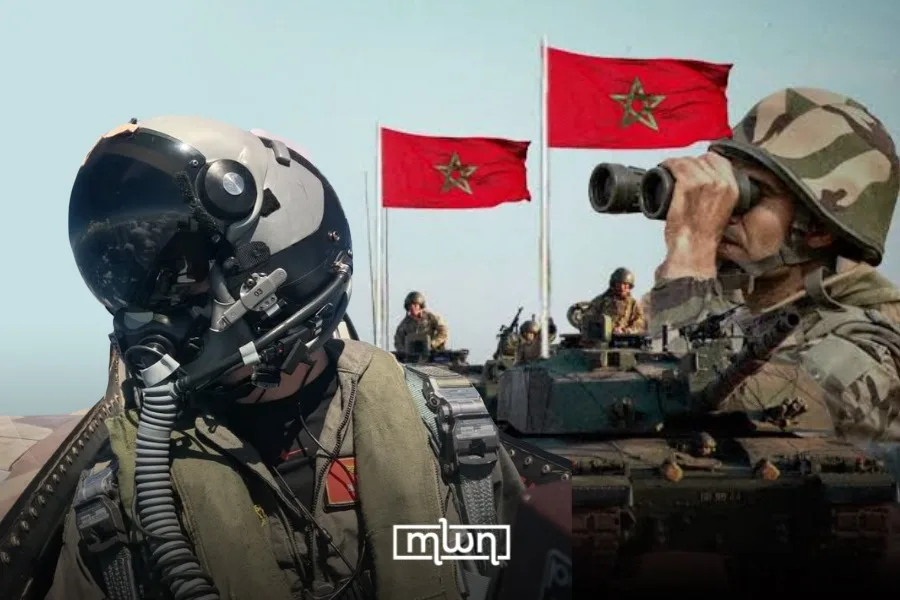
Rabat – The US Department of Defense has awarded a contract estimated at more than $333 million to Rockwell Collins ESA Vision Systems.
The contract will provide repair services for the Joint Helmet Mounted Cueing System, an advanced fighter pilot helmet used by the US military, in addition to several allies, including Morocco.
Defence Blog said the system is known by its acronym, JHMCS. The system enables tracking where the pilot’s head is pointed. It also projects targeting information onto the visor.
Defence Blog said this allows the “pilot to lock a missile onto an enemy jet simply by looking at it rather than pointing the entire aircraft’s nose at the threat first.”
The contract will run for six years as a base period, with an additional six-month option. This will allow the operation to continue through July 2032.
The maintenance work will take place at the company’s sites in Texas, Oregon, and Israel, the news report added.
The contract lists several US allies that will benefit from the contract, including Morocco, Singapore, Chile, Denmark, Norway, Thailand, Oman, Portugal, Canada, Switzerland, and Australia.
The same source emphasized that the contract does not specify how many helmet units or repair jobs the agreement is expected to handle over its six-year span.
Morocco continues to upgrade its military through the purchase and deployment of cutting-edge technology and upgraded military supplies. The US has long ranked among its top arms suppliers.
April’s Stockholm International Peace Research Institute (SIPRI) report showed Morocco maintaining its position as the second-largest military spender in Africa, with the report attributing the spending to the “long-standing tensions between the two countries.”
Algeria continues to top the list in terms of military spending, which rose by 11% in 2025, compared to 6.6% in Morocco.
Among the purchases that Morocco reportedly made recently are two Dutch-built unmanned surface vessels as part of a deal valued at approximately €13 million (MAD 139 million), expanding the Royal Moroccan Navy’s maritime surveillance and operational capabilities.
The export license covers the delivery of an unmanned surface vessel system, including associated sensors, control systems, spare parts, training, and technical support. The equipment is intended for use by the Moroccan Navy in submarine warfare and mine countermeasure missions.