Rabat – Spain’s top criminal court has turned its attention to a question that now sits at the heart of the latest Ceuta crisis: did authorities see it coming?
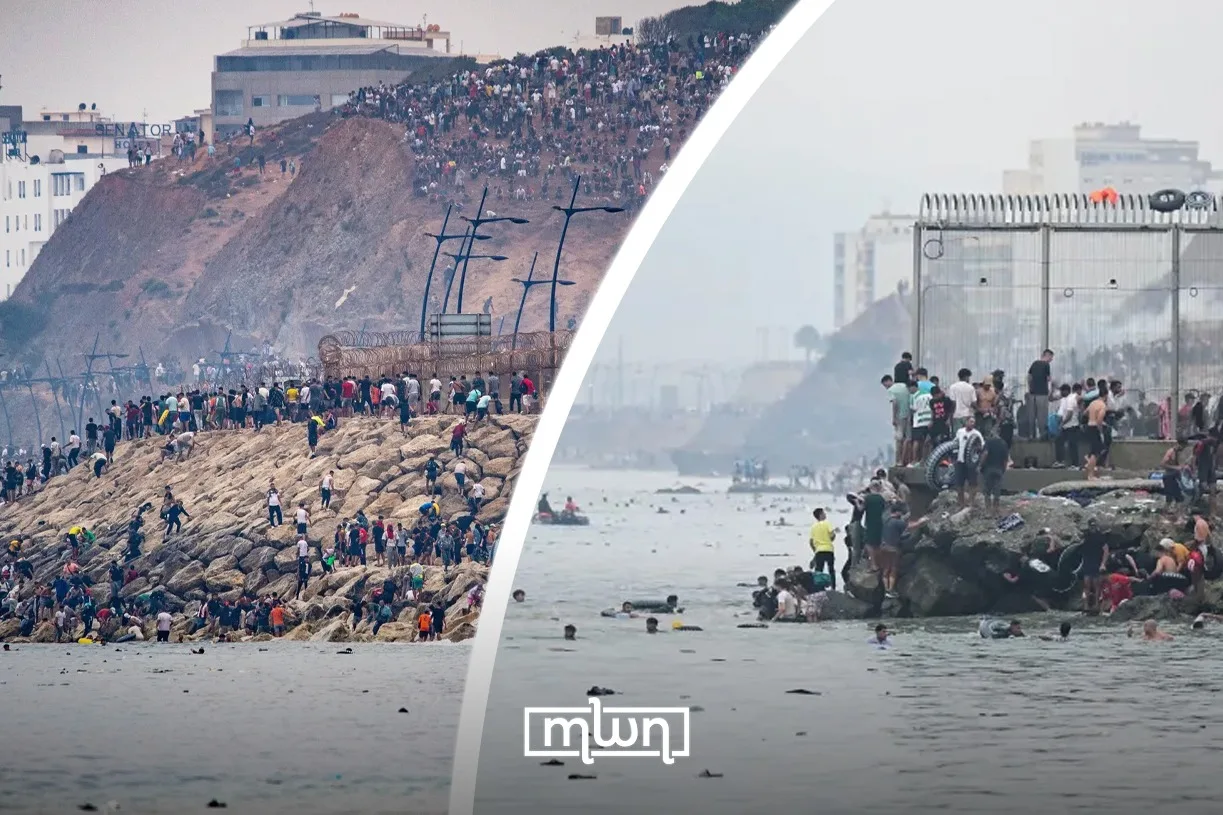
The National Court has asked the Civil Guard to clarify whether any concrete warnings or signals pointed to the sudden surge in mass crossings into the occupied city of Ceuta on July 30 and 31.
The request marks the start of a judicial effort to reconstruct the days that preceded one of the most intense migration episodes in recent months.
The case stems from a complaint filed by the political group Iustitia Europa, which alleges a chain of serious failures and possible crimes. Its claims stretch from threats to state security to the facilitation of irregular migration and human trafficking.
The filing also raises the possibility of organized coordination behind the crossings, as well as a failure by officials to act despite available information.
Judge María Tardón has ordered a detailed account of how the Civil Guard responded on the ground. She wants to understand what resources were deployed, how rescue operations unfolded at sea, and what records exist for those intercepted or saved.
The request also extends to identities and traceable details of survivors, a step that signals concern over accountability and humanitarian follow-up.
According to Spanish media outlet EFE, Interior Minister Fernando Grande-Marlaska has insisted that Spain’s intelligence services issued no specific alert ahead of the events.
At the same time, he acknowledged that authorities received general indications of a likely rise in attempts to reach Ceuta by sea, a pattern often seen during the summer.
Moreover, he suggested that a recent Supreme Court decision, which barred immediate returns of migrants who arrive by swimming, may have encouraged more people to take the risk.
The court has not limited its focus to warnings alone, but also asked whether the deaths reported during the crossings were formally documented, including their causes and timing.
Behind the legal language lies a quieter question: how many lives were lost, and how clearly has that toll been recorded?
Before turning to the Civil Guard, the judge had already sought input from Spain’s National Police to determine whether the crossings followed a coordinated plan. That line of inquiry reflects a broader tension that continues to shape political debate in Spain, where migration crises often trigger competing narratives of spontaneity and orchestration.
Ongoing investigation
Crossings into Ceuta have largely subsided after last week’s surge, with Spanish authorities reporting no renewed mass attempts to enter the enclave.
According to information relayed on Tuesday by EFE, movements from the Moroccan side have slowed to isolated incidents, typically involving small numbers of individuals trying to reach the coast by swimming.
Police sources describe these attempts as limited and infrequent, rarely exceeding a handful of people at a time, often young migrants who continue to test access routes despite tightened controls. Security deployments in and around Ceuta remain heavy.
Attention has now shifted to those who remain inside the enclave. Local officials estimate that between 3,000 and 5,000 migrants are still in Ceuta following the large-scale crossing, while many others have declined voluntary return arrangements to Morocco.
Conflicting figures continue to shape the broader narrative of the crisis. Moroccan authorities dispute some of the higher estimates circulated in Spain, putting the number of arrivals closer to 40,000. Spanish reports, by contrast, suggest the total could have reached up to 80,000 people.
The situation has also touched Melilla, where Moroccan officials report that over 1,000 individuals entered. Rabat has confirmed 11 deaths linked to the events, though Spanish sources cite a significantly higher toll, with some estimates rising to 88. Moroccan authorities say these figures remain under review.
For now, the investigation does not offer conclusions, but rather opens a space of uncertainty, where information gaps carry as much weight as confirmed facts.