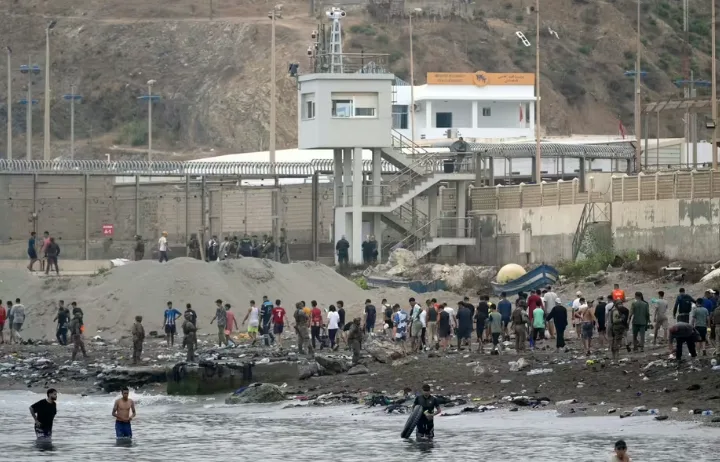
Rabat – Reports are buzzing about the challenges and risks that Moroccan and hundreds of other minors are facing after crossing to the Spanish enclave of Ceuta as part of the large irregular migration crisis last week.
AFP said hundreds of unaccompanied children sleeping on the streets in the enclave are at risk of exploitation, trafficking, and abuse.
The report also quoted Jose Miguel Morales, head of the migrant assistance association Sur Acoge, who said some of these unaccompanied minors have been beaten and assaulted in Ceuta.
“Every day that passes without a solution or safe accommodation means these children, especially girls, are exposed to all kinds of abuse…. We are talking about real children—10 years old, or even younger in some cases. Most of them are not even 14,” he told Spanish TV.
Save the Children also urged authorities to locate and register all minors.
Spain estimates the number who entered the Spanish enclave at more than 70,000. Most of them were returned as part of the Spanish-Moroccan agreement in response to the mass migration crisis that struck the border on July 30. Morocco estimates the number of those who headed to Ceuta at 40,000.
Hundreds of migrants, however, remain and refuse to return home.
Of the 2,000 people that remain in the enclave, more than 1,000 of them are unaccompanied minors.
Spanish news agency EFE reported that Ceuta will be able to carry out the first relocations of minors from the enclave to “other autonomous communities” in a few weeks.
The remarks came as many reports show minors sleeping on the floor in inappropriate conditions.
Minister of Youth Sira Rego announced the launch of a budget allocation for receiving the minors.
“The intention is to make that allocation available urgently and begin welcoming these minors to the peninsula in coordination with the other autonomous communities.”
The minister described the situation as complex and very complicated, stating that the number of 1,342 registered children will increase because the “process is ongoing, which is proving difficult due to the volume of arrivals and the somewhat overwhelming situation that requires a slow but constant effort to begin working on the reception processes,” the minister said.
Ceuta authorities also opened a school and are setting up a second one to receive minors.